Heat pump not heating in Joliet, IL

Send the request today and stop worrying about who to call.

Let a pro reach out

A heat pump that runs but blows cool or lukewarm air is usually stuck in defrost or losing the fight against the cold outside. Joliet winters push outdoor temperatures low enough that frost builds on the outdoor coil, and the system has to pause heating to melt it off. If that defrost cycle sticks, or if the refrigerant charge is low, or the reversing valve that switches the unit between heating and cooling has failed, the heat pump keeps running without doing its job. Below a certain outdoor temperature, a heat pump alone can't keep up with the heat loss from a Will County home, which is why many have a backup furnace or electric strips that should kick in but sometimes don't. If your air feels barely warm or just like room temperature, something in that chain has broken down. It won't fix itself, and running it that way through a hard winter only adds strain to a system that's already struggling.

A smiling man with dark curly hair in a dark green henley shirt sits on a light sofa in a living room with large windows, a lamp, shelving, a stone fireplace, and a bowl of popcorn in the foreground.
A smiling man in a dark long-sleeved henley shirt sits on a beige sofa in a living room, with a bowl of popcorn and a remote on the table in the foreground and shelves, a lamp, and a doorway behind him.
A smiling man with graying hair and stubble in a blue henley shirt sits on a gray sofa with cushions in a living room, with a bowl of popcorn on a wooden table in the foreground.
A smiling man in a dark green long-sleeve shirt reclines on a sofa in a dimly lit living room, with a bowl of popcorn on a side table in the foreground and a bookshelf, lamp, and houseplant behind him.

Why can't your heat pump keep up on a night like this

  • Winter nights average 20°F

    Nights here average 20°F in December, January and February, cold enough to strain a heat pump's output right when you need it most.

  • Heat runs October through May

    Heat runs October through May here, about eight months. A heat pump that struggles in the cold is a problem for most of the year.

  • Cooling runs June through August

    Cooling only runs June through August. The same system doing double duty has far more winter nights to get through than summer days.

NOAA nClimDiv 1991-2020

An outdoor condenser unit on a concrete pad beside a gray lap-sided house, with an electrical disconnect box and conduit on the wall and shrubs with mulch to the right.

Running the way it should

A heat pump working right cycles on, runs steady, and puts out air that feels warm at the vent. The outdoor unit hums along, the coil stays clear, and the house holds its temperature without the backup heat kicking on every hour.

An outdoor air conditioning condenser unit on a concrete pad beside a house with horizontal siding above a brick foundation, with a flexible conduit running to a wall-mounted disconnect box.

Signs it's losing the fight

Dust and grime built up on the outdoor coil block the airflow it needs to pull heat from outside. A unit caked like this in a Joliet winter often can't keep up, and you'll feel it as air that never quite gets warm.

When Your Heat Pump Hands Off to Backup

Backup heat strip

  • Electric resistance strips inside the air handler kick in when the heat pump alone can't keep up, and they warm the air fast.
  • Will County power rates make those strips expensive to run for long stretches, since they draw far more electricity than the compressor does.
  • Strips are meant for short bursts during defrost or a cold snap, not for carrying the house through a whole January night.
  • If the heat pump is undersized, broken, or losing the fight against the cold, the strips end up doing most of the work and the bill shows it.
  • A thermostat set too high, or a big jump up in temperature, can trigger the strips even on a day that isn't especially cold.

Gas furnace backup

  • Most homes in and around Joliet already heat with gas, so a dual-fuel setup switches over to the furnace instead of electric strips.
  • A furnace burns gas to produce heat directly, so it can carry the house through single-digit nights without pulling hard on the power grid.
  • The switchover is usually automatic, controlled by the thermostat or an outdoor sensor, once the temperature drops below where the heat pump works well.
  • Gas heat tends to feel warmer at the vent than a heat pump running flat out, since a furnace isn't fighting outdoor air temperature the way a heat pump is.
  • If the furnace is old or hasn't been serviced, it may not kick in the way it's supposed to when the heat pump hands off to it.
A gray outdoor condenser unit on a concrete pad beside a light-green sided house, surrounded by mulch, ornamental grasses and a shrub, with mowed lawn in the foreground.

Heating as it should

The outdoor unit sits clean on its pad, fins clear, nothing blocking airflow around it. Air comes out of the vents warm to the touch, and the system holds the house at the temperature set on the thermostat without the backup heat stepping in every time it cycles.

A gray outdoor air conditioning condenser unit on a concrete pad beside a house with light vinyl siding, with a gray electrical disconnect box and conduit on the wall to the right.

Frost and grime on the coil

Dirt and weathering have built up on the outdoor fins, and that buildup makes it harder for the coil to pull heat from the air outside. Frost forms faster on a coil already caked with grime, and the unit spends more time defrosting than heating your house.

A closed laptop and a ceramic mug of coffee on a wooden table, with a blurred kitchen counter, cutting board, utensil jar and plant in the background.

What a cold house costs you tonight

If the heat pump stopped pulling its weight, the air handler is probably leaning hard on the backup strips to keep the house livable. You'll feel it in the vents, warmer than the heat pump alone would give you, and you'll see it on the next bill. Those strips are built to cover short gaps, not to carry a Will County night in January.

Past the cost, there's the house itself. Rooms farthest from the air handler go cold first, and pipes in an exterior wall or an unheated space are the ones to watch if the system can't keep up for more than a night. Finding a contractor who can get out to a Joliet address, explaining the system, the noise, when it started, again to three different companies, waiting on callbacks while the house keeps losing ground. Send the form once and that search is done.

A shallow dark wooden bowl and a stack of books rest on a wooden table in front of a beige sofa with linen and green cushions, with a tall ceramic vase of thin branches beside a window in the background.
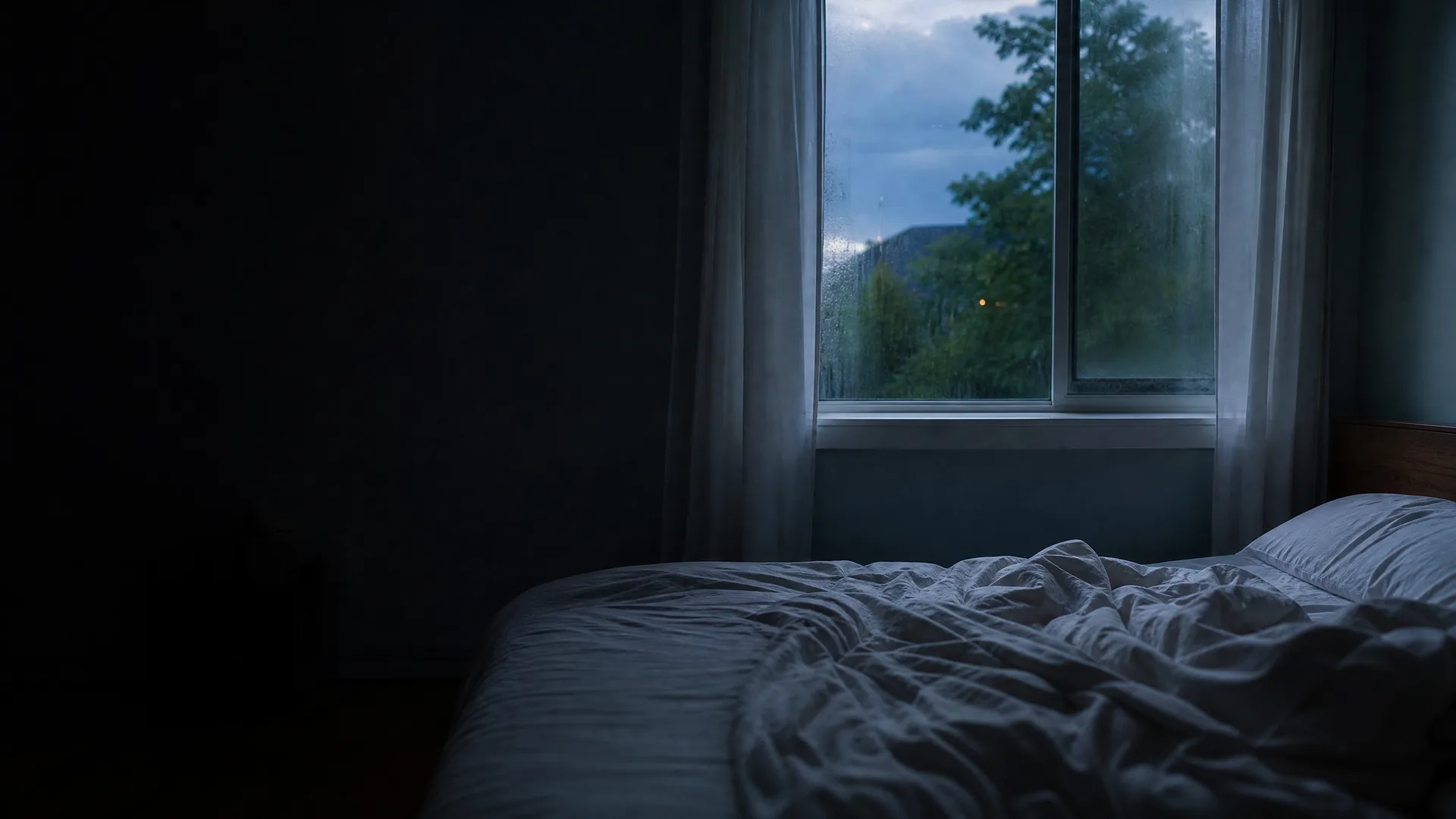
A dimly lit bedroom with an unmade bed and pillows beside a window with sheer curtains, showing trees and a hill under a dusky sky outside.

It's past eleven on a January night and you're still in the living room because the bedroom upstairs won't warm past 62. The vents are pushing air but it's not hot, just barely taking the edge off, and the thermostat says 68 while your skin says otherwise. You've got a blanket over your lap and the dog is curled against your leg instead of his usual spot by the door. Outside, the unit's been running non-stop for an hour, no real cycling, just grinding. You keep checking the thermostat screen like it might change something. It's 9°F out past Joliet tonight, and the house knows it.


Hand off the search today

Describe what your heat pump is doing once, in one form.

Sending the form costs nothing.

Defrost is normal, stuck defrost isn't

Every heat pump in this climate frosts up on the outdoor coil when temperatures drop, and it's built to handle that. A timer or sensor tells it to reverse briefly, melt the frost, then switch back to heating. That cycle should run a few minutes every hour or two at most. If the outdoor unit stays coated in ice, or the fan isn't spinning, or the house never recovers that warm feel after a cycle ends, the defrost control or a sensor has likely failed, and the frost just keeps building instead of clearing.

What the outdoor coil needs

The outdoor coil is where the heat pump pulls warmth from the outside air, even when it's cold, and it can only do that if air moves freely across it. Leaves, ice buildup beyond a normal frost cycle, or anything stacked against the unit cuts that airflow down. Less airflow means less heat getting pulled in, so the compressor works harder for a smaller return. A coil that stays blocked or iced over for hours, rather than clearing on its own cycle, is usually a sign something in the system has stopped working as it should.

A woman in a dark knit turtleneck sweater reclines on a couch under a cream knit blanket, looking down at an open book, with a lit table lamp and framed pictures behind her.
A smiling middle-aged man in a dark green sweater sits at a candlelit table with wine glasses and a plate of greens in a dimly lit interior.

A heat pump has to make a lot of small decisions on its own, and most of those decisions run through parts the homeowner never sees. The reversing valve is what flips the system between heating and defrost, and if it sticks halfway, cold air comes out while the outdoor fan keeps turning like nothing's wrong. The system also depends on a sensor to tell it when the outdoor coil has cleared of frost. When that sensor fails, defrost mode runs long past when it should, and the house just sits there getting colder. Refrigerant pressure feeds into that same decision, so a system low on charge doesn't just heat less, it starts misreading when to defrost at all. Even a compressor that hums without starting usually points to a failed start capacitor rather than the compressor itself. And the backup heat strips, the thing most homeowners expect to save them, only fire if the control board sends the signal. A bad relay there, or airflow choked by a dirty filter, can shut the whole system down on a safety trip that looks like no heat at all.

What's actually going wrong inside

  • A reversing valve switches the system between heating and defrost, and when it sticks partway, the unit can blow cold air while the outdoor fan still runs.
  • The outdoor coil needs a sensor or thermostat to tell it when frost has cleared, and a failed sensor leaves the unit stuck in defrost far longer than it should run.
  • Refrigerant charge that's low won't just cut output, it changes the pressure the system reads to decide when to start and stop defrost cycles.
  • A compressor that hums but doesn't start is usually a failed start capacitor, not a worn-out compressor itself.
  • The auxiliary heat strips only warm the air if the air handler's control board tells them to engage, and a bad relay there can leave the house cold even with power running to the unit.
  • Airflow across the indoor coil has to stay within a narrow range, and a clogged filter or blocked return can trip the system into a safety shutdown that reads as no heat at all.
A gray outdoor heat pump unit on a concrete pad beside a house with horizontal lap siding, connected by conduit and a flexible line to a wall-mounted disconnect box, with low shrubs and mulch nearby.
Fan turning, coil clear, nothing iced around the base, and the disconnect box tidy on the wall.
An outdoor air conditioner condenser unit on a concrete pad beside a house with beige horizontal siding, with conduit running from an electrical box on the wall.
Same setup, but check the line running down to the unit and the coil behind the fan for frost or damage.
  1. Thermostat calls for heat and signals the reversing valve.

  2. Reversing valve directs refrigerant to pull heat from outdoor air.

  3. Outdoor coil absorbs heat even in cold air.

  4. Compressor raises the refrigerant's temperature before it moves indoors.

Power here costs 17.91 cents per kilowatt-hour

At 17.91 cents per kilowatt-hour, every hour the backup strips carry the house instead of the heat pump shows up on the bill. A heat pump that's actually pulling its share of the load keeps that cost down. One that's stuck leaning on the strips all night is why the bill climbs faster than the house warms up.

EIA-861 2025

Where this leaves you tonight

  • A heat pump blowing cool air at night is either stuck in defrost or outmatched by the cold, and both point to the same next step.
  • The reversing valve, the defrost sensor and the outdoor coil are the parts most likely behind a heat pump that won't hold its heat.
  • Backup strips can keep the house livable for a night, but they run up the bill fast at Will County power rates.
  • A heat pump cycling on and off without warming the vents needs a diagnosis, not a thermostat adjustment.
  • Finding a licensed contractor, checking reviews and getting quotes takes time you don't have on a cold night.
  • Sending one form here replaces calling around and explaining the same problem to several contractors.

A heat pump that won't warm the house past a certain point is telling you something specific. Either it's cycling through defrost more than it should, or Joliet's cold has pushed past what the unit can pull from the outdoor air on its own. Both come back to the same parts: the reversing valve, the defrost sensor, the outdoor coil. One of those is likely not doing its job, and no setting on the thermostat changes that.

The backup strips will carry the house for a night. They're drawing far more power than the heat pump alone would, and at 17.91 cents per kilowatt-hour that adds up fast if the system stays stuck. A heat pump pulling its share keeps that cost where it belongs. One leaning on the strips all night doesn't.

What's left is the part that has nothing to do with refrigerant or sensors: finding someone licensed to look at it. That usually means searching, reading reviews you can't verify, calling two or three contractors, and explaining the same cold bedroom and the same warm-but-not-hot vents to each one before you even get a quote. None of that fixes the heat pump. It just delays getting to someone who can.

Sending one form here skips that part. The house still needs the same diagnosis and the same repair. You just stop being the one who has to track down who does it.

A gray outdoor heat pump unit mounted on a concrete pad beside a dark horizontal-slat clad house wall, with gravel ground and shrubs nearby.

Hand off the heat pump problem

RepairHeat PumpWill County, IL
Step 1 of 2

What ZIP code is the job in?