Cook County sees its share of storms
Cook County logged 780 severe weather events between 2015 and 2024, including 548 damaging wind events, 171 hail events and 33 tornadoes. Any of those can reach the outdoor unit sitting beside your house.
Takes about a minute. No obligation.
Cook County logged 780 severe weather events between 2015 and 2024, including 548 damaging wind events, 171 hail events and 33 tornadoes. Any of those can reach the outdoor unit sitting beside your house.
A heat pump with bent fins or a dented cabinet can keep running for weeks before it struggles. If your outdoor unit took a hit this year, it's worth having someone look at the coil and fan even if you haven't noticed a problem yet.

NOAA nClimDiv, 1991–2020 normals
A heat pump in Cook County runs in summer heat thick enough to feel and in winters that ask it to pull heat out of cold air for months at a stretch.
That kind of duty wears parts down faster, so a repair call here is as likely to turn up heat strain or a winter-tired part as storm damage.




Electricity in Cook County ran 18.08 cents per kilowatt-hour in 2025, higher than most US counties pay. A heat pump that's struggling pulls more power to do the same job, whether that's a dirty coil making it work harder or a low charge making the compressor run longer to reach the temperature on your thermostat. At that rate, a small problem left alone shows up on the bill every single month until someone fixes it. Getting it looked at soon costs less than letting it run inefficiently through another summer or winter.
Hail and wind can leave a heat pump running on bent fins or a dented coil for weeks before it struggles, and a bad outage only makes that worse. If the unit took a hit this year, or if the power has been out at your place, have someone check the coil and fan before you need the heat or the AC to work without question.
Find a contractor
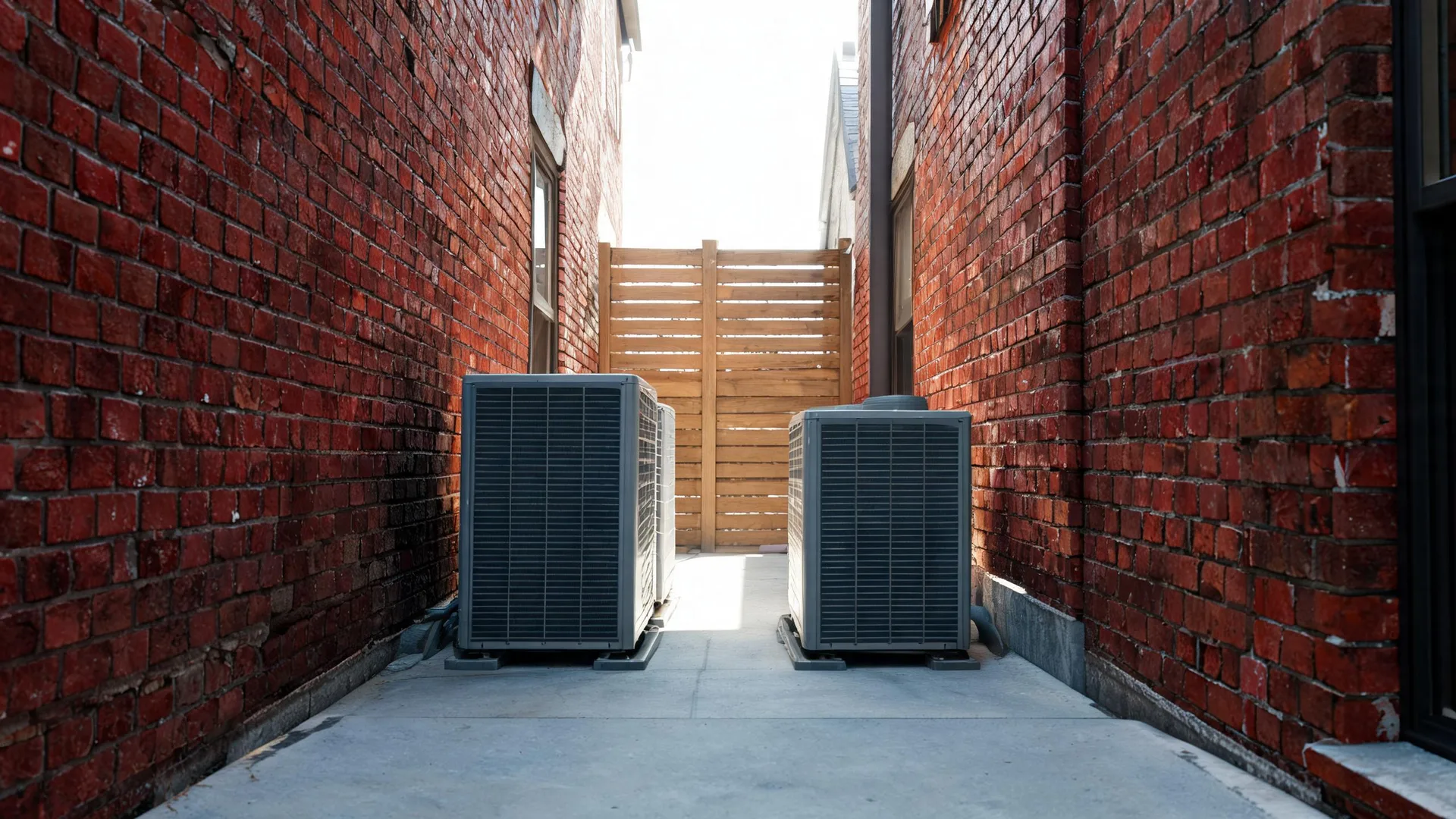
The clip beside this runs a full day and night because that's the job. A heat pump doesn't get the summer off or the winter off here, and it doesn't get to shut down when a storm knocks the power out for a few hours. If yours is already acting up, that long duty cycle is probably part of why. A tech checking it out should look at it with that in mind, not just patch whatever's loudest and send you on your way. Ask what they found and why it's failing now, not just what they're replacing.
A heat pump switches direction to heat and cool, and that reversing valve is a common point of failure. It can stick partway, leaving the system blowing cold air when it should heat, or running nonstop without ever satisfying the thermostat. The defrost board and sensor that tell the outdoor coil when to shed frost fail the same way: a stuck sensor can keep the unit in defrost too long, or never trigger it at all, and ice builds up on the coil until airflow stops.
Unlike a furnace that either fires or doesn't, a heat pump low on refrigerant usually keeps running. It just stops moving enough heat to keep up, so the house falls behind in the coldest or hottest stretches. The compressor is what pays for that over time. Compressors are built to pump refrigerant, not air, and running one low on charge for months wears it out well before its time. Any repair that doesn't find and fix the leak is a temporary one.
Before you call anyone, there are a few things worth checking yourself. Look at the thermostat first. Make sure it's set to the mode you want and the temperature is actually past where the house is sitting, since a setting bumped by accident looks exactly like a system that won't respond. Check your breaker panel for a tripped breaker or a blown fuse. A heat pump that won't start at all often just lost power, not a part. Walk outside and look at the unit itself. If the outdoor coil is caked in ice, snow, or leaves, or if something is blocking airflow around it, that alone can stop a heat pump from keeping up. Check your air filter too. A filter clogged with dust chokes off airflow and can make the system struggle or ice up even when every part inside is fine. If the unit runs but blows air that feels wrong for the mode you're in, or it won't shut off no matter what the thermostat says, that points to something mechanical rather than anything you can fix by looking at it.
If your heat pump came with the house, find out when that was. Half the homes in Cook County were built in 1961 or earlier, which puts a lot of equipment well past a normal service life even with good upkeep. A unit that old is more likely to be on its second or third major part failure than its first. Before you pay for a compressor or a coil replacement, ask the tech straight out how many years they'd expect to get out of this unit if the repair works. If the answer is one or two, put that number next to the repair bill and decide from there.