AC blowing warm air in Joliet, IL

RepairCentral ACWill County, IL
Step 1 of 2

What ZIP code is the job in?

Warm air from the vents usually means the outdoor unit isn't running, even though the indoor fan is. That points to a few things: a tripped breaker, a bad capacitor, a failed contactor, or the system low on refrigerant. Sometimes it's simpler, a thermostat set to "on" instead of "auto", which runs the fan nonstop whether or not the compressor is cooling. If the air is only a little warm and the outdoor unit sounds like it's running, the coil may be iced over, often from low airflow or a dirty filter, and it needs to thaw before it can cool again. A dirty outdoor coil, packed with cottonwood or cut grass, can do the same thing in July. None of this gets better on its own, and running the system while the compressor can't keep up adds wear that turns a small repair into a bigger one.

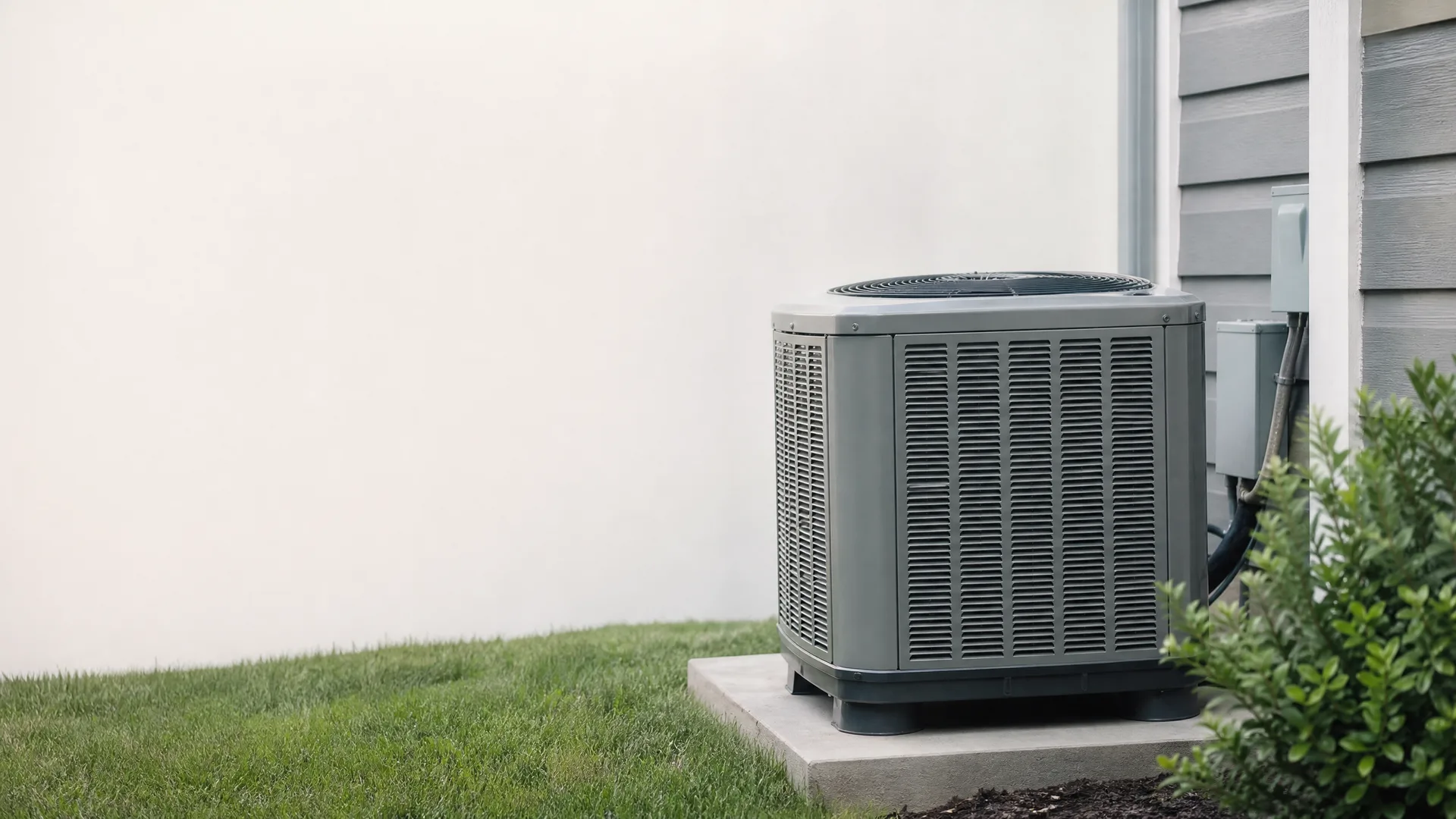
A gray outdoor air conditioner condenser unit on a concrete pad beside a house corner with lap siding and a stucco wall, surrounded by mown green grass.

Why the outdoor unit matters most

The compressor and condenser fan sit outside, and that's where the actual cooling happens. The indoor blower just moves air, it doesn't cool anything on its own. So if that blower is running but the outdoor unit sits silent, you get air movement without any drop in temperature. Walk out to the unit. If the fan on top isn't spinning and you don't hear the compressor's low hum, that confirms the outdoor side has shut down or never started.

An outdoor air conditioning condenser unit on a concrete pad beside a house with light stucco and lap siding, with mown grass to the left and a green shrub to the right.

What a refrigerant leak looks like

A system low on refrigerant doesn't fail all at once. It cools less and less as the charge drops, so you might notice the air getting warmer over several days rather than overnight. Ice on the copper line running to the outdoor unit is a common sign, even in July heat. Running the system with low refrigerant for long stretches puts more strain on the compressor, which is the most expensive part to replace in the whole system.

Is it just blowing air, or is something wrong

Walk outside while the thermostat is calling for cool. If the outdoor unit is silent, not even a hum, that confirms the problem. You might notice the vents feel room temperature instead of cold, or the air has a faint musty smell, which can mean the system is low on refrigerant. A warm house in July heat is more than an inconvenience. Running the blower for hours without the compressor working doesn't cool anything, it just runs up your electric bill while the house stays warm. Left alone, some of these problems, a failing capacitor especially, tend to get worse until the system stops running at all.

A smiling man in a blue denim shirt over a white tee sits at a light stone kitchen counter with a grey mug and a bowl of oranges and bananas, with pendant lights and shelving behind him.
A smiling bearded man in a grey long-sleeved shirt sits at a kitchen counter with a dark mug, with a dining table, pendant light and glass doors onto greenery behind him.
A bearded man in a dark green knit sweater smiles and looks off to the side while standing at a kitchen counter with a white mug of coffee, with open shelving, a potted tree, and a dining table near large windows behind him.
A man with dark curly hair in a dark green sweater stands smiling and looking to the side in a kitchen with white cabinets, a potted plant, a stone countertop with a ceramic mug, and a dining area with framed art in the background.
An outdoor air conditioning condenser unit on a concrete pad beside a house with white horizontal lap siding, with an electrical disconnect box and insulated refrigerant line on the wall and a shrub over mulch to the right.
The outdoor unit is running quiet and clean, lines wrapped, nothing rattling against the siding.
An outdoor air conditioner condenser unit on a concrete pad beside a house with light horizontal lap siding, with an electrical disconnect box and conduit on the wall behind it.
Here the unit sits weathered and worn, the kind of age that wears down a capacitor or contactor before summer's done.
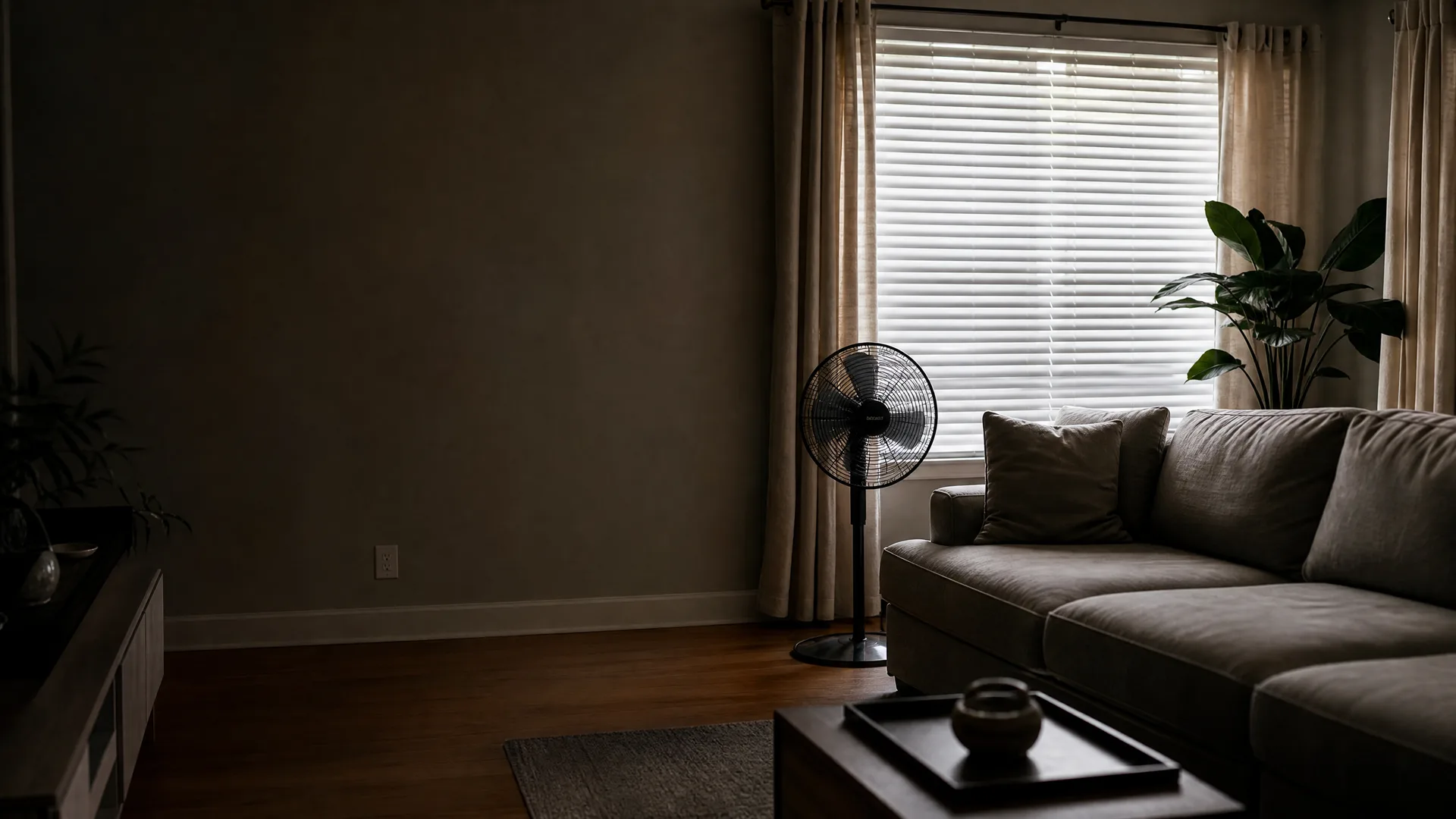
A dimly lit living room with a gray sectional sofa, a standing pedestal fan, a curtained window with blinds, a potted broad-leaved plant, a wooden coffee table with a tray and lidded jar, and a rug on dark wood flooring.

By three in the afternoon the sun is flat against the blinds and you've got them shut tight, the living room striped with light at the edges. The floor fan is going next to the couch, pushing the same warm air around instead of cutting it. You keep checking the vent above the window, holding your hand up to it like it might change. It doesn't. Outside, Will County is deep in a July afternoon, the kind where the grass stops moving and the air just sits. You already bumped the thermostat down five degrees. Nothing changed. The fan on the couch is working harder than the system is.
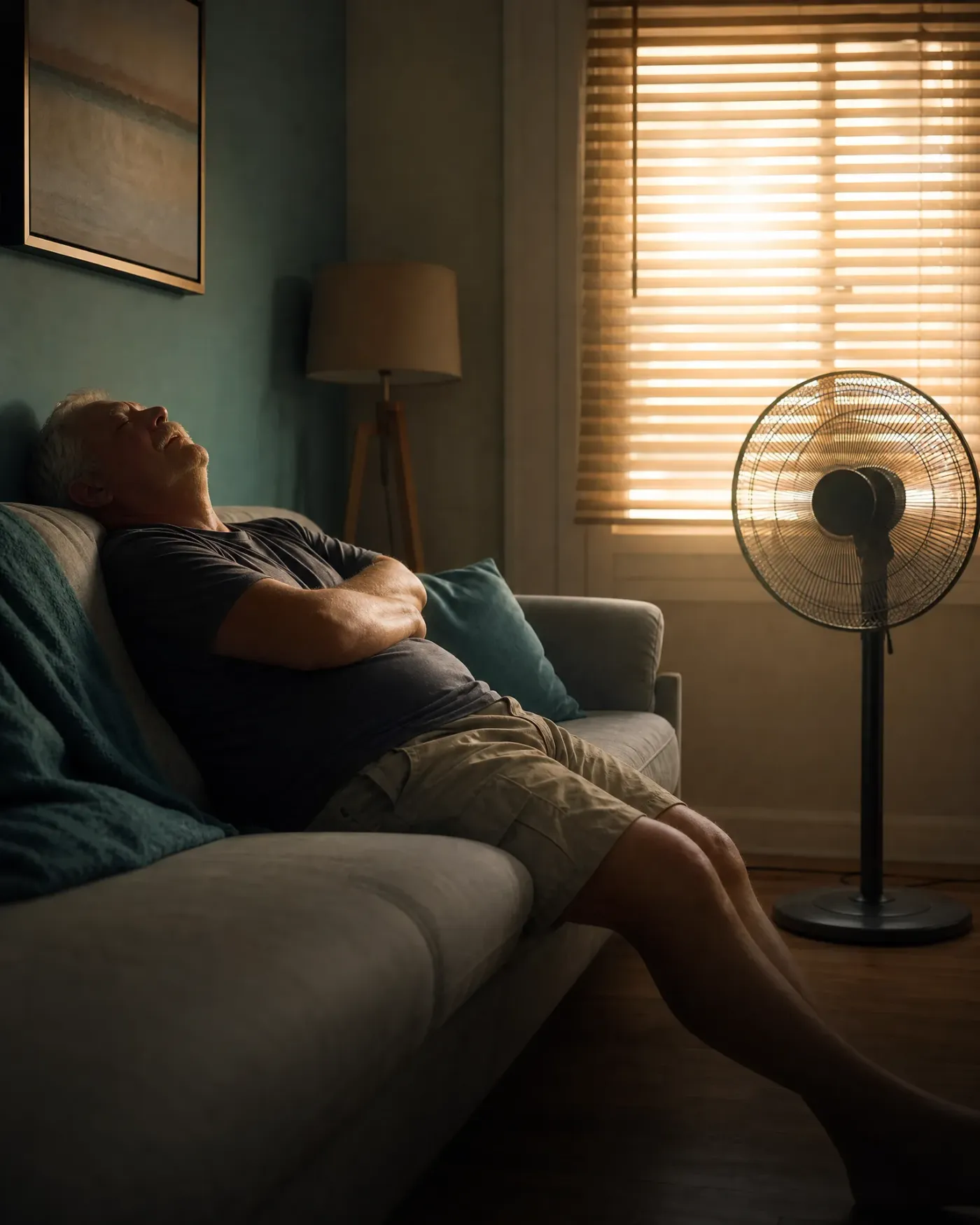

Why does my AC blow warm air only in the afternoon?

Afternoon is when it hits hardest. The system runs fine in the morning, keeps the house comfortable, then by two or three o'clock the air coming out feels room temperature or close to it. You check the thermostat, it's still calling for cool, but the relief just isn't there anymore. It's not random. There's a reason it happens at that time of day and not earlier.

The system is losing the fight against heat load as the day peaks

Afternoon is when the sun has heated the house the most and the outdoor unit has been running the longest without a break. A system that's low on refrigerant or struggling with a weak capacitor can keep up in the cooler morning hours, then fall behind once the heat load climbs. The compressor works harder, and if it's already marginal, that's when it starts short cycling or losing capacity. Summers in the Joliet area push a system through long stretches of high heat and humidity, and a unit with a developing problem usually shows it first on the hottest, longest-running part of the day, not first thing in the morning when the load is lighter.

  1. Thermostat calls for cool and sends power to the contactor.

  2. Contactor closes and sends power to the compressor and condenser fan.

  3. Compressor compresses refrigerant, condenser fan pulls outside air across the coil.

  4. Cooled refrigerant travels inside to the evaporator coil.

An outdoor air conditioning condenser unit on a concrete pad beside a house with white horizontal vinyl siding, with a gray electrical disconnect box and refrigerant lines on the wall behind it.
Before you get your air conditioner repair
A gray outdoor air conditioner condenser unit on a concrete pad beside a house with white horizontal siding and a brick foundation, with a wall-mounted disconnect box and conduit, and a green shrub with mulch at left.
After you get your air conditioner repair
A gray outdoor air conditioner condenser unit on a concrete pad beside a house with horizontal siding and a stone veneer foundation, surrounded by mulch, ornamental grasses, and shrubs, with a conduit and disconnect box on the wall.

Send one request and you're done looking

A licensed pro who repairs air conditioners in Will County gets your request.

Send it once and finding someone is no longer on you.

Send it today

It costs nothing to send, and you don't have to hire anyone.

Cooling runs June through August

Your AC only has to earn its keep three months out of the year here, June through August. When it quits on you in that stretch, there's no mild stretch to wait it out in, you need the outdoor unit back up fast.

NOAA nClimDiv 1991-2020

A gray outdoor air conditioner condenser unit on a concrete pad beside a house with horizontal siding and a stucco foundation, with a disconnect box and conduit on the wall, decorative gravel, mulch, and a shrub nearby.

Clean and clear

The pad around this unit is bare, just gravel and mulch, nothing closing in on the coil. Air moves through the grille the way it should. A unit kept clear like this pulls outside air across the coil without a fight, and that's half of what keeps your house cold.

An outdoor air conditioning condenser unit on a concrete pad beside a house with horizontal lap siding, with an electrical disconnect box and conduit on the wall, mulch and a green shrub to the right, and a concrete walkway in the foreground.

Coil caked with debris

Grass clippings and dirt have packed into the grille here, the kind of buildup that happens over a season when nothing's checked. A coil this dirty can't shed heat well, so the compressor works harder for less cooling, and a weak capacitor gets pushed closer to failing.

Call for Repair or Wait It Out

Call a repair tech

  • A licensed tech can check the capacitor, contactor, and refrigerant charge in one visit and tell you which one failed.
  • Most of the parts that cause warm air, the capacitor, the contactor, a tripped breaker, are quick fixes once someone's looked at the unit.
  • If the compressor itself has failed, a tech can tell you that too, before you spend money chasing the wrong part.
  • Someone local who services this equipment every summer has likely seen your exact failure before and knows what to check first.
  • A repair now gets the outdoor unit running again without waiting to see if the problem gets worse or fixes itself.

Wait it out

  • If the breaker tripped on its own with no other cause, flipping it back on might solve it with no repair needed.
  • A dirty outdoor coil sometimes just needs a hose rinse, something you can try before calling anyone.
  • Waiting costs you comfort every afternoon the system runs this way, and in Will County summers that adds up fast.
  • A failing capacitor or contactor usually doesn't fix itself, it tends to get worse until the compressor won't start at all.
  • If the unit is low on refrigerant, that means a leak somewhere, and leaving it alone lets the leak keep draining the system.
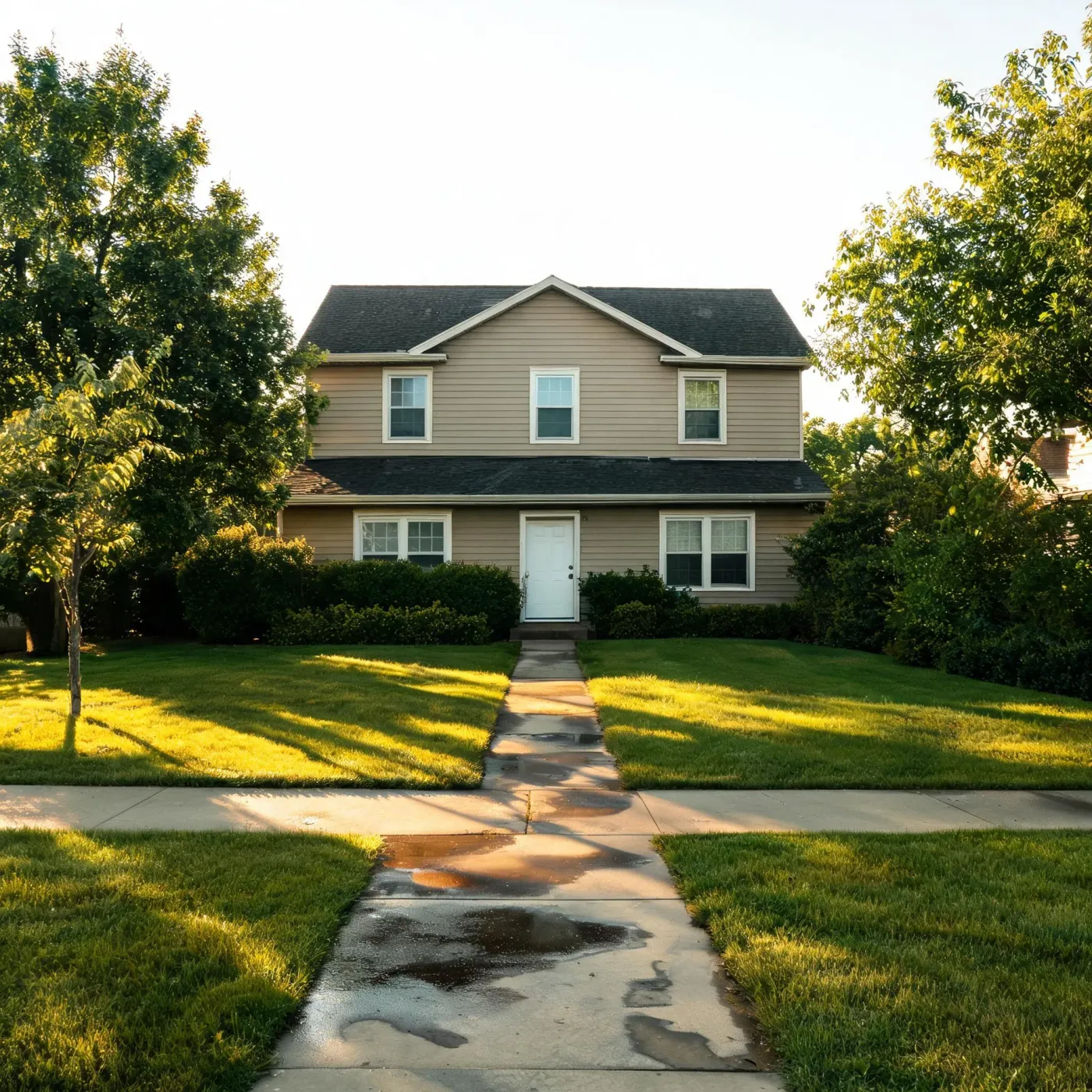
A two-story house with tan horizontal siding and a dark shingled roof, fronted by a mowed lawn, trimmed shrubs, leafy trees on both sides, and a concrete walkway leading from a wet sidewalk to the white front door.

That stretch of June, July and August here holds a dew point around 63°F, and that's the kind of air that leans on an AC all day long, not just in the heat of the afternoon. Humid air carries more heat into the house through the walls and windows, so the compressor runs longer to pull it back out. A unit that's already weak, a tired capacitor, a contactor on its way out, won't make it through a summer like that. It's why warm air from the vents tends to show up right when you need the cooling most. Source: regional climate data for Will County, IL.

NASA POWER T2MDEW

A bearded man in a navy T-shirt sits on a light-colored couch indoors, smiling while looking down at a laptop screen in the foreground, with a framed picture and a potted plant blurred behind him.
A bearded man in a plaid flannel shirt stands indoors looking out a window at snow-covered conifers, with a ceramic mug on the wooden sill and wooden cabinets behind him.

Warm Air, Clear Answer

  • Warm air from the vents with the outdoor unit silent points to a breaker, a capacitor, a contactor, or low refrigerant.
  • A licensed tech can check all three in one visit and tell you which part failed.
  • None of those repairs wait well once July and August settle in around Joliet.
  • A contractor who works this equipment every summer in Will County has seen which part usually gives out first.
  • Sending one request gets you matched with one local contractor, not a string of calls from companies you don't know.
  • Once that match is made, finding someone to fix it stops being something you have to chase down yourself.

A silent outdoor unit with warm air still coming through the vents means the problem sits outside, in one of a short list of parts. A breaker, a capacitor, a contactor, or the refrigerant charge. None of those are mysteries once someone qualified looks at the unit, and none of them get better left alone through a Will County summer. The compressor either runs or it doesn't, and every day it doesn't is a day the house holds heat it shouldn't.

A contractor who services this equipment around Joliet every summer has already seen what usually fails first on units like yours, because the same few parts give out the same few ways, year after year. That's not guesswork on their end, it's the job. Sending a request through this page puts you in touch with one licensed, local contractor, not a handful of companies competing for the callback. One visit, one diagnosis, one person who can point at the part and tell you what it'll take to get the compressor running again.

Once that request is sent, the work of tracking someone down is off your plate. You're not calling around, not comparing strangers, not waiting to hear back from three different places at once. You get matched, and from there it's a conversation with someone who already knows what a dead compressor on a hot afternoon in Will County usually comes down to.

A dark wood cabinet with a paneled door and a ceramic pot of green foliage on top stands in a beige-walled room with white baseboard, a window at left, hardwood floor, and a patterned area rug.
A dark wood glass-front cabinet holding folded towels, woven baskets and a ceramic vase stands in a bathroom corner beside a window, with a potted fern and stacked towels on top and a freestanding tub partly visible at left.
A woven basket holding a green cushion and a cream fringed knit throw sits on a wood floor in a room corner beside a window and a dark wooden cabinet.
Corner of a room with a dark wood cabinet topped by a round vase, a linen curtain at a window, white baseboard, oak plank flooring with sunlight patches, and a woven jute rug in the foreground.
A dark wood sideboard against a pale wall holds a shallow stone bowl and a round ceramic vase with leafy branches, with sunlight from a curtained window falling across the wall, wood floor and woven rug.

Finding a pro stops being your job

The pro who gets in touch is licensed in Illinois and works in Will County.

Reach a local pro

No charge to send it. You decide if you hire them.