








AC not cooling in Joliet, IL

Send the request today and stop worrying about who to call.

Send it today

If your AC is running but the air coming out isn't cold, the problem is usually low refrigerant from a leak, a dirty outdoor condenser coil that can't shed heat, or a failing compressor. If it's not running at all, check the thermostat batteries and the breaker first, since a tripped breaker or dead batteries can look like a bigger problem than it is. A frozen evaporator coil is common too, often from restricted airflow, a dirty filter, or low refrigerant, and it needs to thaw before a technician can diagnose it properly. In Joliet, summers get humid enough that a struggling system runs almost constantly trying to keep up, which puts extra strain on an already weak part and tends to turn a small issue into a full breakdown right when you need the cooling most. Whatever the cause, running the system while it's blowing warm air can make the underlying problem worse, so it's worth having someone look at it before you keep using it.

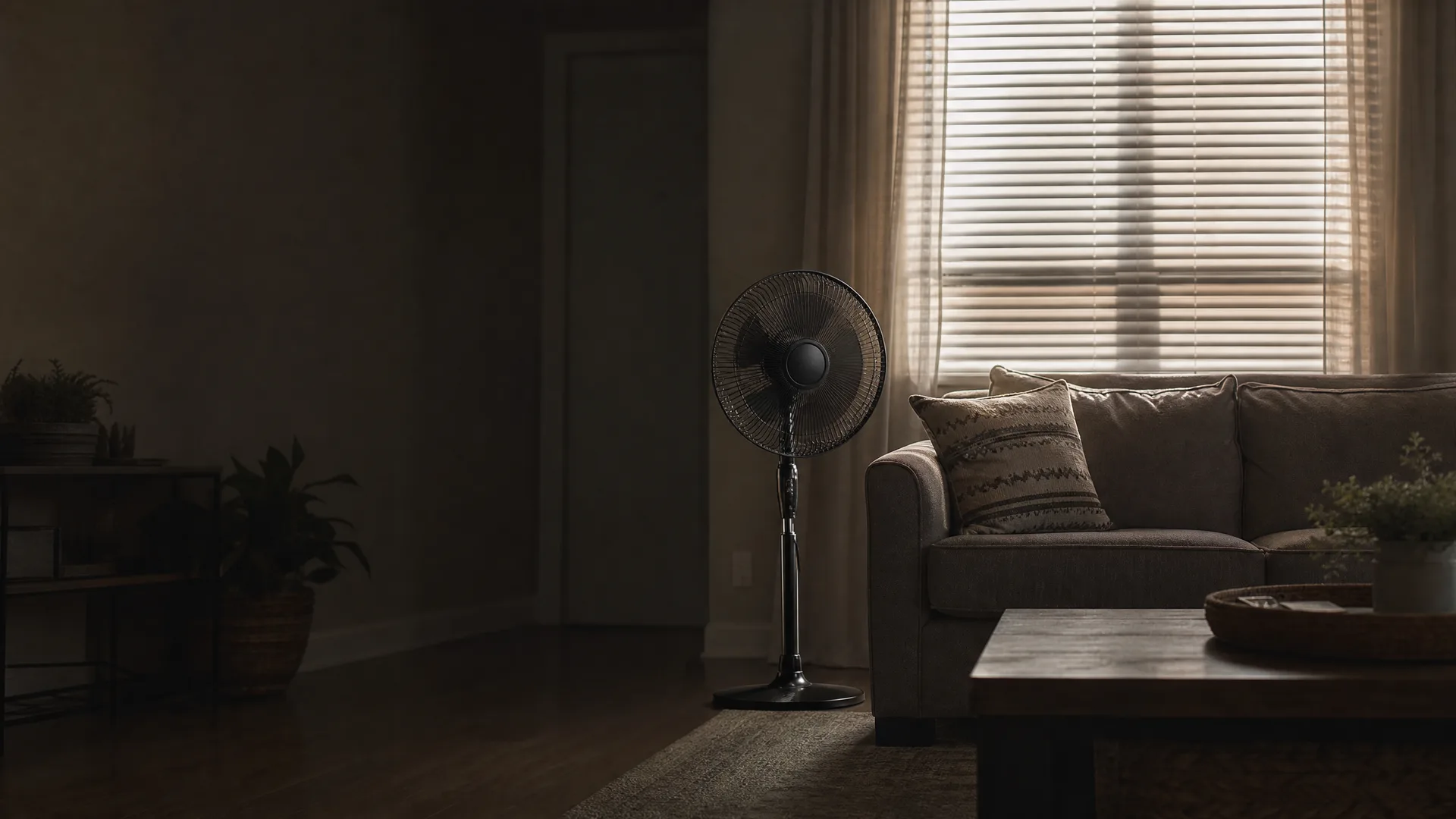
A dimly lit living room with a black pedestal fan on a wood floor beside a gray sofa with a patterned pillow, a wooden coffee table in the foreground, potted plants at left, and a curtained window with blinds behind.

It's a little after three and the blinds are shut against the sun, thin lines of light cutting across the carpet. The floor fan by the couch is turning on its highest setting, pushing the same warm air around the room. You've already checked the vent above the kitchen window twice, hoping it was your imagination. It wasn't. Outside, the heat is sitting heavy over Will County the way it does most July afternoons, the kind of day the AC shouldn't even be working hard for. You press your hand flat against the vent again. Barely a whisper of air, and none of it cold.

Call Now or Check It Yourself First

Call Today

  • A dirty condenser coil or low refrigerant won't fix itself, and running the system while it struggles can shorten the compressor's life.
  • A licensed tech in Will County who works on these systems every summer can usually spot the cause within the first visit.
  • If the system is blowing warm air on a 90 degree afternoon, every extra day without a fix means another day of strain on the compressor.
  • A stuck contactor or failing capacitor can leave the outdoor unit unable to start at all, and that won't change on its own.
  • Getting one contractor out now means the diagnosis happens before the problem gets worse, not after.

Wait It Out

  • A thermostat set wrong or a tripped breaker can look like a major failure when it isn't, and either one takes a minute to check yourself.
  • If the air coming out is cold but weak, a clogged filter might be the whole story, and swapping it costs nothing but a trip to the store.
  • Some rattles or short cycling come and go on their own once outdoor temperatures drop in the evening.
  • Waiting through a mild stretch costs little if the house stays tolerable and nothing else seems wrong.
  • A system that's cooling, just not as fast as usual, may just need a thermostat schedule adjustment rather than a repair.
An outdoor air conditioner condenser unit on a concrete pad beside a house with light horizontal siding, with a small electrical disconnect box on the wall, mulch and shrubs at left, and a plain white wall and concrete slab at right.

Why the outdoor coil matters

The condenser coil sits outside and its job is to shed the heat your house gives up. When grass clippings, cottonwood seed or a season of dust cake the fins, the coil can't dump that heat into the air, so the refrigerant stays hotter than it should and the air from your vents warms up. A coil like that doesn't clean itself off in a storm. Someone has to rinse the fins from the inside out.

A dark gray outdoor air conditioner condenser unit on a concrete pad beside a house with horizontal siding and a plain light wall, with mulch and grass in the foreground and a conduit and electrical box on the wall.

What a refrigerant leak does over time

Refrigerant doesn't get used up the way fuel does. A system that's low on it has a leak somewhere in the line set or the coil itself, and the level only drops further as time passes. Running the AC while it's low makes the compressor work harder to move less heat, and that strain is what shortens its life. A gauge check tells a tech how low the charge has gotten and points toward where the leak is.

Cooling runs June through August

Three months is all your AC gets to prove itself here, June through August, and most of that work lands on the hottest days when the condenser coil and compressor are already under the most strain. A unit that's struggled quietly through one of those stretches usually won't make it through the next.

NOAA nClimDiv 1991-2020

A gray-haired man in a dark long-sleeve shirt sits on a gray sofa in a living room, looking toward a sunlit window with sheer curtains.
A gray-haired man in a dark green sweatshirt sits on a sofa in a living room, looking toward a bright window, with a houseplant, lamp, fireplace and framed art behind him.
A gray-haired bearded man in a dark green collared sweater sits on a sofa in a living room with a window, houseplant, floor lamp and bookshelves, looking off to the side.
A gray-haired man in a dark green sweater sits on a sofa in a sunlit living room, looking off to the side, with a framed landscape painting, dining table and shelving behind him.

One request and it's handed off

A licensed pro who repairs air conditioners in Will County gets your request.

No charge to send it. You decide if you hire them.

A gray outdoor air conditioning condenser unit on a concrete pad beside a house with horizontal siding and a stone veneer base, with a wall-mounted disconnect box and conduit, next to a shrub bed and a concrete patio.

Running fine

The condenser sits clean on its pad, coil fins clear, fan spinning free. Air moves through the house at the temperature you set, and the compressor cycles on and off without strain. This is what the outdoor unit looks like when nothing's asked more of it than it can give.


An outdoor air conditioner condenser unit on a concrete pad beside a house with light gray vinyl siding, with a gray electrical disconnect box and conduit on the wall, gravel beds and dried plants nearby, and a concrete sidewalk in the foreground.

Struggling to keep up

This one's older, the gravel bed around it gone to weeds, and a unit left like this is often the one losing the fight against a Will County July. Dirt and neglect outside usually mean trouble on the refrigerant side too, and the compressor pays for it.

Why does your house feel warmer upstairs than downstairs?

You've probably noticed the air moving but not cooling, or a room upstairs that stays warm no matter where you set the thermostat. Some houses run the unit nearly nonstop and the electric bill climbs without the house ever feeling right. You might hear the outdoor unit humming without the usual fan noise, or notice ice forming on the copper line running into the house. A musty smell from a vent can mean moisture sitting somewhere it shouldn't. None of these fix themselves, and a system pushed hard while it's struggling puts more wear on the compressor, the part that costs the most to replace.

A gray outdoor air conditioning condenser unit on a concrete pad beside a house with horizontal lap siding, with a conduit and electrical disconnect box on the wall and a green shrub in mulch to the right.

A coil that can breathe

The fins are clear and the fan spins free, so the unit can push the heat from inside your house out into the air. The compressor cycles on and off the way it's supposed to, and it's not working any harder than the summer day asks of it.

A weathered outdoor air conditioner condenser unit on a concrete pad beside a house with horizontal vinyl siding, with a conduit and disconnect box on the wall to the right.

A coil working blind

Dirt and old leaves have built up around the base and across the grille. With the fins packed like that, the coil can't shed heat fast enough, so the compressor runs longer to make up for it. Left alone, that strain is what wears a compressor out early.

An outdoor air conditioner condenser unit on a concrete pad beside a house with horizontal lap siding, with a conduit running to a gray electrical disconnect box on the wall.
Before you get your air conditioner repair
A gray outdoor air conditioner condenser unit on a concrete pad beside a house with horizontal lap siding, with a wall-mounted disconnect box and conduit at left and a green shrub and mulch bed at right.
After you get your air conditioner repair

You wait and see if it sorts itself out, maybe the thermostat catches up by evening, maybe it's just a hot day doing what hot days do in Will County.

Most of the time it doesn't sort itself out, because a dirty coil or a slow refrigerant leak gets worse under load, not better, and a tech caught it before the compressor paid the price.

A middle-aged woman with shoulder-length dark hair, wearing a gray cardigan over a cream top, sits in an upholstered armchair and looks toward a sunlit window, with a shelf holding framed pictures and a plant behind her.
A woman with dark hair in a bun sits wrapped in a chunky knit blanket on a couch with a child resting his head on her shoulder, eyes closed, beside a lit lamp and bookshelf indoors.

Where That Leaves You

  • Warm air from a running AC usually means a dirty condenser coil, low refrigerant, or a compressor on its way out.
  • No air at all points first to the thermostat batteries and the breaker before anything more involved.
  • Running a struggling system through more hot days in Will County only adds strain to a compressor that's already working too hard.
  • A licensed tech local to Joliet who services these systems all summer knows which of these three causes shows up most often.
  • One contractor gets the call for your repair, not a handful of companies competing for the job.
  • Once you know which of these it is, the fix is usually straightforward from there.

Warm air from a running system or no air at all, both point to a short list of causes, and most of them are things a tech can identify quickly once they're standing in front of your unit. A dirty coil gets cleaned. A refrigerant leak gets found and sealed. A dead thermostat battery gets swapped. None of it stays a mystery for long.

What matters now is not letting a hot system sit and struggle through another string of Joliet summer days while you wait. A compressor that's already straining doesn't get better on its own, and the longer it runs that way, the more it's asking of a part that may already be on its way out.

The tech who shows up to look at it will be licensed and local, someone who works on air conditioners in Will County all summer and has seen what usually fails first in houses like yours. You're not handing your number to a stack of companies who'll all call asking for the job. One contractor gets matched to you, and that's who shows up, already knowing the three or four things most likely to be wrong before they test for any of them.

That's the whole question this page set out to answer: warm air points to the coil, the refrigerant, or the compressor, no air points to the thermostat and the breaker first. Everything past that is a tech's job, not a guess you make standing in a hot living room.

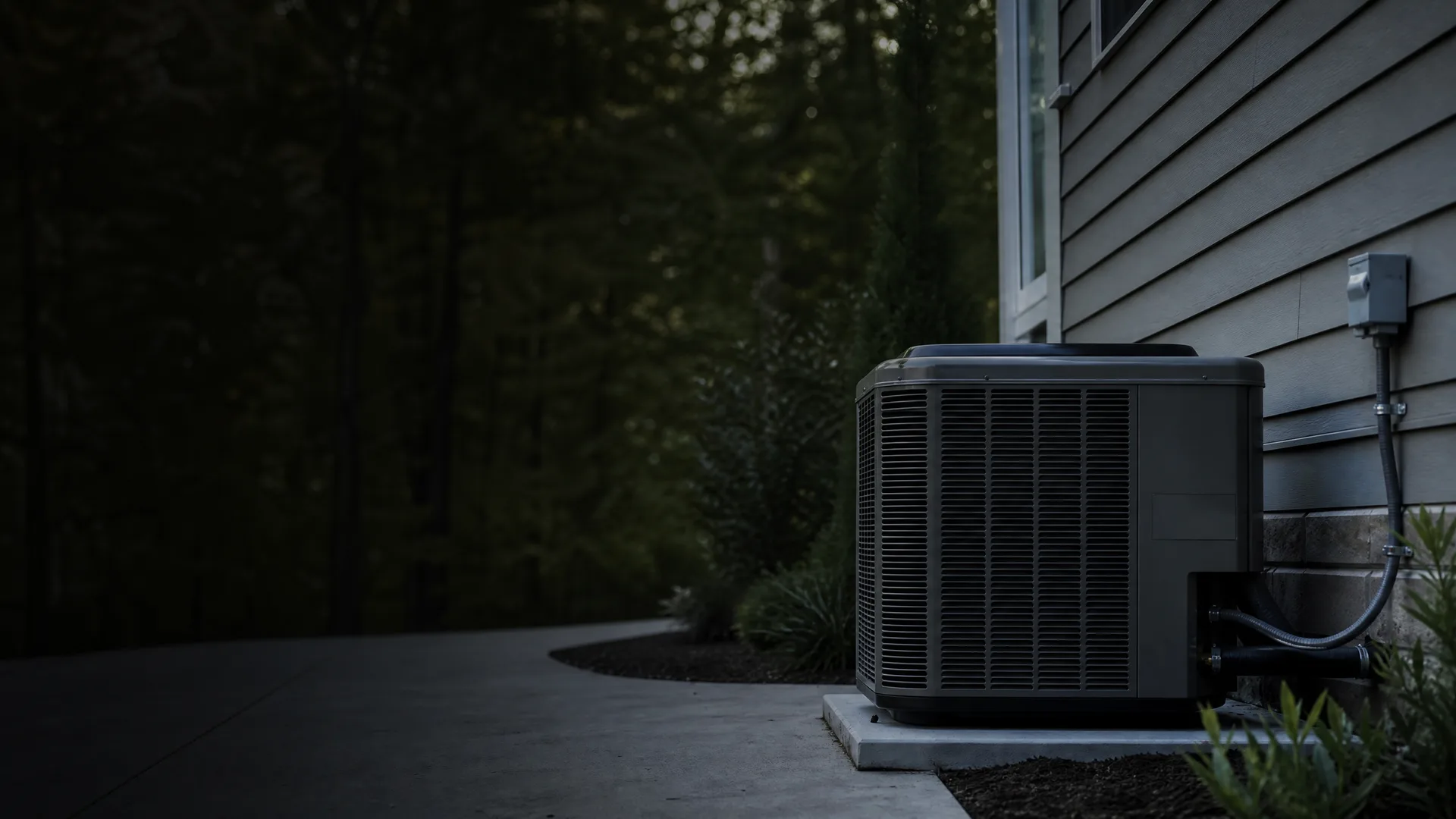
An outdoor air conditioner condenser unit sits on a concrete pad beside a house with horizontal lap siding, with a refrigerant line, electrical disconnect box, a concrete driveway and dark trees in the background.

Done looking for an air conditioner pro

The pro who reaches out is licensed in Illinois.

RepairCentral ACWill County, IL
Step 1 of 2

What ZIP code is the job in?