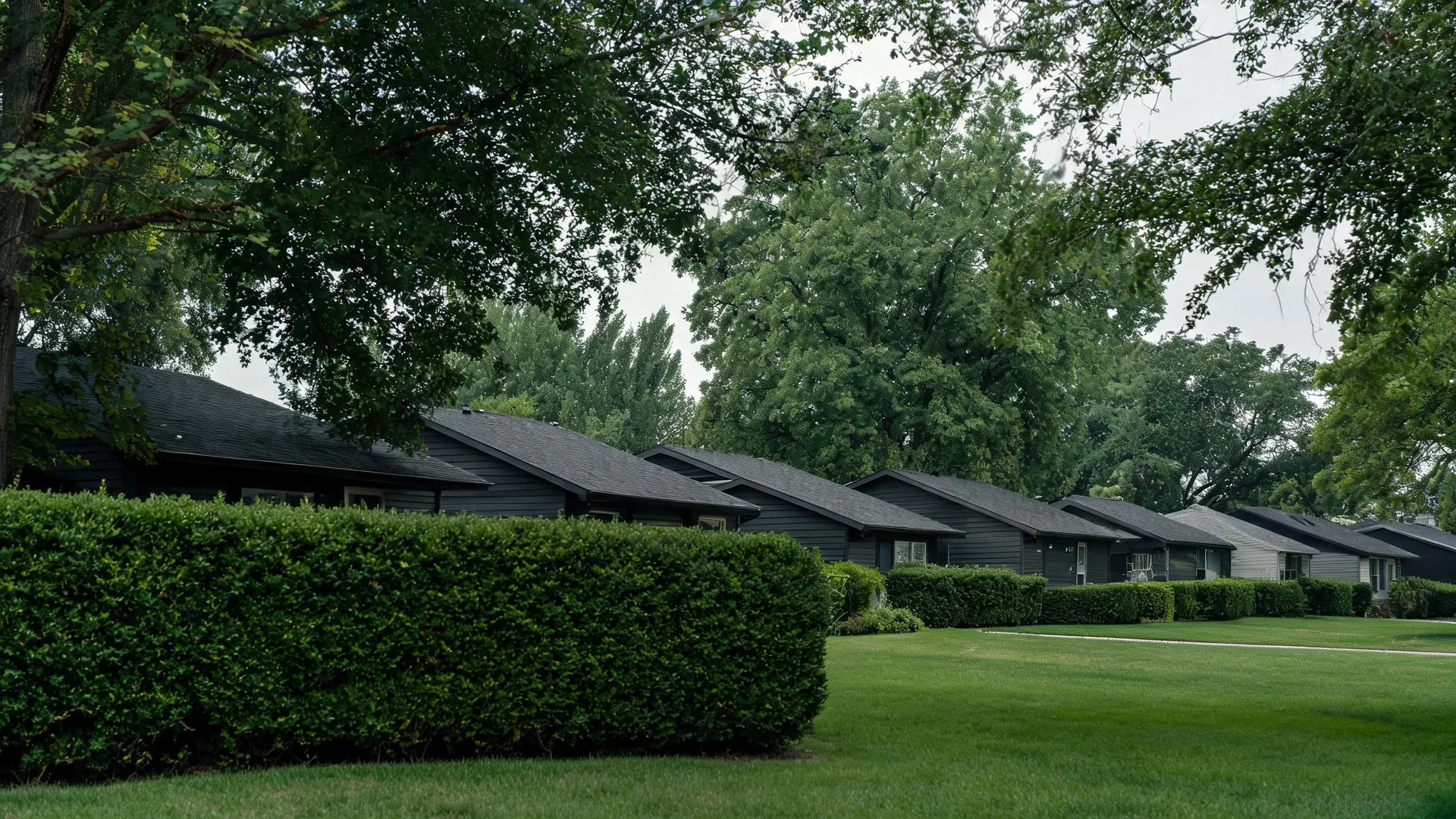






A row of dark-sided single-story houses with gabled shingle roofs behind a long trimmed hedge, with mown lawn in the foreground and large leafy trees overhead under an overcast sky.

AC Installation in Chicago, IL

Tell us about the job

Takes about a minute. No obligation.

New system or replacementCentral ACCook County, IL
Step 1 of 2

What ZIP code is the job in?

Cook County saw 780 severe weather events between 2015 and 2024. Most of that was wind: 548 damaging wind events over the same stretch, enough to put a tree limb through an outdoor unit or drive hail into the coil. Hail hit 171 times, and 33 tornadoes touched down. Any new AC gets installed outside, exposed to whatever comes through. Statewide, 16% of households lost power for a day or more in 2024, and a cut that long during a heat wave turns a new system into a box sitting idle on a pad.

3 months
June through August, your air conditioner is on duty
82°F
the average summer afternoon it cools against
171 hail events
in ten years, and hail bends the fins on outdoor coils
13.4 SEER2
the federal minimum any new unit must meet
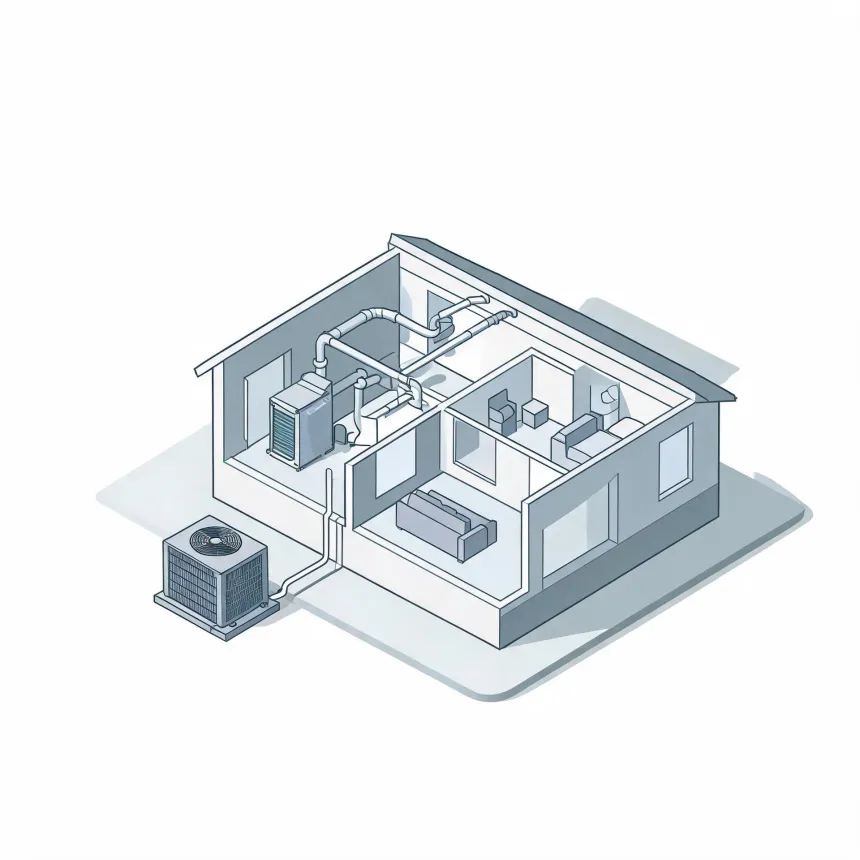
Isometric line illustration of a cutaway house showing interior rooms, a furnace or air handler with ductwork, and an outdoor condenser unit beside the building.
Your air conditioner works hardest from June through August.

NOAA nClimDiv, 1991–2020 normals

Gas heats 80.2% of the homes in Cook County.

Most new installs here pair the AC with the gas furnace already in the house, not a full electric swap.

Half the homes here were built before the systems that cool them

Half the homes here were built by 1961
Climate zone 5A
Power here costs 18.08 cents per kilowatt-hour
Get it installed before summer needs itCooling here runs June through August, so May is the month to put a new system in.

Cook County falls under climate zone 5A, a cool zone where the winter heating load counts for more than the summer cooling load. Any split-system central air conditioner installed here, under 45,000 Btu an hour, has to hit at least 13.4 SEER2, the federal minimum that took effect for units built from January 1, 2023 on. That rating measures how much cooling the system wrings out of each watt-hour of power it draws over the summer, not how big a house it can handle. A unit that meets the number still has to be sized to the house. Some systems on the market beat 13.4 SEER2 by a wide margin, and a federal tax credit is available for qualifying high-efficiency equipment.

Plan the install around what the weather here will do to it

Think about where the new unit will sit and what stands between it and the next storm. A pad clear of overhanging limbs and a clear line of sight for the crew to check it after high wind both matter more here than in calmer places. Ask the contractor what happens to heat and hot water if the power goes out while the system is new.

Find a contractor
A man in a dark long-sleeved shirt, cap, and tan work pants walks up concrete steps toward a teal front door, carrying a canvas tool bag in his right hand, with a potted shrub beside the porch.
A gray cylindrical air conditioning condenser unit mounted on a concrete pad next to a light-colored vinyl-sided house exterior.

Match the new system to the house you actually have

Half the homes here were built in 1961 or earlier, which means plenty of ductwork and electrical panels have never been matched to modern equipment. Before the new unit goes in, have the contractor check the panel's capacity and look at the duct run the AC will tie into. A system sized right for the house still needs a panel that can carry it and ducts that can move the air it pushes.

Bigger isn't better

An oversized air conditioner cools the air fast and shuts off before it pulls the moisture out of it. The house ends up cold and clammy, and the compressor spends the day cycling on and off instead of running a steady stretch. That short cycling wears on the compressor and the contactor faster than normal runtime ever would.

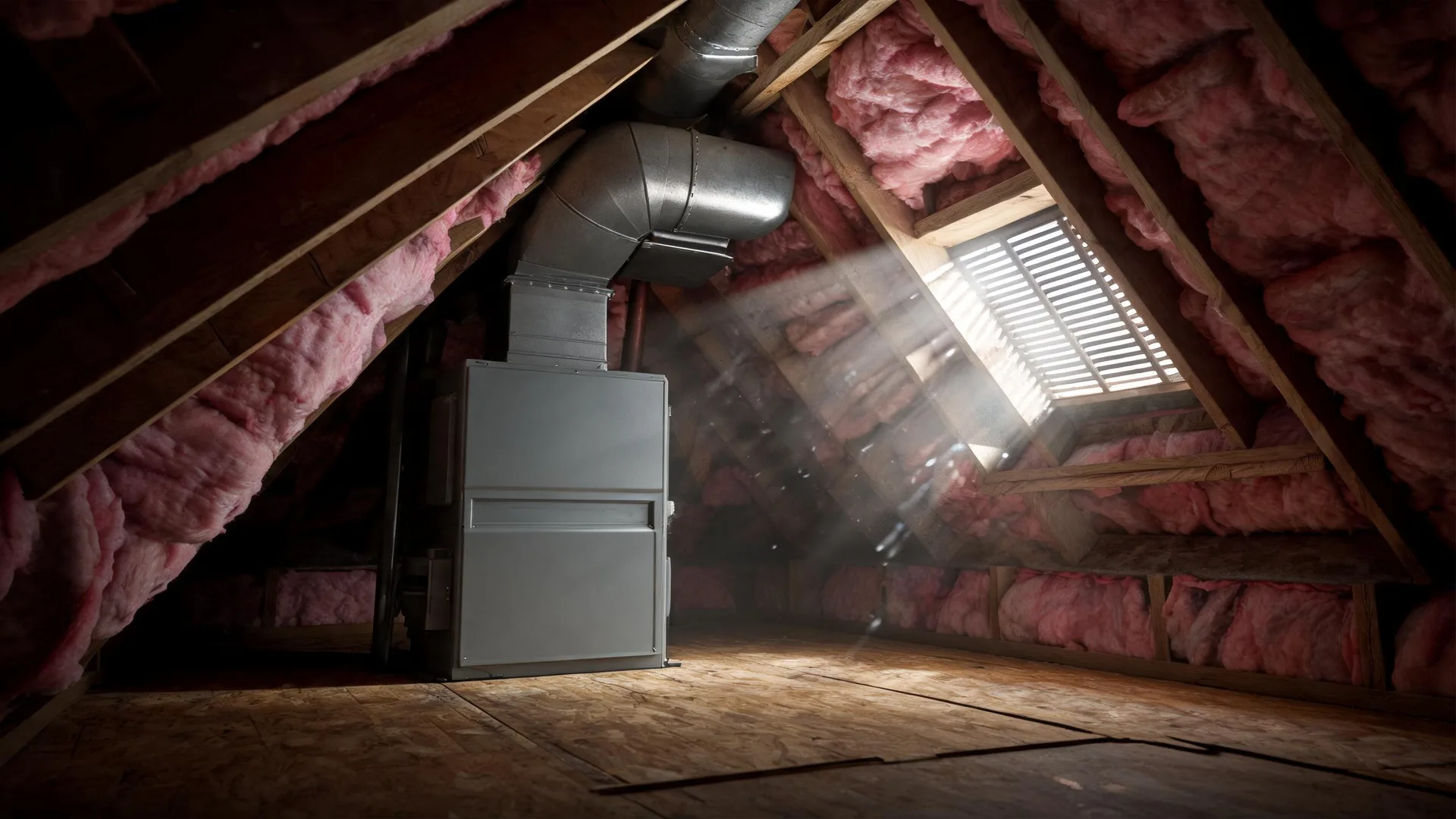
The math behind the size

A contractor works out the right size with a load calculation, room by room: square footage, window area and orientation, insulation, ceiling height, how many people live there. Two houses the same size can need different sized systems once the windows and walls are counted. Skip that step and the install is a guess wearing a number.

Aerial view of a gray central air conditioning condenser unit on a concrete pad next to a house with vinyl siding.

Going above the federal minimum saves little here, about $20 a year.

  • A higher-efficiency unit$180 a year
  • A new unit at the federal minimum, 13.4 SEER2$200 a year

Estimates for a typical Cook County home, from EIA household energy data, Illinois fuel prices and NOAA climate normals. Your home will differ.

Installation starts with the old equipment coming out, if there is any, and the line set, pad and electrical disconnects getting inspected along the way. The outdoor unit gets set on a level pad, away from the wall, with room for air to pull through the coil. Indoors, the evaporator coil goes in above or beside the furnace, and the refrigerant lines get run and connected between the two. A tech pulls a vacuum on the line set to clear out air and moisture before any refrigerant goes in, then checks the charge against what the system calls for. The furnace blower and the new coil have to work together, so airflow gets checked across the duct run, not just at the unit. Once it's running, a good installer checks the temperature split between the air going in and the air coming out, and listens for anything that shouldn't be there before calling the job done.