







Three lit brick homes on a tree-lined residential street photographed at dusk.

AC Maintenance in Chicago, IL

Tell us about the job

Takes about a minute. No obligation.

Tune-up, service, or cleaningCentral ACCook County, IL
Step 1 of 2

What ZIP code is the job in?

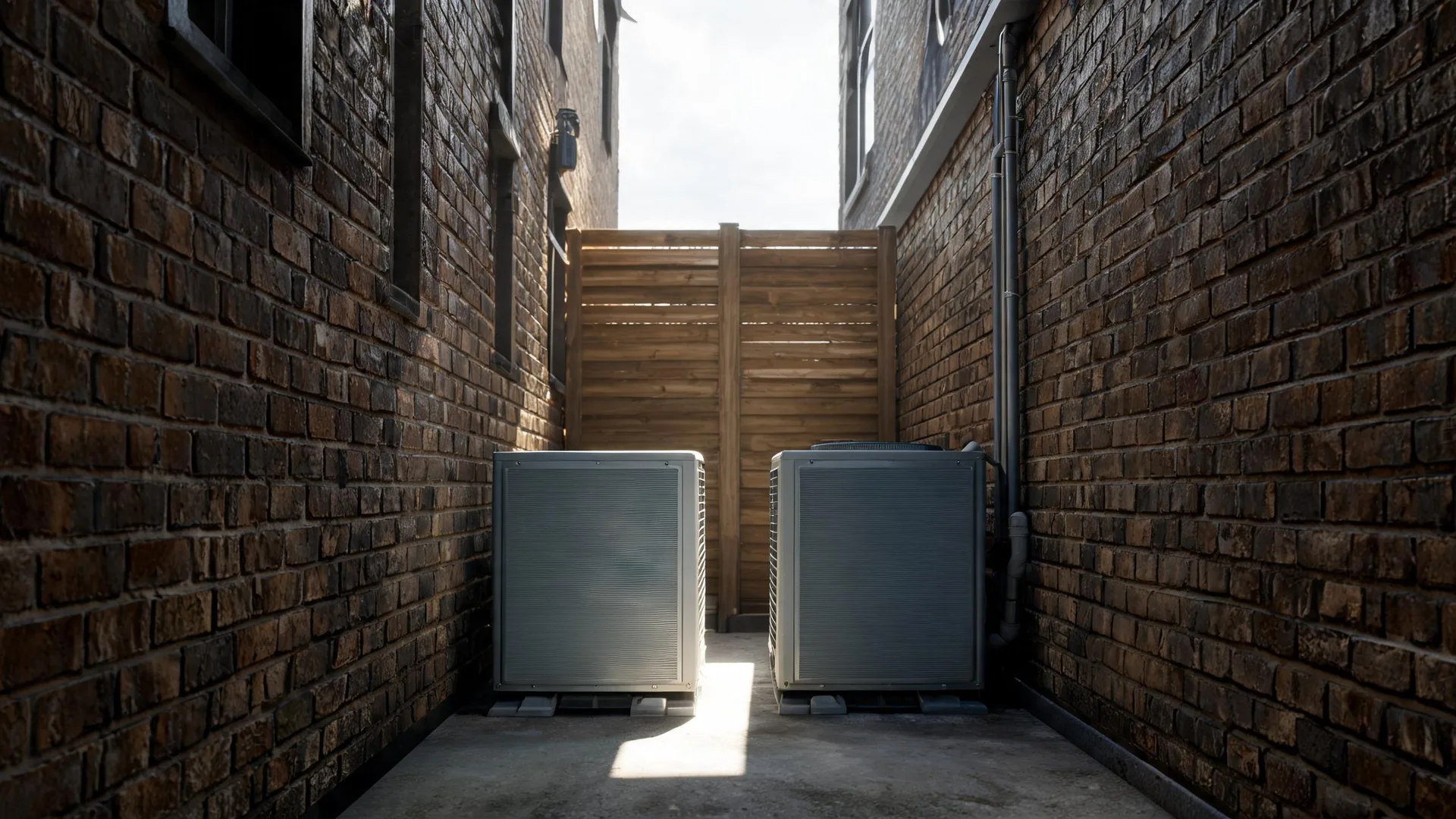
Cook County saw 780 severe weather events between 2015 and 2024. Damaging wind accounted for 548 of them, hail hit 171 times, and 33 tornadoes touched down somewhere in the county. An outdoor AC unit sits right out in that path, exposed to wind-driven debris and hail with nothing over it. A bent fin or a cracked fan blade doesn't always stop the unit cold. Sometimes it just runs worse and costs more to run, for months, before anyone notices. A pre-season check catches that damage while it's still minor, and it's worth doing before the storms start rolling through.

3 months
June through August, your air conditioner is on duty
82°F
the average summer afternoon it cools against
171 hail events
in ten years, and hail bends the fins on outdoor coils
548 wind events
in ten years, and wind drives debris into outdoor units
Isometric cutaway illustration of a single-story house showing interior rooms with furniture, attic ductwork connected to an indoor air handler, and an outdoor condenser unit on a pad linked by refrigerant lines.
Your air conditioner works hardest from June through August.

NOAA nClimDiv, 1991–2020 normals

Cooling in Cook County starts in June and stays on through August.

Have the AC checked in May, before it has to run hard.

Three sticky, 82-degree months ask a lot of one machine

Cooling runs June through August
Summer afternoons average 82°F
548 damaging wind events from 2015 to 2024
Half the AC units here are older than the houses they coolHalf the homes in Cook County were built in 1961 or earlier, and a lot of that original equipment has already been replaced at least once.

A tune-up before June is also the time to have someone check the unit over after months of sitting outside through whatever weather came through. Wind and hail don't wait for the off season to let up. With 548 damaging wind events and 171 hail events logged in the county over the past decade, a cabinet can take a hit any time of year. A loose panel, a bent fin, debris caught in the fan, all of it sits there quietly until the compressor kicks on for the first hot day and has to push against it. A pre-season check catches that before three months of 82-degree afternoons wear it into something bigger.

Get the outdoor unit checked before summer puts it to work

Weather like that doesn't skip the off season. A unit that sat outside through winter should get looked at before it has to run hard again. Have the cabinet, fins and fan checked now, while a bent part is still a bent part and not a bigger repair.

Find a contractor
A man in a dark shirt, tan work pants and a backward cap, seen from behind, carries a waxed canvas tool bag up porch steps toward a dark teal front door with a glass-paned top, beside a potted shrub.
An outdoor residential air conditioning condenser unit mounted on a concrete pad, surrounded by gravel with a blue sky in the background.

Skip it long enough and the machine pays for it

A dirty coil or a clogged filter makes the compressor work harder to move the same amount of heat out of the house. It still cools, so nothing seems wrong, but it's drawing more power and running longer to get there. Left alone, that extra strain is what burns out a capacitor early or cooks a compressor before its time. The refrigerant charge drifts low over the years too, from small leaks at the fittings, and a low charge makes the compressor run hot without anyone knowing until it trips off on its own protection. None of this announces itself. The unit just quietly asks more of its parts every season until one of them gives out.

Refrigerant pressure doesn't lie

A gauge reading on the refrigerant lines shows a weak compressor or a slow leak long before the house feels warm. The system can still blow cold air while running on a charge that's dropped enough to shorten the compressor's life. That number only comes from hooking up gauges, not from standing in front of the vent.

Electrical parts wear out quietly

A capacitor loses its strength slowly, and a contactor's points pit and burn a little more each time it cycles. Either one can still start the unit right up to the day it doesn't. Checking them on purpose, instead of waiting for a no-start call, is the only way to catch one close to failing.

Aerial view of a gray outdoor air conditioning condenser unit mounted on a concrete pad next to a house with vinyl siding.

Book your AC tune-up in May, before homes here start needing cooling in June.

  1. Jan
  2. Feb
  3. Mar
  4. Apr
  5. May
  6. Jun
  7. Jul
  8. Aug
  9. Sep
  10. Oct
  11. Nov
  12. Dec

A tune-up checks the refrigerant charge, cleans the coils, tests the capacitor and tightens the electrical connections.

A proper tune-up starts outside at the condenser. The coil fins get washed clean of dirt and grass clippings so the unit can actually shed heat, and bent fins get combed back into shape. The fan blade gets checked for cracks and the motor bearings for play. Inside, the evaporator coil and the drain line get looked at, since a clogged drain backs up and spills water right where nobody wants it. The refrigerant charge gets measured with gauges, not guessed at, because a system can blow cold air for a while on a charge that's already low. Electrical connections get tightened, since a loose wire heats up and burns before it ever trips a breaker. The capacitor and contactor get tested under load rather than just eyeballed, because both can look fine sitting still and fail the moment the compressor tries to start.