






A lit brick residential street at dusk showing a row of two-story homes with covered porches and mature trees.

AC Repair in Chicago, IL

Tell us about the job

Takes about a minute. No obligation.

RepairCentral ACCook County, IL
Step 1 of 2

What ZIP code is the job in?

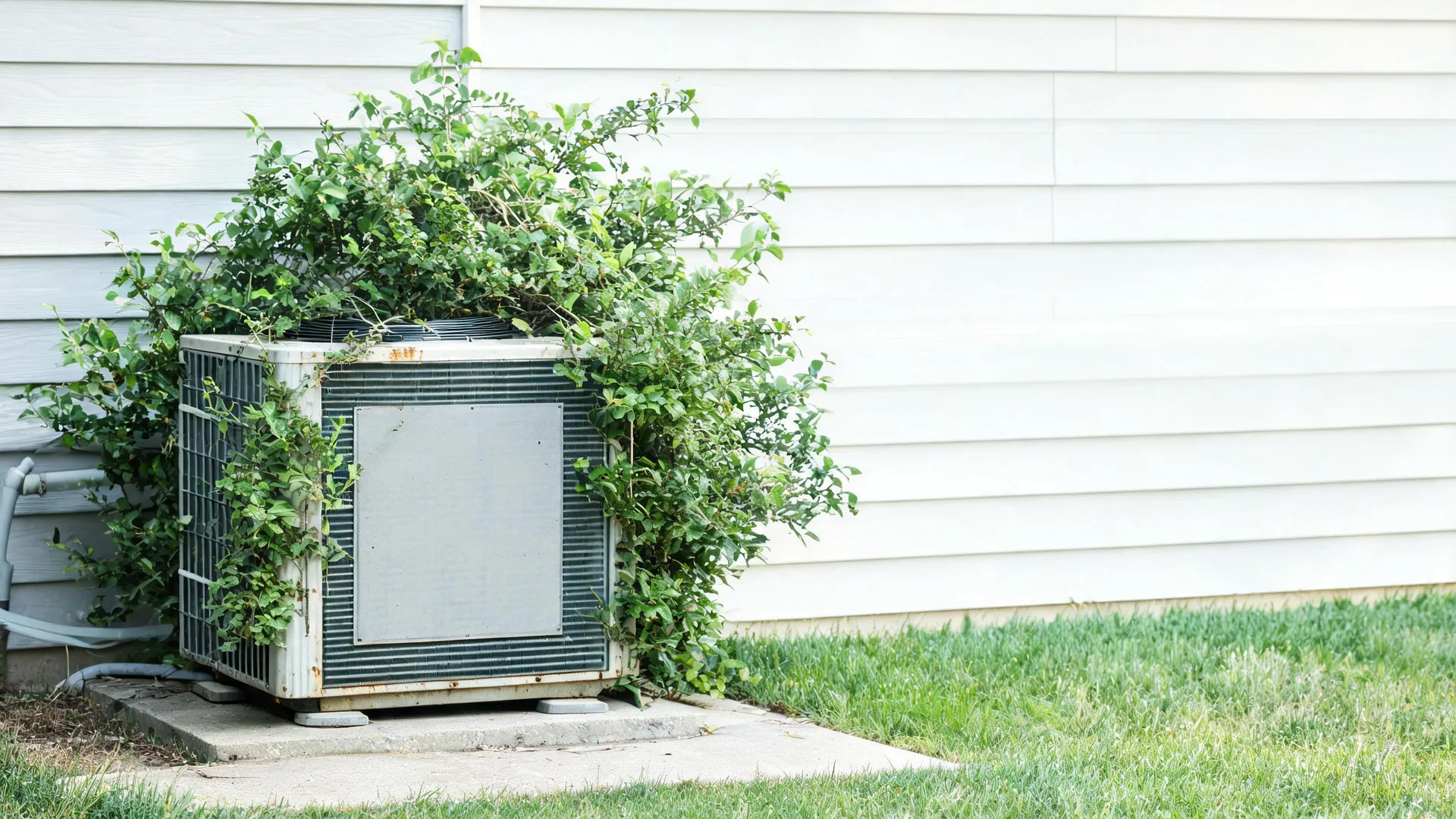
Cook County saw 548 damaging wind events and 171 hail events between 2015 and 2024. That's weather that reaches outdoor condenser units directly, since they sit outside and take the brunt of it. Hail dents the fins and bends them shut, and wind throws branches and debris into the cabinet. A unit can take a hit like that and still run, at least for a while, with the coil or the fan working harder than it should. If a storm has come through and your AC took anything against it, worth having someone look even if the air coming out still feels cold.

3 months
June through August, your air conditioner is on duty
82°F
the average summer afternoon it cools against
171 hail events
in ten years, and hail bends the fins on outdoor coils
548 wind events
in ten years, and wind drives debris into outdoor units
Isometric cutaway illustration of a house showing attic ductwork, an indoor air handler, and an outdoor condenser unit connected by lines.
Your air conditioner works hardest from June through August.

NOAA nClimDiv, 1991–2020 normals

A dirty condenser coil makes the whole system work harder to dump heat outside.

That strain is what pushes a capacitor or a compressor toward early failure.

Three months of hard running is what wears this system out

Cooling runs June through August
Summer afternoons average 82°F
548 damaging wind events from 2015 to 2024

Half the homes in Cook County were built in 1961 or earlier. If your AC came with a house that old, it's probably not the original unit, but it may still be older than you'd guess, especially if nobody's replaced it since they bought the place. An older system has had more years of hard summers to wear down the same parts: the compressor, the capacitor, the coil. At some point a repair just buys a little more time on a machine that's already most of the way through its life. Before paying for a major fix, it's worth asking whoever looks at it how many years it likely has left.

If this storm damaged your AC, don't wait for it to fail outright

A unit that took hail or wind damage can keep running for a while before it quits. If a storm's come through recently and your outdoor unit was in its path, get it looked at now, while it's still just a repair.

Find a contractor
A man in a cap, navy long-sleeved shirt and tan work pants carries a worn canvas tool bag up porch steps toward a teal front door, with a potted shrub beside the entry.
A gray metal air conditioning condenser unit mounted on a concrete pad in a flat grassy field under a partly cloudy sky.

Three months of running hard, every summer

Three months isn't long, but 82 degrees on an average afternoon means this system barely gets a break in that stretch. It runs long hours to hold the house down, and that's the load behind most midsummer breakdowns. When a technician checks a system that's been running hard all summer, they're looking at the same parts under that strain: the capacitor, the coil, the compressor. Get the actual part named before you pay for the fix, not just told it's worn.

The sounds that mean something's wrong

A click that repeats instead of starting the compressor, a hum with no air moving, a rattle that wasn't there before. These aren't noises to wait out. A compressor that clicks and won't start is trying to draw more current than it should, and each attempt adds strain. Grinding usually means a motor bearing is going. Caught early, most of these are a single part replacement. Ignored, they take other parts down with them.

What the air itself tells you

Warm air from the vents, weak airflow, or a system that runs constantly without the house cooling down all point to the same kind of problem: it's losing capacity. That can be a refrigerant leak, a failing compressor, or a coil so dirty it can't absorb heat anymore. Water pooling near the indoor unit means a clogged condensate line, and that one gets worse fast since the water has to go somewhere. None of these fix themselves with time.

An outdoor air conditioning condenser unit positioned beside a blue-sided house at sunset.

A new air conditioner would save little on running costs in Cook County, so the repair decision comes down to the unit's condition.

  • A new one at the federal minimum, 13.4 SEER2$200 a year
  • An older air conditioner$220 a year

Estimates for a typical Cook County home, compared with an older unit built to the previous federal minimum, from EIA household energy data, Illinois fuel prices and NOAA climate normals. Your home will differ.

Repair makes sense when a part like a capacitor or contactor has failed.

Replacement makes sense when the compressor has failed or the system uses R-22 refrigerant, which is no longer made.

A repair is worth it when the part that failed is the only thing wrong with the system. A capacitor, a contactor, a fan motor: these fail on their own, and swapping one doesn't tell you anything bad about the rest of the unit. It's a different question when the compressor is the part that's gone. That's the most expensive component in the system, and a shop that quotes a compressor swap on an old unit is often quoting most of the price of a new one anyway. Refrigerant leaks sit in between. A leak at a fitting is a fair repair. A leak in the coil itself tends to mean the coil is failing in more than one place, even if only one spot is showing it right now. The other thing worth asking is how the rest of the system has been behaving before this breakdown. A unit that's needed a few service calls in the last couple of years is telling you something different than one that's run clean for a decade and just hit its first problem.