





A row of illuminated two-story brick houses with front porches and mature trees photographed at twilight.

AC Repair in Rockford, IL

Tell us about the job

Takes about a minute. No obligation.

RepairCentral ACWinnebago County, IL
Step 1 of 2

What ZIP code is the job in?

Summer here runs June through August, with afternoon highs averaging around 82. That is a normal cooling load, nothing that pushes a system harder than it was built for. So when an AC quits or starts short cycling in Rockford, the cause is almost always the same handful of things that go wrong anywhere. A capacitor giving out. A low refrigerant charge. A dirty coil, or a failing contactor. Winnebago County does see its share of wind and hail, and either can bend fins or knock the outdoor unit out of alignment, so a tech will check the condenser for that kind of damage too. None of this is exotic. It just takes someone who checks the right parts in the right order to find out which one quit.

3 months
June through August, your air conditioner is on duty
82°F
the average summer afternoon it cools against
54 hail events
in ten years, and hail bends the fins on outdoor coils
131 wind events
in ten years, and wind drives debris into outdoor units
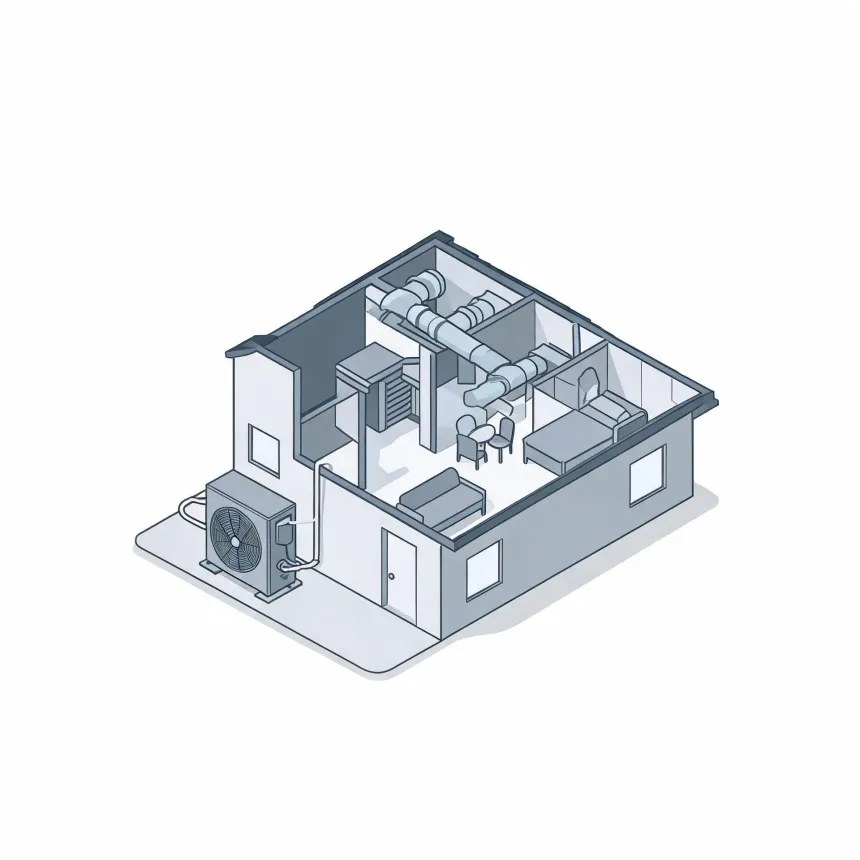
Isometric line illustration of a cutaway house showing interior rooms with furniture and ceiling ductwork, connected to an outdoor condenser unit with a fan beside the building.
Your air conditioner works hardest from June through August.

NOAA nClimDiv, 1991–2020 normals

An aging compressor and a cheap fix rarely go together for long.

If the unit is old enough, that same capacitor will just take something else down with it next year.

Half the homes here were built by 1971, old enough that the AC may be original

Half the homes here were built by 1971
Cooling runs June through August
Summer afternoons average 82°F
Rockford summers aren't the problemElectricity here runs 15.87 cents a kilowatt-hour, so a unit that's lost its edge costs more every month it sits unfixed.

Winnebago County sees its share of rough weather, with damaging wind hitting the county 131 times between 2015 and 2024. Wind and hail are hard on an outdoor unit specifically, bending the fins or racking the cabinet enough to throw the fan out of true. Power loss is the other piece, and an AC doesn't care why it lost power, only that it did. Most units come back on their own once power returns. If yours doesn't, that's worth a call on its own, separate from whatever was wrong before the outage.

Find out if it's worth fixing before you fix it

Half the homes in Winnebago County date to 1971 or earlier. If yours is one of them, the AC may already be older than the house, or close to it. A repair call is still the right move. But ask the tech straight out how much life is left in the unit before you pay for a major part.

Find a contractor
A gray residential air conditioning condenser unit mounted on a concrete pad outdoors, surrounded by green grass under a partly cloudy blue sky.

What to check before you call

Before anyone comes out, there are a few things worth checking yourself. Look at the thermostat first. Make sure it's set to cool, not just on, and that the setpoint is actually below room temperature. Check the breaker box for the outdoor unit and the air handler, since a tripped breaker will stop the whole system cold. Go outside and look at the condenser. If the fan isn't spinning and you don't hear any hum at all, that points to the capacitor or the contactor. If it's running but the coil is caked with grass clippings, cottonwood or dirt, that alone can choke airflow enough to cause the problems you're seeing. Inside, pull the filter and hold it up to a light. If you can't see through it, replace it. A clogged filter starves the coil of airflow and can freeze it solid, which then reads as no cooling at all. If you do see ice on the indoor coil or the line running outside, shut the system off and let it thaw before anyone touches it further. None of this fixes a bad capacitor or a low charge, but it tells the tech what you already ruled out, and it rules out the handful of things that aren't actually broken.

Most failures start small

A capacitor weakens for months before it quits outright. A dirty coil chokes airflow a little more every week it goes unwashed. By the time the system stops, the part that failed was usually struggling long before anyone noticed.

A weak part rarely fails alone

A dying capacitor forces the compressor to pull harder every time the system starts up, and a compressor run that way long enough wears out ahead of schedule. Replacing the small part before it fails is what spares the big one next to it.

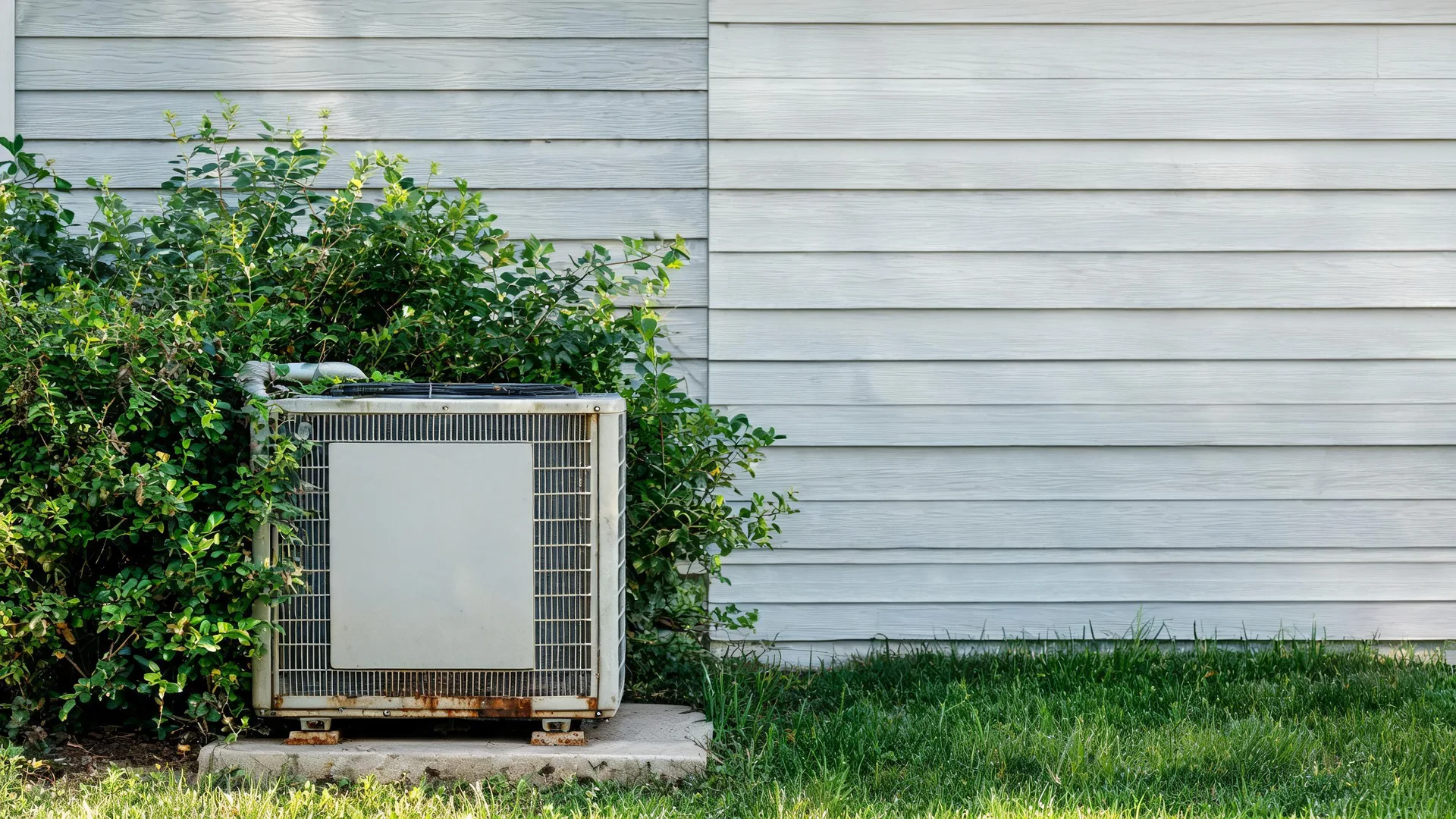
An overhead view of a residential air conditioning condenser unit mounted on a concrete pad next to a house with vinyl siding.

A new air conditioner would save little on running costs in Winnebago County, so the repair decision comes down to the unit's condition.

  • A new one at the federal minimum, 13.4 SEER2$180 a year
  • An older air conditioner$200 a year

Estimates for a typical Winnebago County home, compared with an older unit built to the previous federal minimum, from EIA household energy data, Illinois fuel prices and NOAA climate normals. Your home will differ.

Repair makes sense when a part like a capacitor or contactor has failed.

Replacement makes sense when the compressor has failed or the system uses R-22 refrigerant, which is no longer made.

A diagnostic call starts outside at the condenser, checking that the fan spins freely and the compressor kicks on without hesitating. The tech will pull the capacitor and test it, since a weak one shows up on a meter long before it fails outright. From there it's refrigerant pressures, checked at the service valves, and a look at the contactor for pitting or burn marks that mean it's about to stop making contact. Inside, the coil gets checked for ice or buildup, and the airflow across it gets measured, since a coil starved of air will freeze over and mimic other problems that have nothing to do with the coil itself. Only after all of that does the tech say what's actually wrong, because guessing from one symptom is how the wrong part gets replaced.