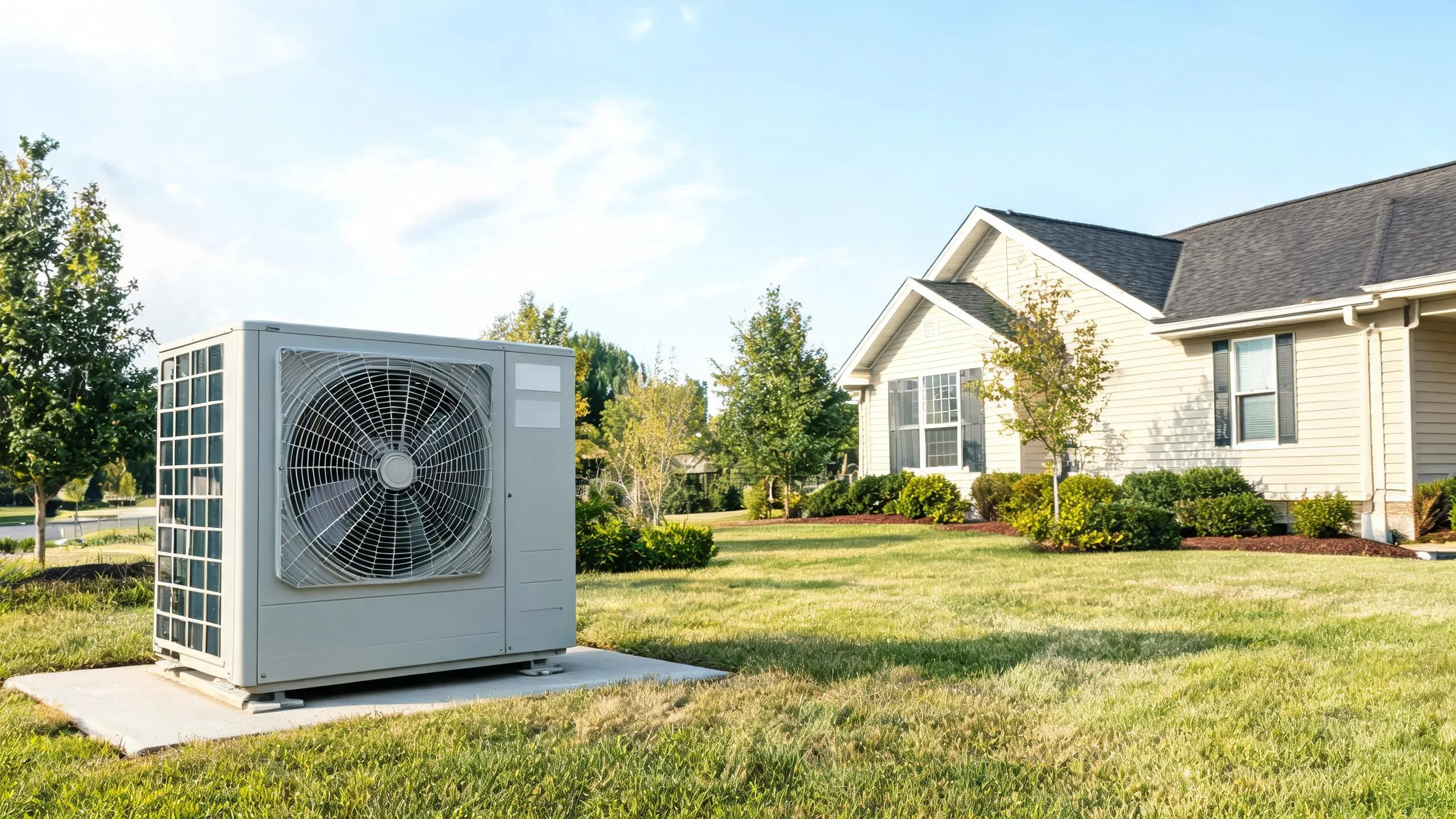





A grey heat pump outdoor unit mounted on a concrete pad in a suburban backyard, with a single-storey house visible behind it.

Heat Pump Repair in Belleville, IL

Tell us about the job

Takes about a minute. No obligation.

RepairHeat PumpSt. Clair County, IL
Step 1 of 2

What ZIP code is the job in?

A diagnostic visit starts with the tech asking what the system is doing and when it started. Then they watch it run. They check the refrigerant pressures, the temperature of the air coming off the indoor coil, and the amp draw on the compressor and fan motors. Outside, they look at the reversing valve, since that's the part that lets a heat pump switch between heating and cooling, and a stuck valve can look like several other problems at once. They'll also check the defrost board and sensor, because a heat pump that won't clear frost in cold weather usually points there rather than to the compressor itself. Once they find the actual cause, they can tell you what it takes to fix it and whether it makes sense to repair it or think about replacement.

7 months
October through April, your system heats
5 months
May through September, it cools
26°F
the average winter night it heats against
87°F
the average summer afternoon it cools against
Isometric cutaway illustration of a single-story house showing interior rooms, ceiling ductwork, an indoor air handler, and an outdoor condenser unit connected by lines on the ground.
Your system heats October through April and cools May through September.

NOAA nClimDiv, 1991–2020 normals

A heat pump that's short cycling puts extra strain on the compressor every time it starts.

Let that continue and a repair can turn into a compressor replacement.

A heat pump that runs on bad parts runs up a bigger bill at 15.87 cents a kWh

Power costs 15.87 cents a kWh statewide
Climate zone 4A
Cooling runs May through September

St. Clair County has seen its share of damaging wind and hail over the years. Neither one is what wears out a heat pump. Wind and hail hit the cabinet and the fan blades, not the compressor or the reversing valve. If the outside unit has a bent fan guard or a dented top, that's worth a look, but it's a separate issue from why the system isn't heating or cooling right. Most heat pump problems here come down to the same handful of causes you'd find anywhere, a failing capacitor, a low refrigerant charge, a stuck reversing valve, a defrost sensor that's stopped reporting. Finding which one it is matters more than anything about the weather outside.

Stop paying for a struggling machine

Power costs more here, so a machine that's running badly costs you every month. Get it fixed soon.

Find a contractor
A gray heat pump condenser unit mounted on a concrete pad against the gray lap-siding exterior wall of a house.

What years of running does to a heat pump

A heat pump works all year, not just in summer, and that shows in what tends to go first. The reversing valve wears from being asked to switch directions over and over, season after season. The run capacitor loses its charge gradually, so the compressor and fan motors have to strain a little harder each month until they can't start at all. Refrigerant doesn't get used up, so if the charge is low, it's leaking out somewhere, usually at a coil joint or a fitting that's been slowly working loose. Outside, the condenser coil collects dirt and grass clippings over time, and that buildup makes the whole system run hotter and longer than it should. None of this is sudden. It's wear that adds up the longer the unit runs without anyone checking it.

What you can check yourself

Look at the outdoor unit and clear away leaves, grass clippings or anything blocking the coil. Check that the indoor air filter isn't clogged. Make sure the thermostat is set to the right mode and the batteries aren't dead. Look at the breaker panel for a tripped breaker before assuming the worst.
What those checks rule out

A dirty filter or a blocked outdoor coil can mimic a failing compressor, since both choke off airflow and make the system struggle. A tripped breaker can look like a dead unit when the problem is nothing more than that. Ruling these out first means a tech spends the visit finding the real problem instead of resetting what you could have reset yourself.

The clearest sign is a heat pump that's heating or cooling less than it used to, with no change in how the thermostat's set. Short cycling is another one, where the unit kicks on, runs a few minutes, and shuts off before the house actually feels it. Ice building up on the outdoor unit in cold weather and not clearing on its own points to the defrost system rather than the compressor. A system stuck in one mode, blowing cold air when it should be heating or the reverse, usually means the reversing valve isn't switching like it should. Any grinding, clicking or buzzing from the outdoor unit that wasn't there before is worth paying attention to, since motors and compressors don't start making noise for no reason. The longer any of these run unaddressed, the more they tend to pull other parts of the system down with them.

A good rule is to look at what's actually failed, not just the age of the unit. A capacitor, a defrost sensor, a contactor, these are inexpensive parts, and replacing one brings the whole system back without touching anything else. A compressor is different. It's the one part that can't be swapped on its own cheaply, and when it fails, a tech has to weigh that cost against putting the money toward a new system instead. The reversing valve sits in between, since replacing it is real work but still far short of a full replacement. What matters most is whether the rest of the system is sound. A unit that's had its refrigerant charge low for a long time or has run hot from a dirty coil for years puts more strain on everything else, including the compressor, so one failure can be a sign of others close behind. A tech who's seen the actual problem can tell you whether this is a fix or whether it's time to start asking about a new unit.