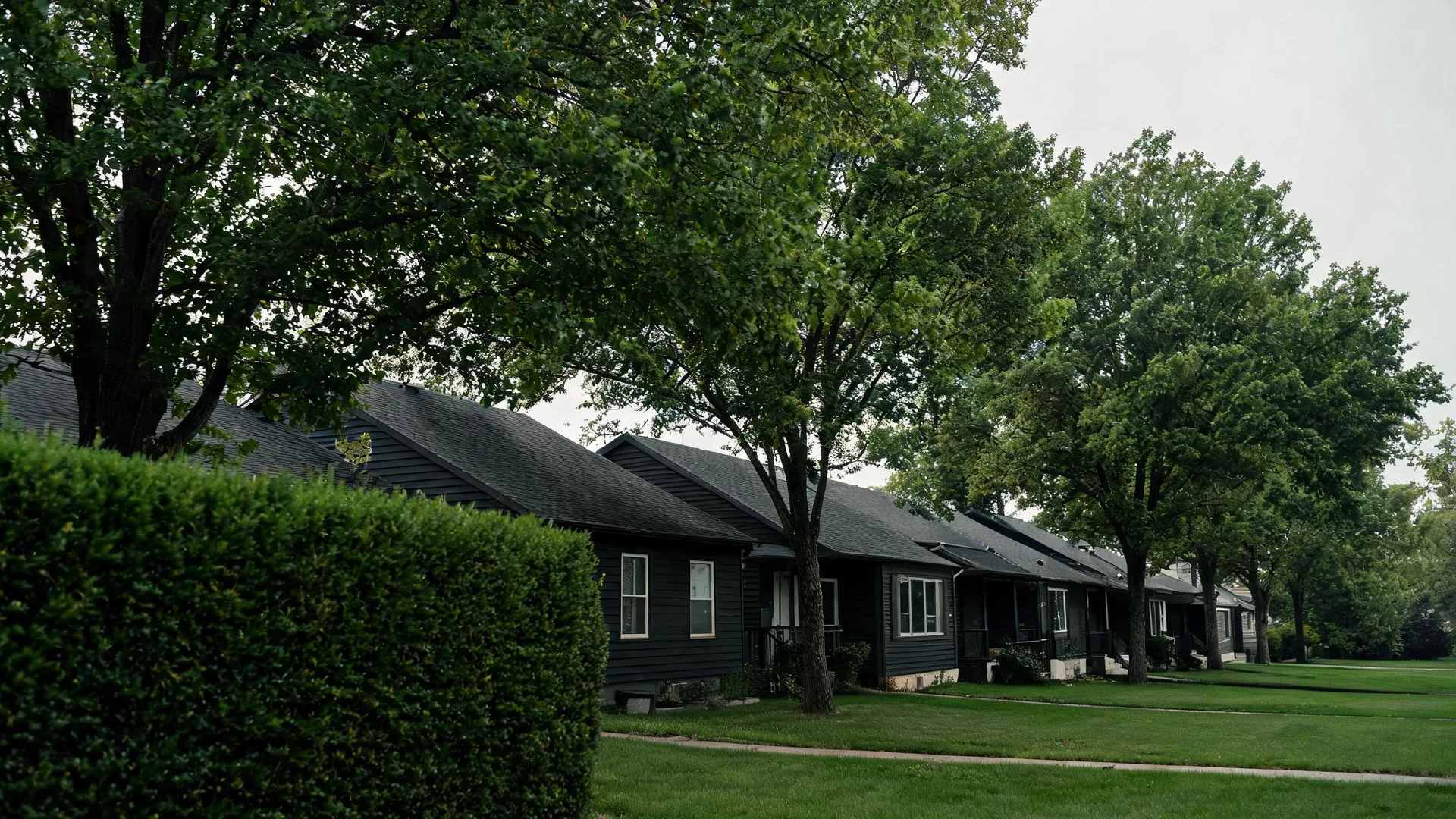



A row of dark-sided single-story houses with gray shingled roofs behind large leafy trees, a trimmed hedge at left and mown lawn with a narrow walkway in front.

Heat Pump Repair in Bloomington, IL

Tell us about the job

Takes about a minute. No obligation.

RepairHeat PumpMcLean County, IL
Step 1 of 2

What ZIP code is the job in?

Winter is the real test for a heat pump here. McLean County sits in zone 5A, with overnight lows averaging 20 degrees across December, January and February. A heat pump built for this zone is designed to run through that kind of cold, leaning on backup heat when it needs to. So when one starts short cycling, running long defrost cycles, or blowing air that isn't warm enough, something ordinary is usually at fault. A low refrigerant charge is common. So is a failing defrost control or a reversing valve stuck in one position. A contractor who checks those first finds most problems without guessing.

8 months
October through May, your system heats
4 months
June through September, it cools
20°F
the average winter night it heats against
84°F
the average summer afternoon it cools against
Isometric cutaway illustration of a small house showing interior ductwork and an air handler connected by lines to an outdoor condenser unit on a pad beside the building.
Your system heats October through May and cools June through September.

NOAA nClimDiv, 1991–2020 normals

Heat here runs October through May, eight months straight.

September is when a weak part gets found before the cold sets in for good.

A diagnostic visit starts with the tech asking what the system is doing and when. Short cycling, weak airflow, ice that won't clear, a sound that wasn't there before. That answer narrows things before a single panel comes off. Next comes the refrigerant charge, checked against the manufacturer's numbers for the outdoor temperature at the time. The electrical side gets checked too. Contactors, capacitors, the reversing valve coil all get tested to see if they're pulling the current they should. Outside, the tech looks at the coil itself. A coil caked with debris can't move heat the way it needs to in either direction. If the system runs in heat mode during the visit, the tech will watch a defrost cycle start and end to see if it's timing out correctly. None of this takes guessing. It takes checking each part against what it's supposed to do, in order, until the one that isn't matches what the homeowner described.

Get the usual fix

Nothing about this area is especially hard on it. It's most likely the usual problem with the usual fix.

Find a contractor
A man in a navy shirt, tan work pants and a cap, seen from behind, climbs porch steps toward a dark teal front door while carrying a canvas tool bag.
A gray air-source heat pump mounted on a concrete pad next to a house with gray vinyl siding, surrounded by gravel and flanked by green shrubs and white hydrangea flowers.

A newer system still has years left in it

Half the homes in McLean County were built in 1981 or later, half before. If yours is one of the newer ones, the heat pump itself may be newer too, especially if it came with the house. A unit that's a few years old and giving trouble is usually worth fixing. The parts that typically fail, a capacitor, a control board, a reversing valve, are repairs, not reasons to replace a system that still has years ahead of it.

What you can check first

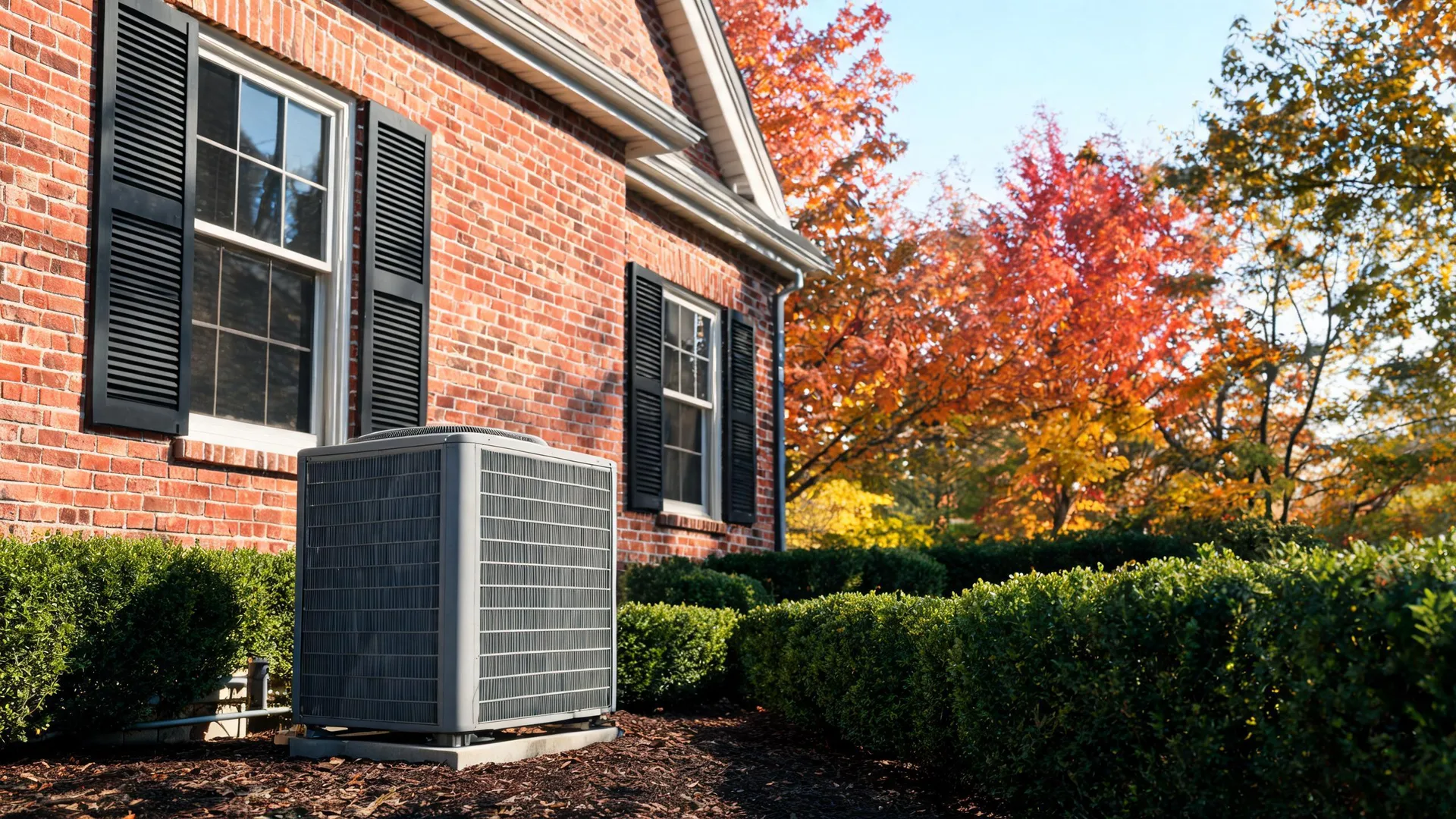
Look at the outdoor unit. If the coil is packed with leaves, grass clippings or ice that isn't melting between cycles, clear what you can reach by hand and see if that changes anything. Check the thermostat batteries and settings too. A schedule that got bumped or a mode switched to the wrong setting looks exactly like a failing system but isn't one. Inside, check that supply vents are open and not blocked by furniture or rugs, and look at the filter. A filter clogged with dust chokes airflow across the indoor coil and can bring on a lot of the same symptoms a tech gets called for.
What to leave alone

Don't pull panels off the indoor or outdoor unit, and don't touch anything electrical. If the outdoor unit is frosted over or iced solid, let it be. Some ice during a defrost cycle is normal, but ice that doesn't clear points to a problem inside the system, and chipping at it risks the coil fins underneath. If the breaker has tripped, you can reset it once. If it trips again, stop there. A breaker that won't hold is telling you something is drawing current it shouldn't, and that's a job for someone who can test it safely.

Most heat pump failures trace back to a handful of parts, and they fail the same way whether the system is heating or cooling. Capacitors weaken with age and stop giving the compressor or fan motor the jolt it needs to start, so the unit hums or clicks but doesn't turn over. Contactors pit and burn from constant cycling until they stop closing the circuit reliably. The reversing valve, which is what lets a heat pump switch between heating and cooling, can stick in one position after years of use and leave the system blowing the wrong temperature of air entirely. Refrigerant doesn't get used up, so a low charge almost always means a slow leak somewhere in the line set or coil. Defrost control boards and sensors fail too, and when they do, the outdoor unit either never defrosts or never stops trying to.

Whether a repair makes sense usually comes down to what broke, not how old the labels say the unit is. A capacitor, contactor, or defrost board is a contained failure. The part wore out, it gets swapped, and the rest of the system keeps running the way it always has. A compressor is different. It sits at the center of everything, and when it's failing, the system runs long, doesn't hold temperature, or trips on its own protection. A compressor replacement costs close enough to a new system that most homeowners choose to put the money there instead. Refrigerant leaks sit in between. One leak, found and sealed, is a repair. A system that's leaked more than once, in more than one spot, is telling you the line set or coil is wearing out generally, and patching the next leak just buys time until the one after it.