






A large outdoor air-conditioning unit mounted beside a vinyl-sided house, surrounded by mulched garden beds and green shrubs.

Heat Pump Repair in Breese, IL

Tell us about the job

Takes about a minute. No obligation.

RepairHeat PumpClinton County, IL
Step 1 of 2

What ZIP code is the job in?

A heat pump in Breese earns its keep both ways, cooling from May through September and carrying heat from October through April. That only leaves April and September as a break, and not much of one. Most breakdowns show up right as the load shifts, in the first real cold snap or the first hot stretch, when a part that was already weak gets asked for more than it can give. If yours is struggling now, there's a good chance it's been heading this way for a while. Getting it looked at before the next shift in weather is worth more than waiting for it to fail outright.

7 months
October through April, your system heats
5 months
May through September, it cools
25°F
the average winter night it heats against
87°F
the average summer afternoon it cools against
Isometric line illustration of a cutaway single-story house showing interior rooms, ceiling ductwork and an indoor air handler, connected by a line to an outdoor condenser unit on a pad beside the building.
Your system heats October through April and cools May through September.

NOAA nClimDiv, 1991–2020 normals

Clinton County sits in zone 4A, a mixed climate that works a heat pump hard in both directions.

A heat pump here failing now is most likely just a worn part giving out, not a sign of anything unusual about this place.

Half these homes are older. The heat pump inside usually isn't.

Half the homes here were built by 1977
Power costs 15.87 cents a kWh statewide
Climate zone 4A

Illinois electricity runs 15.87 cents per kilowatt-hour, and a heat pump that's running on a weak part doesn't use less power because it's struggling. It uses more, and often runs longer to make up for what it can't deliver. A failing capacitor or a low charge can turn a normal cycle into one that drags on, and in a Breese winter or summer that's a lot of cycles. The part that's costing you every month is usually the same one that's about to fail outright.

The longer it runs weak, the more it costs

A worn part doesn't get cheaper to run while it waits. Have it checked and fixed now, before another month of high rates passes through a struggling system.

Find a contractor
A man in a dark jacket, brown pants and cap carries a worn canvas tool bag up porch steps toward a dark teal front door, with a potted shrub in a blue glazed planter beside him.
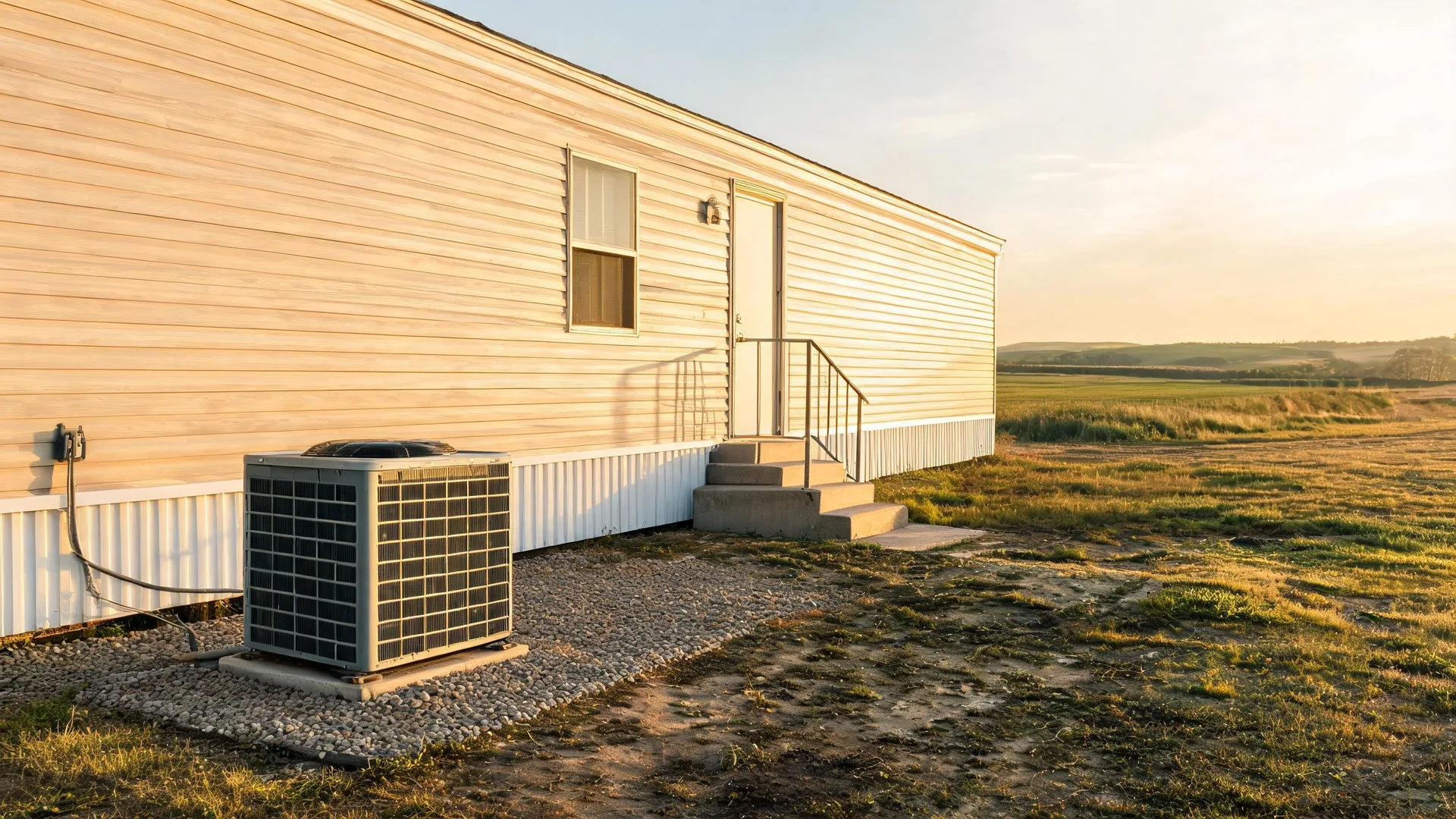
A residential heat pump outdoor unit mounted on a concrete pad next to a house with gray vinyl siding.

What a struggling heat pump sounds and feels like before it quits

A heat pump that needs attention usually tells you before it quits outright. It may run but stop keeping up, blowing air that isn't as warm or as cool as it used to be. It may short cycle, kicking on and off instead of running a full stretch. Ice building up on the outdoor coil in winter is normal for a few minutes during defrost, but a coil that stays frosted over is a sign the system isn't defrosting right or is low on refrigerant. Listen for it too. A hum with no fan movement points to a failing capacitor or motor. Clanking or grinding usually means something is loose or worn. If it's blowing room-temperature air instead of hot or cold, the reversing valve may be stuck, or there's a refrigerant problem underneath it. None of these get better by waiting. A part that's struggling now is a part that's closer to failing for good.

A struggling part pulls others down with it

A compressor working against a low charge or a weak capacitor runs hotter than it should. That heat doesn't stay put. It can break down the oil that lubricates the compressor and wear out parts nearby that were otherwise fine. What started as one bad part spreads to the system around it.
Running it anyway turns a repair into a replacement

A heat pump that keeps cycling on a fault is still doing the job, so it's tempting to let it ride. But a compressor that overheats again and again can seize for good, and a seized compressor usually means a new system instead of a fixed part. Catching the problem while it's still one part is what keeps it a repair.

Before anyone comes out, there are a few things worth checking yourself. Look at the thermostat first. Make sure it's set to heat or cool as needed and the batteries aren't dead, since a blank or unresponsive display can look like a system failure when it isn't. Check the outdoor unit for anything blocking it, leaves, snow, or debris piled against the cabinet can choke airflow and make it struggle. Look at the air filter too. A filter clogged with dust starves the system of airflow and can cause a lot of the symptoms that feel like a bigger failure. Check the breaker panel if the unit isn't responding at all. A tripped breaker is sometimes the whole story. None of this fixes a bad capacitor or a refrigerant leak, but it rules out the easy stuff before you pay someone to find it for you.

A diagnostic visit starts with questions. What the system is doing, when it started, whether it's heating or cooling or neither. Then the tech checks the easy things again, because a loose wire or a dirty filter can mimic something worse. From there it's gauges on the refrigerant lines to see if the charge is right, and a meter on the electrical parts, the capacitor, the contactor, the windings in the motors. A compressor gets tested under load, since some faults only show up once it's working. Airflow gets checked at the vents and across the coil, because a system can have a perfectly good compressor and still fail to heat or cool if air isn't moving through it. The tech is narrowing it down, ruling parts out until the one actually causing the problem is left standing. By the end of it you should know what's wrong, why it's doing what it's doing, and what it takes to fix it.