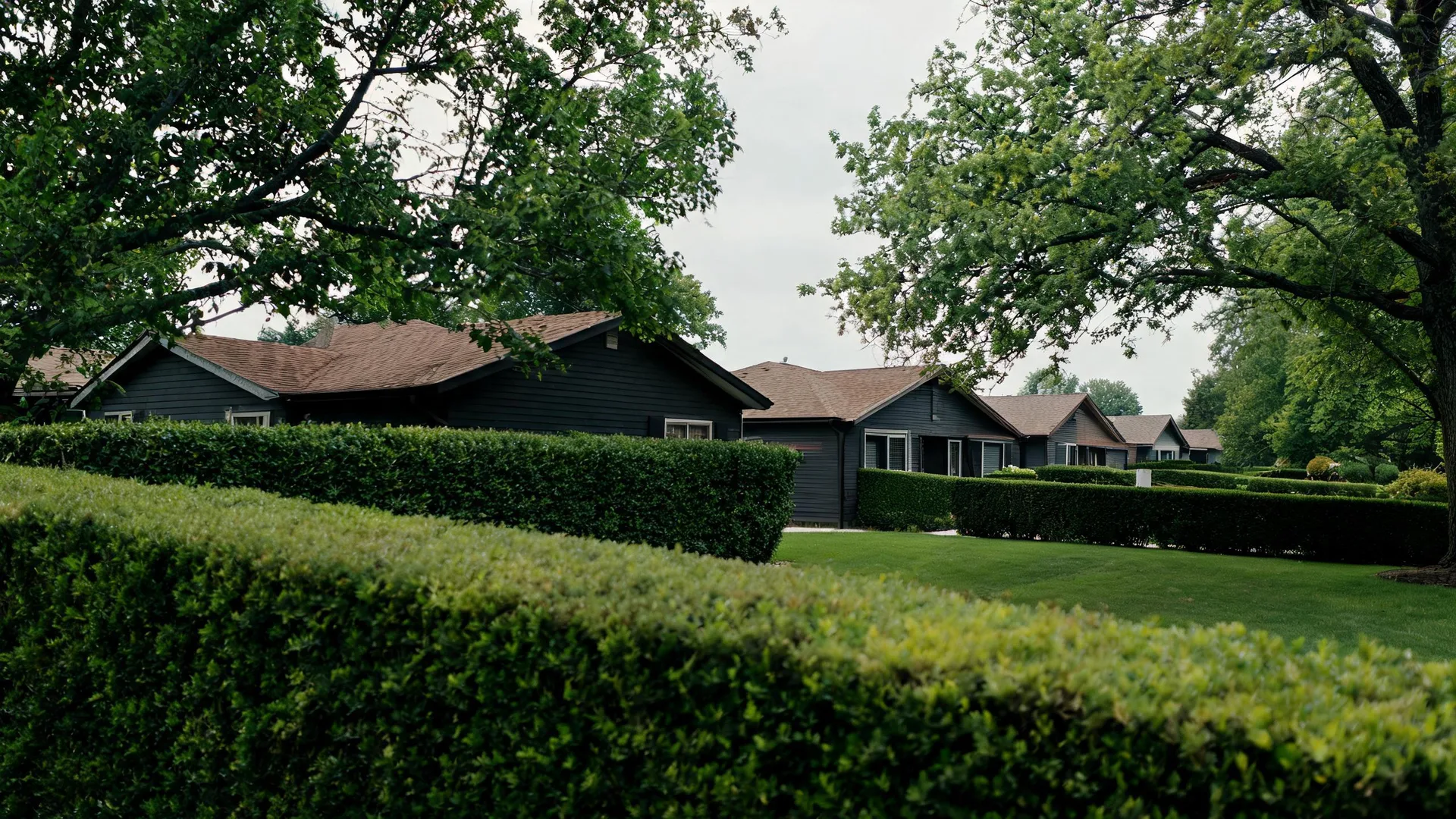
A row of dark-sided single-story houses with shingled roofs behind trimmed hedges and mown lawn, framed by large leafy trees under an overcast sky.

Heat Pump Repair in Carbondale, IL

Tell us about the job

Takes about a minute. No obligation.

RepairHeat PumpJackson County, IL
Step 1 of 2

What ZIP code is the job in?

September is the month to get ahead of it

Heat pumps in Carbondale run from October through April, seven months of the year. A part that's already weak tends to hold on through mild days and fail once the unit has to run hard, which is usually that first cold snap in October.


A breakdown in October is a bad time to start looking

Once the heat is running every day instead of once in a while, a weak part gets no rest to hide behind. A heat pump looked at in September gets fixed before the house needs it, not during the week it does.

7 months
October through April, your system heats
5 months
May through September, it cools
27°F
the average winter night it heats against
87°F
the average summer afternoon it cools against
Isometric line illustration of a cutaway single-story house showing interior rooms with ducted air distribution, an indoor air handler, furniture, and an outdoor condenser unit connected by lines outside the wall.
Your system heats October through April and cools May through September.

NOAA nClimDiv, 1991–2020 normals

Jackson County gets its share of wind, hail and winter storms, same as a lot of places.

None of that is what's wearing on your heat pump. It's most likely a part that's worn out from running, not from the weather outside.

Half these homes are old enough to be on a second or third heat pump

Half the homes here were built by 1976
130 damaging wind events from 2015 to 2024
30 hail events from 2015 to 2024
Electricity here isn't cheapIllinois homes paid 15.87 cents per kilowatthour in 2024, and a struggling heat pump burns through it fast.

Most of those 181 events were wind, with hail and a few tornadoes mixed in. None of that lines up with what's usually wrong when a heat pump quits. Wind and hail mark up a cabinet or bend a fin, and that kind of damage shows on the outside where you can see it. A unit that's short cycling, blowing warm air, or won't start is almost always a contactor, a capacitor, or a reversing valve giving out after years of running. That failure happens on a calm day the same as a stormy one.

A heat pump running poorly costs you every month it stays that way

At 15.87 cents per kilowatthour, a heat pump that's short cycling or struggling to keep up isn't just uncomfortable, it's running up your bill while it does it. Getting the actual cause fixed now stops that, instead of paying for it all winter.

Find a contractor
A man in a cap, gray long-sleeve shirt and brown work pants climbs wooden porch steps toward a dark teal front door, carrying a canvas tool bag, with a potted shrub beside the entry.
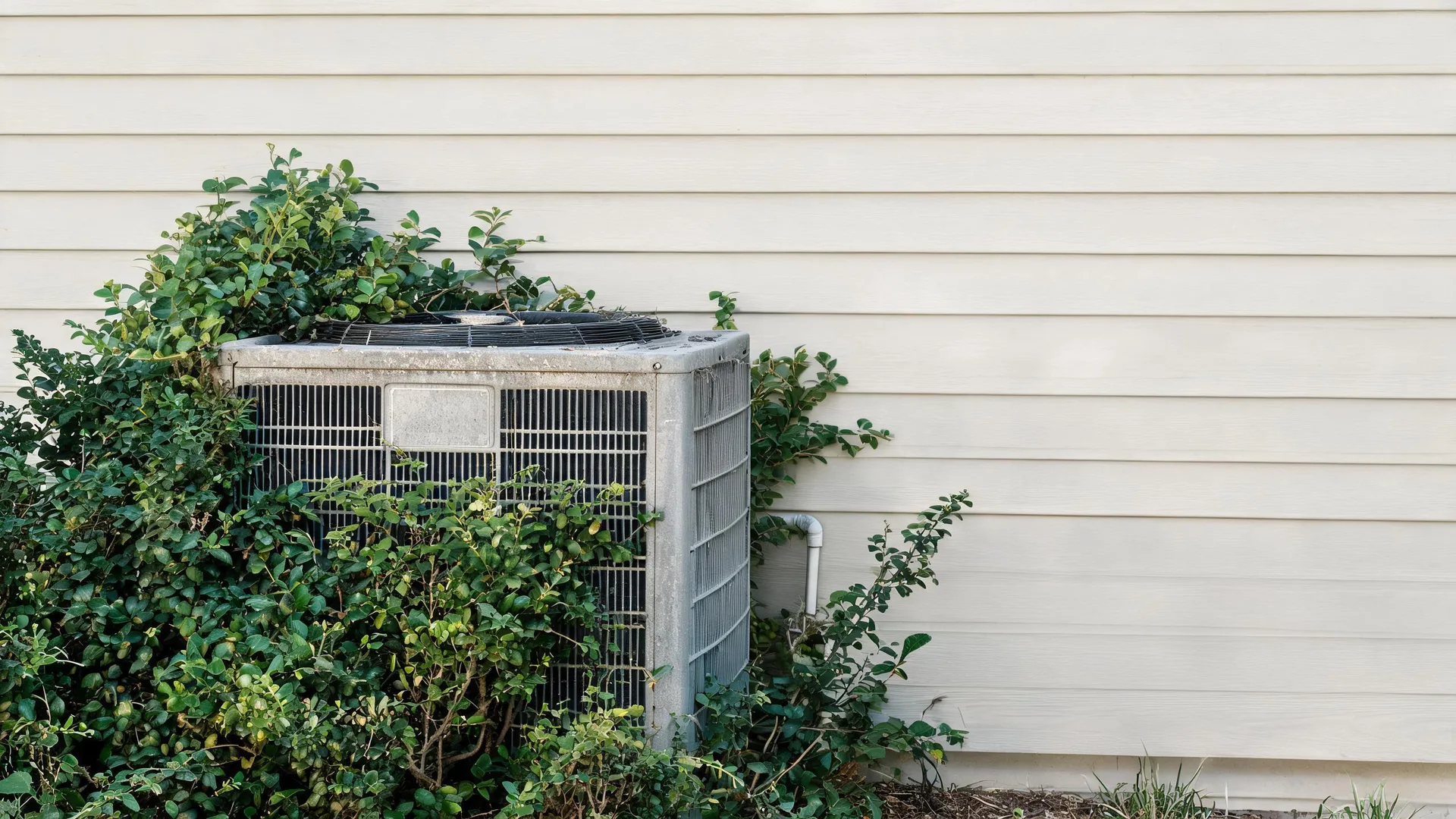
A gray heat pump condenser unit mounted on a concrete pad against the gray lap-siding exterior wall of a house.

What you can check before you call

Start outside. If the outdoor unit isn't running at all, check the breaker before anything else. It trips more often than people think, and resetting it is the whole fix some days. While you're out there, look at the coil, the fins wrapped around the unit. Leaves, grass clippings and dirt packed into those fins make the system work harder than it should, and clearing them by hand or with a hose is something anyone can do. Make sure nothing is stacked against the unit or blocking its sides. It needs open air to move heat. Inside, pull the filter and hold it to a light. If light doesn't come through, it needs changing. A clogged filter chokes airflow and shows up as weak heat or ice forming on the outdoor coil. A little frost out there during a cold snap is normal, the unit clears it on its own. Ice that stays, or builds up on a mild day, is not. Last, check the thermostat. Batteries die, and it's easy for the setting to get bumped to cool or fan only without anyone noticing. None of this fixes a failed capacitor or a stuck reversing valve, but it clears out the simple causes before anyone needs to open the cabinet up.

Most failures come from one worn part, not the whole system

A heat pump rarely dies all at once. A capacitor weakens over years of starting the compressor and fan, a contactor pits and sticks from the current passing through it, and a reversing valve wears from switching back and forth between heat and cool. Any one of those going bad can stop the unit cold or make it run wrong, while everything else in the cabinet is fine.

Where the breakdown shows up tells you where to look

A unit that won't start at all usually points to the contactor or capacitor. One that runs but blows cold air in heating mode often means the reversing valve is stuck. Short cycling, where it kicks on and off too fast, points to a dirty coil, a failing sensor, or a refrigerant charge that's run low. The symptom is the clue to what gave out.

A heat pump that's struggling doesn't fail faster just by sitting there, but running it while something's wrong does the damage. A low refrigerant charge makes the compressor work to keep up, and that strain is what burns a compressor out early, turning a part replacement into a full unit replacement. A dirty coil forces the system to run longer to move the same heat, and that extra runtime wears on the motor and bearings that would've lasted years otherwise. Ice that's building on the outdoor coil and not clearing on its own means the defrost cycle isn't doing its job, and a unit left to fight through that cakes up worse the longer it runs. None of these start as emergencies. They turn into one somewhere around the week the homeowner decided to wait and see.

A repair makes sense when one part failed and the rest of the unit is sound, which is most of the time. A capacitor, a contactor, a reversing valve, these are cheap compared to the compressor and outdoor coil around them, and replacing one brings the whole system back to normal. Replacement starts to make sense when the compressor itself is the problem. That's the part that actually moves the heat, it's the most expensive thing in the cabinet, and a failing compressor often means the unit is near the end of what it's going to give you anyway. Age matters here too, not because a number on a calendar means anything on its own, but because a unit old enough to need major parts replaced is also old enough that other parts are close behind it. A tech who's opened the cabinet can tell you which situation you're actually in.