




A tall trimmed hedge in the foreground borders a mown lawn beside a row of dark single-story houses with shingled roofs, surrounded by large leafy trees under an overcast sky.

Heat Pump Repair in Carlinville, IL

Tell us about the job

Takes about a minute. No obligation.

RepairHeat PumpMacoupin County, IL
Step 1 of 2

What ZIP code is the job in?

A heat pump that's struggling shows itself in plain ways. It runs and runs but the air coming out doesn't feel warm enough, or it switches between heating and cooling on its own instead of staying put. Ice building up on the outdoor unit beyond what a normal defrost cycle clears is another sign, especially if the fan isn't spinning to help melt it off. Listen for the reversing valve too. A hum or clunk when the system tries to switch modes, followed by it staying stuck in one mode, usually means that valve is failing. If the outdoor unit is making a grinding or screeching noise, that's the fan motor or compressor telling you something's worn. Any of these is worth a call before the system stops heating or cooling altogether.

7 months
October through April, your system heats
5 months
May through September, it cools
24°F
the average winter night it heats against
85°F
the average summer afternoon it cools against
Isometric line illustration of a cutaway single-story house showing interior rooms with furniture and attic ductwork connected to an outdoor condenser unit beside the building.
Your system heats October through April and cools May through September.

NOAA nClimDiv, 1991–2020 normals

A reversing valve or a fan motor is a repair. A failing compressor is a different conversation.

If the compressor is going, the parts and labor to replace it can cost more than a new system would.

A heat pump that runs wrong still runs up the bill

Power costs 15.87 cents a kWh statewide
28 hail events from 2015 to 2024
Winter nights average 24°F

Half the houses in Macoupin County were built in 1966 or earlier. If your heat pump came with a house that age, the unit itself probably isn't original, but it may be on its second or third system since. That matters when you're deciding whether to fix what's wrong or start planning for a replacement. A reversing valve or fan motor repair makes sense on a system with years left in it. The same repair on a system already past the age most heat pumps make it to is just a delay. Ask whoever comes out to look at it how much life it has left before you pay for the big fix.

Find out how much life is left before you pay for the repair

Get a straight answer on both. What's wrong with it now, and whether it's worth fixing given its age.

Find a contractor
A gray heat pump outdoor unit mounted on a concrete pad next to the stone-accented exterior wall of a house.

Every part in it has been running for years, not months

A heat pump works year round, not just one season, so the parts that wear are the ones that never really stop moving. The compressor runs whenever the system calls for heat or cool, more than almost anything else in the house, and it's usually the reason a system gets replaced instead of repaired. The reversing valve is the part unique to a heat pump, the thing that switches it between modes, and that switching wears at its seals until it starts sticking. Outdoor fan motors sit exposed to the weather all year, and the bearings in them wear down from running constantly, not from any one storm or cold snap. Refrigerant lines and the joints in them can develop slow leaks over years of the system cycling on and off, expanding and contracting a little each time. None of this fails on a schedule. It fails from the running itself, so a unit that's been working steadily for a long time has simply put more hours on every one of these parts than one that hasn't.

What you can check safely

Look at the outdoor unit and clear away leaves, grass clippings or anything blocking airflow around it. Check that the indoor filter isn't clogged, since restricted airflow can make a working system seem like it's failing. Check the thermostat batteries and settings before assuming the problem is mechanical. These take a few minutes and rule out the easy explanations first.
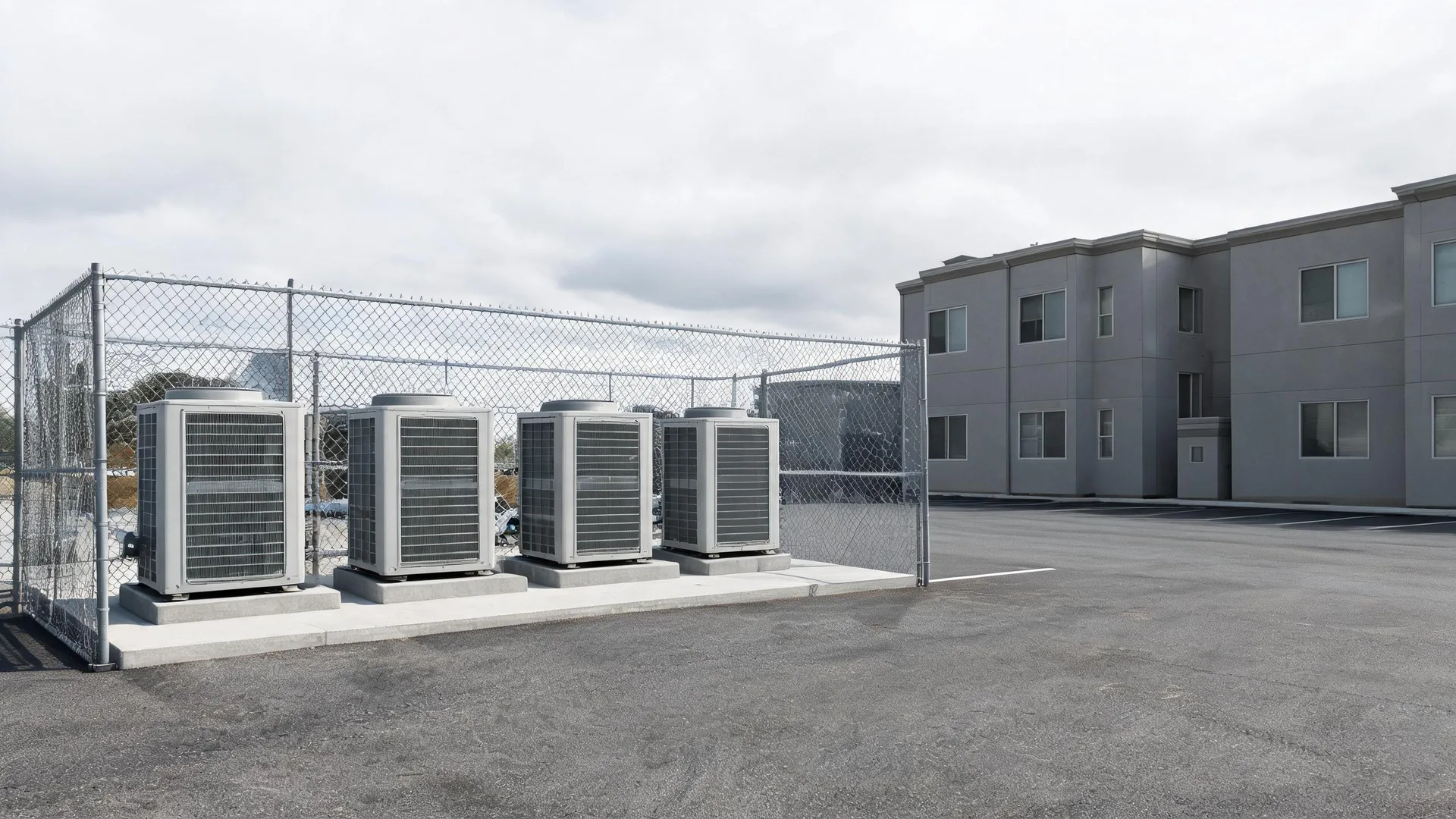
What to leave alone

Don't open the outdoor unit's cabinet or touch the refrigerant lines. Refrigerant is pressurized and handling it without the right equipment is dangerous, and it's also regulated, so this part of the job always goes to a licensed contractor. If you see ice on the coil, don't chip at it. Turn the system off and let it sit so it can thaw without anything getting bent or cracked.

A heat pump that's struggling and left alone doesn't just stay struggling. A reversing valve that's starting to stick gets worse each time it's asked to switch, until it sticks all the way and leaves the system stuck in one mode. A compressor running low on refrigerant from a slow leak keeps working just as hard to make up for it, and that extra strain is what pushes a compressor toward failing outright instead of just underperforming. Ice on the coil is the same story. A little bit melts in the normal defrost cycle, but if something's keeping it from clearing, the ice builds further with every cycle and starts blocking airflow the system needs to run at all. None of these fix themselves by continuing to operate. They get to a point where the one part that's wearing takes the rest of the system down with it.

A diagnostic visit starts outside, watching the unit run through a full cycle rather than just looking at it sitting there. A tech will check refrigerant pressure, since that number says more about what's wrong than almost anything else, too low and there's a leak somewhere in the lines. They'll test the reversing valve directly, sending it the signal to switch and watching whether it actually does. Electrical readings on the compressor and fan motor come next, since a motor can draw the wrong amount of power before it ever makes a noise you'd notice. Airflow gets checked too, both the filter and the coil, because restricted airflow can mimic a failing part when nothing mechanical is actually wrong. By the end they can usually point to the one part causing the trouble, rather than guessing at all of them.