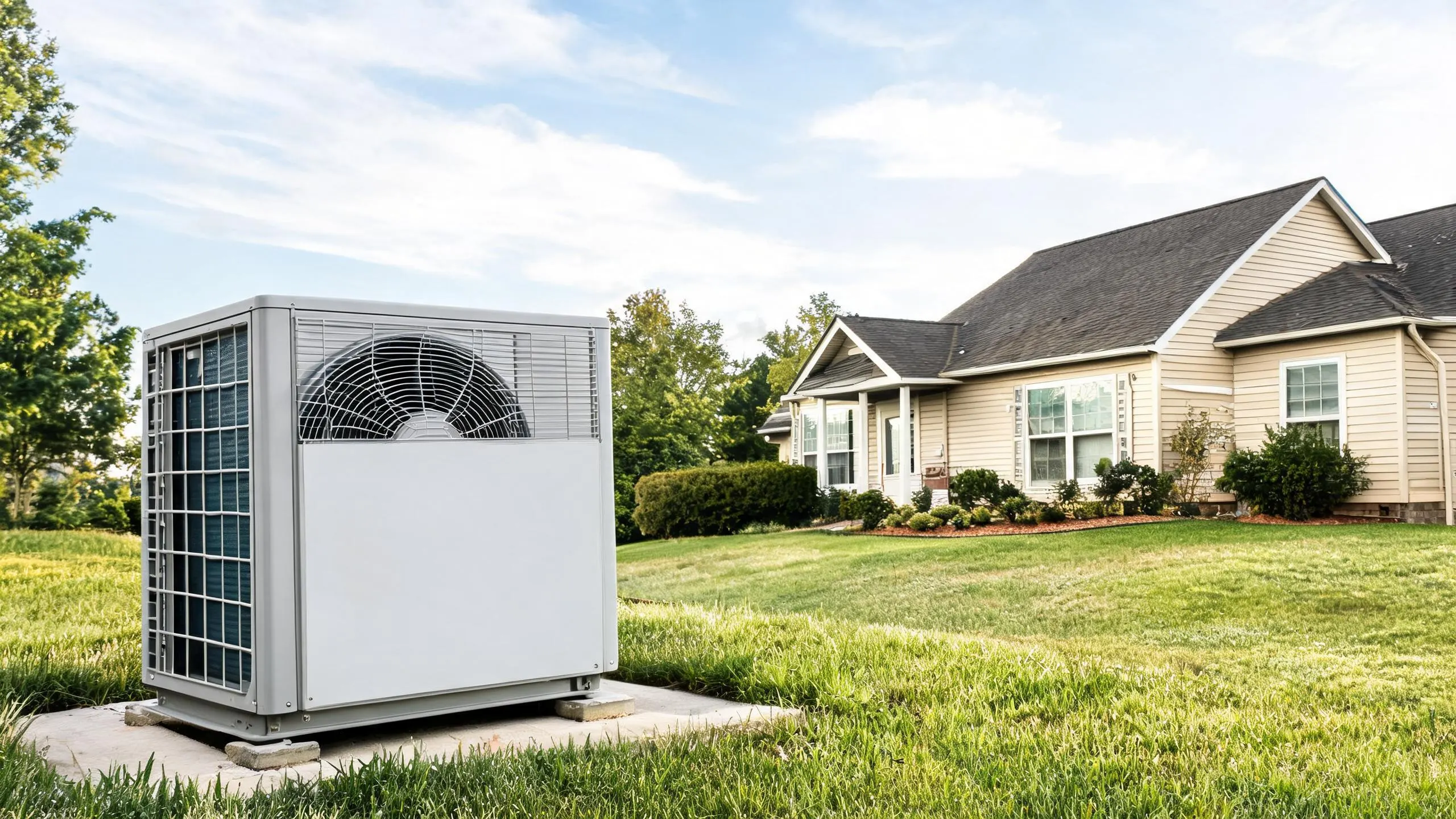





An outdoor heat pump unit mounted on a concrete pad in front of a single-story suburban house with beige siding.

Heat Pump Repair in Champaign, IL

Tell us about the job

Takes about a minute. No obligation.

RepairHeat PumpChampaign County, IL
Step 1 of 2

What ZIP code is the job in?

Champaign County saw 317 severe weather events between 2015 and 2024. Most of that was wind, 223 events, and the outdoor unit sits right out in it. Hail came through 70 times in the same stretch, and a heat pump coil takes that hit standing still with nowhere to hide. Thirteen tornadoes touched down in the county too. A unit can take a beating like that and still run, at least for a while, which is exactly why it's worth a look after a bad storm instead of waiting for it to quit.

8 months
October through May, your system heats
4 months
June through September, it cools
21°F
the average winter night it heats against
84°F
the average summer afternoon it cools against
Isometric cutaway illustration of a single-story house showing interior rooms with furniture, an attic duct network connected to a furnace or air handler, and an outdoor condenser unit linked by lines outside the wall.
Your system heats October through May and cools June through September.

NOAA nClimDiv, 1991–2020 normals

Electricity here runs 17.53 cents per kilowatt-hour, above most of the country.

A heat pump struggling to heat or cool pulls more power to do it, and that shows up on every bill until it's fixed.

A heat pump that's struggling doesn't wait for a cheaper month to fix

Power here costs 17.53 cents per kilowatt-hour
Climate zone 5A
Cooling runs June through September

A heat pump in Champaign earns its keep both ways, heating all winter and cooling through that sticky summer air. The dew point averages 64°F across June, July and August, which is heavy air for the system to wring moisture out of while it's also cooling the house. There's no stretch in the year where the unit just coasts. When a part is already worn, that steady load is what pushes it from working fine to acting up. The noise or the short cycling is usually wear that's been building, not a sudden defect. Getting it looked at properly means whoever fixes it fixes the cause, not just the symptom.

After a storm, get the unit checked before it tells you something's wrong

If the outdoor unit came through a storm with hail or flying debris, get it checked even if it's still running. Damage to the coil or fan doesn't always show up right away.

Find a contractor
A white mini-split heat pump outdoor unit mounted on a concrete pad beside a gray-sided house, surrounded by gravel and green shrubs.

The first week of the season finds what was already wrong

This heat pump works nearly the whole year here, heat from October through May, cooling June through September. September is the one month it isn't running at all, right before it has to carry the full heating load in October. May is the same before summer. A weak part can sit there all through the off month doing nothing, then October or June asks for a full day's run and that's when it gives out. If the system struggled last season, the first cold week or the first humid week is when that same problem shows up again.

The outdoor unit takes the wear first

The compressor, the fan motor and the reversing valve all live outside, through every storm and every swing in temperature. Refrigerant leaks start small, at a fitting or a coil pinhole, and show up as weaker heat or weaker cooling long before the system quits outright. Capacitors weaken with age and heat cycling, and a failing one makes the compressor or fan struggle to start, which is often the hard clunk or hum a homeowner hears right before a breakdown.
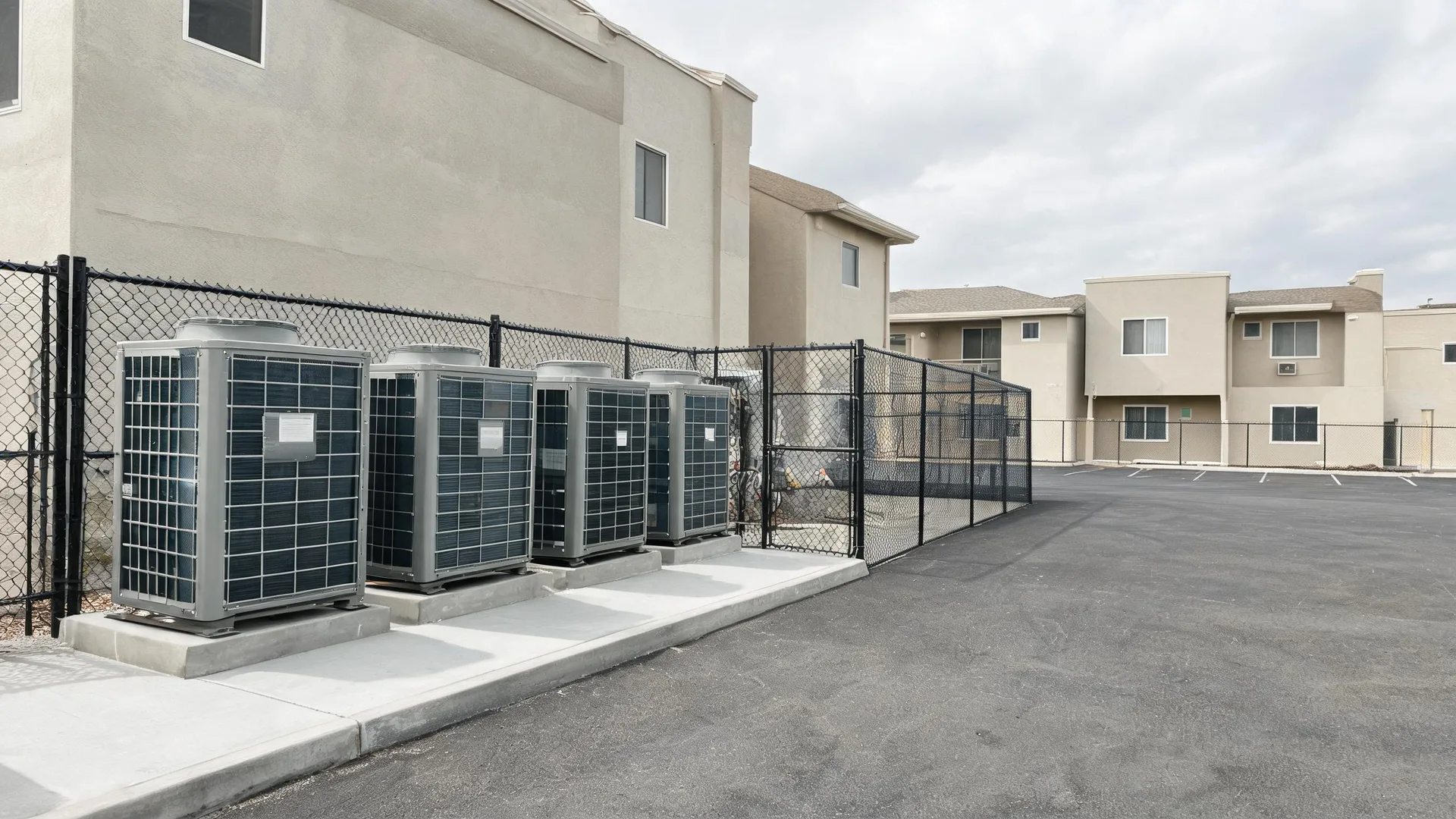
A reversing valve stuck mid-switch is a repair, not a replacement

The part that lets a heat pump switch between heating and cooling is the reversing valve, and when it sticks, the system can blow cold air in heating mode or warm air in cooling mode. That's a valve or a solenoid problem, not a sign the whole unit is done. Frost that builds on the outdoor coil and won't clear points to the defrost control or a low charge, both fixable without touching the compressor itself.

Before calling anyone, check the thermostat is set to the mode you want and the batteries aren't dead. Walk outside and look at the unit itself. If the outdoor coil is caked in ice or snow, that's worth noting but don't chip at it or hose it off. Check that nothing is blocking airflow around the unit, no leaves, no stacked firewood, no deck furniture pushed up against it. Go inside and pull the air filter. A filter clogged with dust chokes airflow and can make the whole system struggle even when every part is fine. Check the circuit breaker too, since a tripped breaker can look exactly like a dead system when the problem is that simple. None of this tells you what's wrong inside the unit, but it rules out the easy stuff before someone has to come take a real look.

The system has already earned its keep by the time something goes wrong, which is exactly why a diagnosis matters more than a guess. A tech who knows what this climate does to a heat pump can tell the difference between a part that failed on its own and one that wore out from running nearly every day of the year. That distinction matters for the fix. Replacing a capacitor on a unit with a cracked coil underneath just buys a few more weeks before the next call. Have it looked at properly, and whatever gets fixed is the thing that was actually failing, not the symptom that happened to show up first.