


A row of dark-sided houses with brown shingled gable roofs behind tall trimmed hedges, with a mowed lawn in the foreground and overhanging tree branches against an overcast sky.

Heat Pump Repair in Charleston, IL

Tell us about the job

Takes about a minute. No obligation.

RepairHeat PumpColes County, IL
Step 1 of 2

What ZIP code is the job in?

Winter nights here average 23 degrees, cold enough that your heat pump counts on its backup heat strips a few times most winters. That is normal. It is not a sign the system is struggling with anything unusual. When a heat pump blows cool air, runs nonstop, or trips its breaker in Coles County, the cause is almost always one a tech sees everywhere. Low refrigerant. A failing defrost control. A dirty coil. A worn contactor. Nothing about the weather here points to anything stranger than that. The job is finding which of those it is and fixing that part.

7 months
October through April, your system heats
5 months
May through September, it cools
23°F
the average winter night it heats against
85°F
the average summer afternoon it cools against
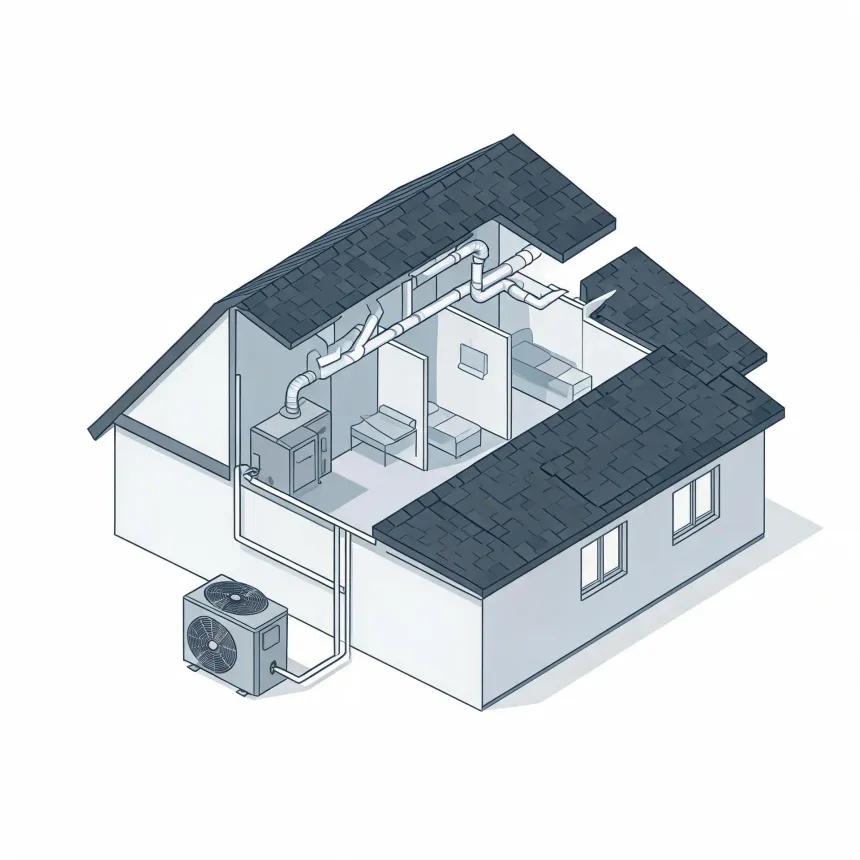
Isometric line illustration of a cutaway single-story house showing interior ductwork, an indoor air handler unit, and an outdoor condenser connected by refrigerant lines, with a dark shingled roof.
Your system heats October through April and cools May through September.

NOAA nClimDiv, 1991–2020 normals

Heat pumps here start the heating load in October, after sitting idle most of the summer.

A weak contactor or low charge that made it through September often fails in the first cold snap.

Electricity here runs 15.87 cents a kWh, so a heat pump working harder than it should shows up on every bill until it's fixed

Power costs 15.87 cents a kWh statewide
64 damaging wind events from 2015 to 2024
26 hail events from 2015 to 2024

Half the homes in Coles County were built in 1971 or earlier. If your heat pump came with a house that old, it's worth asking how old the unit itself is, since a system doesn't always get replaced when a house changes hands. Heat pumps that age are more likely to need a part that's simply worn out rather than one that failed early. That changes the question a tech is answering. It's not just what's wrong, but how much life the unit has left before the next thing goes.

A struggling heat pump costs more here every month it runs

At 15.87 cents a kWh, a heat pump that's low on charge or fighting a bad contactor is paying for itself in wasted power while it waits. Fixing the part that's actually wrong stops that, instead of covering for it until the next cold snap.

Find a contractor

A low charge gets lower

A refrigerant leak does not seal itself. Every day the heat pump runs on a low charge, the compressor pumps refrigerant that is also carrying oil to lubricate it. Less refrigerant means less oil getting where it needs to go, and the compressor wears against itself a little more each cycle.
A frozen coil blocks its own fix

When the outdoor coil ices over and the defrost cycle cannot keep up, airflow drops, and a coil with less airflow collects ice faster. Left alone, the ice packs in around the fan and can keep it from turning at all, which turns a defrost problem into a seized motor.

Most heat pump failures trace back to a handful of parts. The reversing valve is one of them. It is what switches the system between heating and cooling, and when it sticks, the unit gets stuck blowing the wrong temperature air or will not switch modes at all. Capacitors and contactors wear out simply from cycling on and off thousands of times a year, and when one fails, the outdoor unit may hum without starting or not start at all. A dirty outdoor coil forces the whole system to work harder to move heat, and that strain shortens the life of the compressor along with it. A fan motor that is going bad often shows itself first as a grinding or rattling sound before it quits. None of this is unusual or hard to diagnose for someone who knows what to check first.

A diagnostic visit starts outside, at the unit itself. A tech checks the refrigerant charge with gauges rather than guessing, since low charge and a failing compressor can look alike from across the yard. The contactor and capacitor get tested under load, because a part can look fine sitting still and still be the thing that's failing. The reversing valve gets checked by running the system in both modes, since a valve that sticks halfway can still switch sometimes and fool anyone who doesn't test it both ways. Voltage gets checked at the motor and amp draw at the compressor, because those numbers say whether a part is working hard or working wrong. Only after all that does a tech open anything up. The readings tell you where to look before a wrench ever comes out.