A row of illuminated two-story brick houses with front porches and mature trees photographed at twilight.

Heat Pump Repair in Crystal Lake, IL

Tell us about the job

Takes about a minute. No obligation.

RepairHeat PumpMcHenry County, IL
Step 1 of 2

What ZIP code is the job in?

September is when a weak heat pump shows itself

Heat here switches over to heat mode in October, and September is when that first real demand hits. A heat pump that was limping along all summer, or sitting idle with a problem nobody noticed, will struggle the first cold morning it has to work hard.


What that means for the repair call

If your heat pump is short cycling, running constantly without warming the house, or blowing cold air once the weather turns, the cause is usually something that was already wearing out before the switch happened. Catching it in September or early October means it gets fixed before you're relying on it every day through the winter.

8 months
October through May, your system heats
3 months
June through August, it cools
17°F
the average winter night it heats against
81°F
the average summer afternoon it cools against
Isometric line illustration of a cutaway single-story house showing interior rooms with furniture and ceiling ductwork, connected to an outdoor condenser unit on the ground outside the left wall.
Your system heats October through May and cools June through August.

NOAA nClimDiv, 1991–2020 normals

McHenry County sees damaging wind and hail most years, and winter lows average 17°F.

None of that is hard on a heat pump. A unit acting up here is almost always the same handful of problems techs see everywhere else.

McHenry County weather isn't the problem. 140 wind events and 45 hail events over ten years, and a heat pump still fails for the same old reasons.

217 severe weather events from 2015 to 2024
16% of homes statewide lost power a day or more in 2024
140 damaging wind events from 2015 to 2024

Half the homes in McHenry County were built in 1989 or later, which puts a lot of the housing stock here within a heat pump's working life rather than past it. If your house falls on the newer side of that line, the unit struggling right now probably isn't old enough to be the reason. Age alone doesn't wear out a heat pump the way a bad capacitor, a low charge, or a failing reversing valve does. Worth checking when your system went in, especially if it came with the house.

Electricity here runs 15.87 cents a kilowatt-hour. A heat pump working harder than it should costs you every day you leave it.

A heat pump that's short cycling or running nonstop is pulling power the whole time it does it. Illinois electric rates were 15.87 cents per kilowatt-hour in 2024, some of the highest in the region. A problem fixed now costs less than the same problem still running through the winter.

Find a contractor
A man seen from behind in a gray long-sleeved shirt and tan work pants climbs porch steps toward a dark teal front door, carrying a canvas tote bag with leather handles, beside a potted shrub.
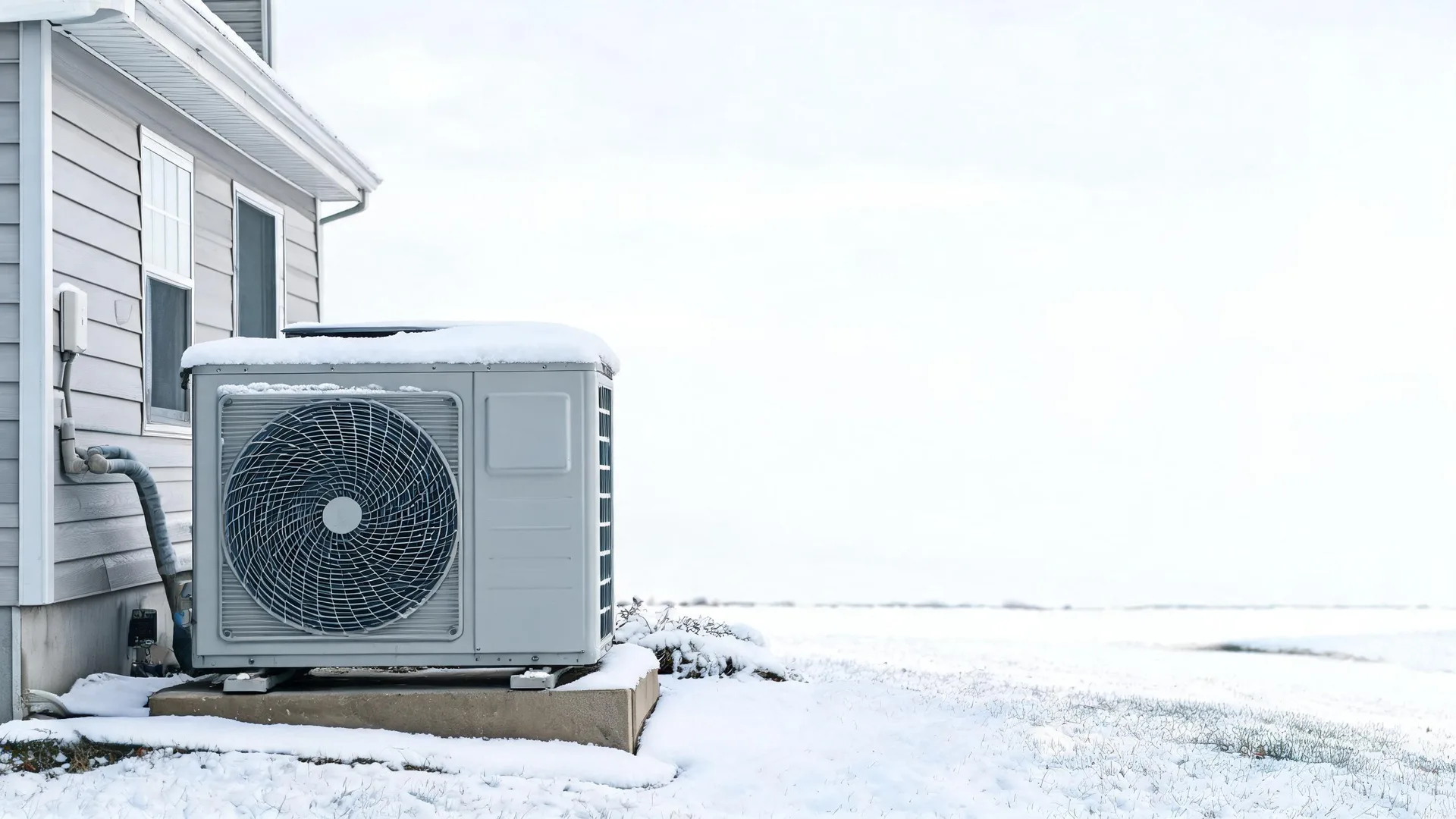
A gray air-source heat pump mounted on a concrete pad next to a house with gray vinyl siding, surrounded by gravel and flanked by green shrubs and white hydrangea flowers.

Check the install date before you decide anything

A heat pump that's new enough to still be under warranty is worth a repair call before anything else. Check the paperwork or the panel inside the unit for an install date. If it was put in alongside a newer house, calling the installer first could mean parts or labor are covered. Either way, a technician can tell you in one visit whether what's failing is a quick fix or something bigger.

What a failing heat pump sounds and feels like

A heat pump in trouble usually tells you before it quits outright. Warm air turning cool or lukewarm at the vents, the outdoor unit icing over when it shouldn't, a hissing or clicking that wasn't there before, or the system cycling on and off every few minutes instead of running a normal stretch. Some units keep running but stop keeping up, so the house never quite reaches the set temperature no matter how long it runs.

What those signs usually point to

Short cycling often traces back to a bad capacitor or a clogged filter choking airflow. Ice on the outdoor coil points to a refrigerant leak or a defrost control that stopped working. A reversing valve that sticks will leave you with heat when you want cooling, or the other way around. None of these get better by waiting, and a unit forced to keep working with one of these problems usually ends up damaging a second part trying to compensate for the first.

A heat pump rarely fails all at once. It starts with one worn part, and the system tries to keep working around it. A low refrigerant charge makes the compressor run longer to move the same amount of heat, so it runs hotter than it was built to. A clogged filter starves the system of airflow, and the coil behind it can ice over from the strain. A failing capacitor makes the compressor struggle to start, and every hard start wears the motor windings a little more. None of these fix themselves by running longer. The part that's already failing keeps failing, and the parts around it start absorbing damage that was never meant to be theirs. Shutting the system off and calling for a look at it stops that chain before it reaches the compressor itself.

Repair makes sense when the part that failed is cheap to replace next to the unit itself. A capacitor, a contactor, a fan motor, a control board. Swap it and the heat pump runs the way it did before. Replacement starts to make more sense once the compressor is the thing failing, because that part alone costs close to what the rest of the system is worth, and a technician has to weigh that against putting money into a unit that's already shown a major failure. Age matters here too, not because a number on a calendar means anything by itself, but because older units use a refrigerant that's being phased out, and a leak in one of those can turn a repair into a search for parts that are getting harder to find. Ask what failed, not just what it costs to fix it. The same repair bill means something different on a unit that's run clean for years than it does on one that keeps coming back with new problems.