






An outdoor HVAC condensing unit on a concrete pad next to a beige single-story house with a dark shingle roof.

Heat Pump Repair in Danville, IL

Tell us about the job

Takes about a minute. No obligation.

RepairHeat PumpVermilion County, IL
Step 1 of 2

What ZIP code is the job in?

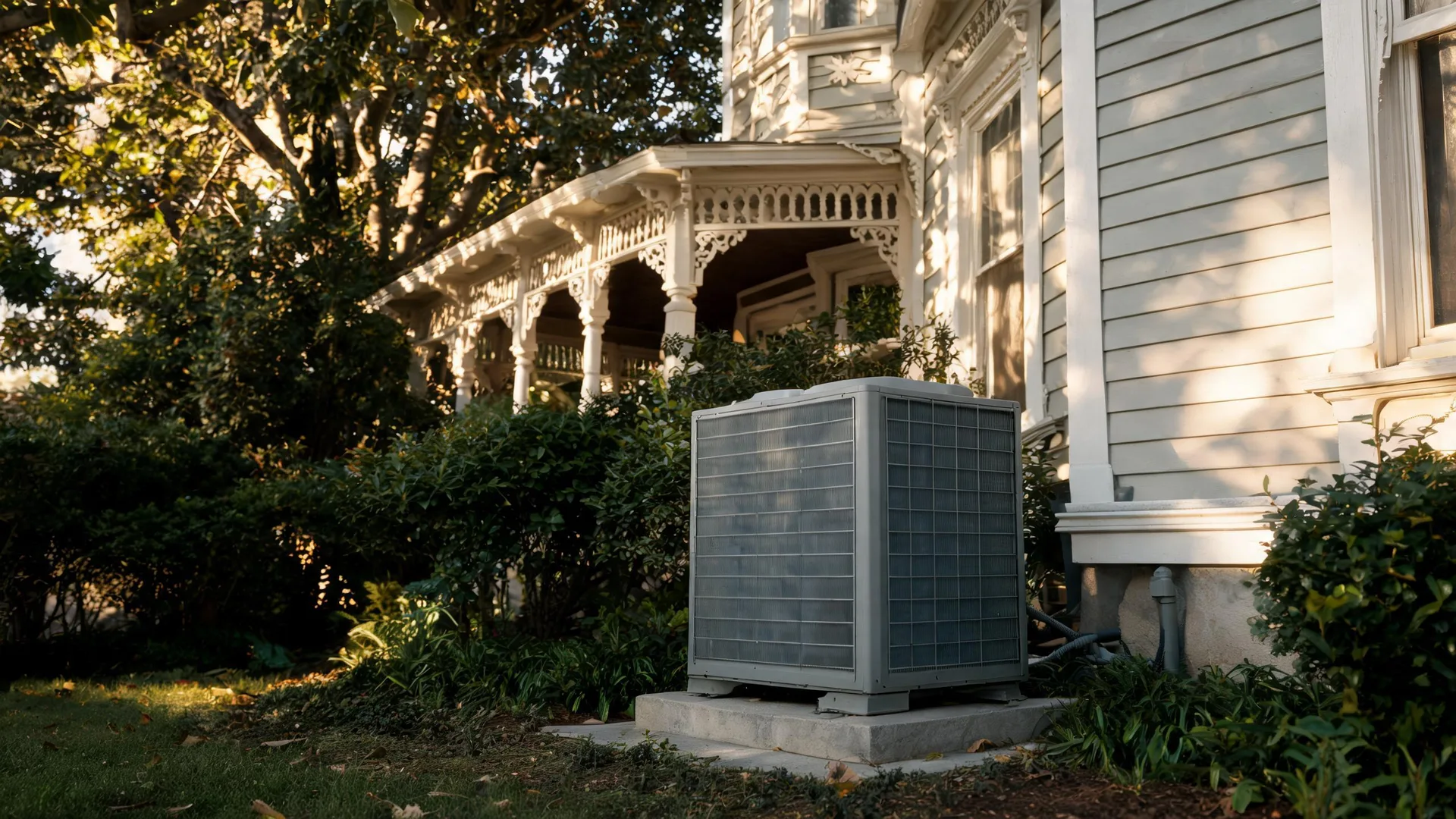
Vermilion County logged 250 severe weather events between 2015 and 2024. Most of that was damaging wind, 163 times in that stretch, and hail came through 70 times. Nine tornadoes touched down too. A heat pump's outdoor unit sits outside year round, and wind-blown debris or hail can bend the fins or dent the cabinet without stopping it from running that day. Across Illinois, 16% of households went at least 24 hours without power in 2024, and a heat pump needs power to run at all. If a storm has come through since the unit last ran fine, it's worth having someone look at it even if you haven't noticed a problem yet.

8 months
October through May, your system heats
4 months
June through September, it cools
21°F
the average winter night it heats against
84°F
the average summer afternoon it cools against
Isometric cutaway illustration of a single-story house with a dark gabled roof, showing interior rooms with ductwork leading to an indoor air handler and an outdoor condenser unit connected by lines on the ground outside.
Your system heats October through May and cools June through September.

NOAA nClimDiv, 1991–2020 normals

Electricity in Vermilion County runs 17.81 cents per kilowatt-hour, higher than most of the country.

A heat pump that's struggling pulls more power to do the same job, and you pay that rate for every extra hour it runs.

Half the homes here are pushing seventy years old, and so is a lot of their equipment

Half the homes here were built by 1957
163 damaging wind events from 2015 to 2024
70 hail events from 2015 to 2024

Heat runs here from October through May, eight months straight, so September is when a weak part gets found the easy way or the hard way. A heat pump that struggled at the end of last winter doesn't fix itself sitting idle through the summer. The first cold mornings put real load on it, and that's when a worn contactor or a low-on-charge system shows itself. Overnight lows average 21°F across December and January, and a unit that's already working harder than it should has no room left when it actually gets cold. Getting it looked at before October means the repair happens on a mild day, not during the first hard freeze.

Storms here don't always break a heat pump outright. They just start the problem.

If a storm has come through since your heat pump last ran fine, get the outdoor unit checked before you assume it's fine. Bent fins or a dented cabinet don't always stop it from running the day of the storm. They just mean it's working harder than it should, and that's how a small problem turns into a no-heat or no-cool call later.

Find a contractor
A man in a cap, navy T-shirt and brown work pants, seen from behind, carries a worn canvas tool bag up steps toward a dark teal front door beside a potted shrub.
A gray air-source heat pump mounted on a concrete pad next to a house with gray vinyl siding, surrounded by gravel and flanked by green shrubs and white hydrangea flowers.

A machine that never really gets a break

This heat pump doesn't get an off season. It runs through the sticky stretch of summer, when the dew point averages 64°F across June, July and August, pulling moisture out of the air on top of cooling it. Then it runs through winter carrying the heat load too. A dew point that high means the outdoor coil is working to wring water out of the air, not just move heat, and that's extra strain the rating plate doesn't account for. Add in whatever a storm has already done to the cabinet or fins, and the compressor and reversing valve are carrying more than a unit in a drier climate ever would. None of that shows up as a sound or a smell right away. It shows up as a part that gives out sooner than it should have.

A small fault turns into a big one

A heat pump low on charge will keep running, but the compressor works harder to move the same heat. Run it that way long enough and the compressor itself wears out, which turns a refrigerant repair into a full replacement. A failing contactor behaves the same way. It keeps closing the circuit until the day it doesn't, usually by welding shut or burning through, and either way the fix is bigger than if it had been caught earlier.
Why it's worth shutting off, not pushing through

If the outdoor unit is icing up, making a new noise, or short cycling, turning it off until someone looks at it costs you comfort for a day. Leaving it running can cost you the compressor, the reversing valve, or both. Those are the expensive parts to replace, and a heat pump with a bad compressor is usually not worth repairing at all.

Before you call anyone, there are a few things worth checking yourself. Go to the thermostat first. Make sure it's set to heat or cool as needed and the temperature is actually set past the room temperature, since a setting bumped by accident looks like a dead system. Check the breaker box next. A heat pump trips a breaker sometimes, and if it's tripped, that's not a sign the unit is broken, just that it needs to be reset once. Look at the outdoor unit itself. If leaves, grass clippings or ice have built up around it, the airflow is choked and the system can't move heat the way it should. Check the air filter too. A clogged filter starves the system of airflow on the indoor side the same way debris does outside, and it's one of the few things a homeowner can actually pull and look at. If the outdoor fan isn't spinning at all, or it's spinning but no air is coming out, that's worth noting before the call, since it tells the contractor where to start. None of this fixes a bad compressor or a refrigerant leak, but it rules out the simple stuff first.

Half the homes in the county were built in 1957 or earlier. The house doesn't tell you how old the heat pump is, since units get replaced long before a house does, but if yours came with the house or hasn't been swapped since, it's worth asking how much life is left in it before paying for a big repair. A contactor or a capacitor is worth fixing no matter the age of the unit. A failing compressor is a different question on a unit that's already old, especially one that's been running through muggy summers and carrying the heat load all winter without a break. Ask the contractor straight out what they'd do in your position before you commit to the bigger repair.