A quiet residential street at dusk lined with illuminated two-story brick houses and mature trees.

Heat Pump Repair in Decatur, IL

Tell us about the job

Takes about a minute. No obligation.

RepairHeat PumpMacon County, IL
Step 1 of 2

What ZIP code is the job in?

May is the test for a heat pump that's been sitting since fall

Cooling starts in June here, but the strain shows up in May when the system first has to push hard. A heat pump that struggled at the end of last season usually shows it again now, before the full heat of summer arrives.


September matters just as much, in the other direction

Heat comes on in October, so September is when a heat pump switches jobs after four months of cooling. If a part was already weak, this is when it gets found, right as you need the heat to work.

7 months
October through April, your system heats
4 months
June through September, it cools
22°F
the average winter night it heats against
84°F
the average summer afternoon it cools against
Isometric cutaway illustration of a single-story house showing interior ductwork, an indoor air handler, and an outdoor condenser unit connected by lines along the exterior wall.
Your system heats October through April and cools June through September.

NOAA nClimDiv, 1991–2020 normals

Decatur winter nights average 22°F, and a heat pump answers that by running for hours at a stretch.

Long runtime like that puts real hours on a heat pump's parts. A weak one usually shows itself during a stretch like this.

184 severe weather events, and your heat pump still just needs its usual fix

184 severe weather events from 2015 to 2024
16% of homes statewide lost power a day or more in 2024
109 damaging wind events from 2015 to 2024

Illinois electricity ran 15.87 cents per kilowatthour in 2024. A heat pump that's low on charge or struggling to defrost runs longer to do the same job, and every extra hour shows up on the bill at that rate. It won't fix itself by running more. The longer a weak system limps along, the more those hours cost you before anyone looks at it.

In a county this old, a repair should start with the system's age

Half the homes in Macon County were built in 1964 or earlier. If your heat pump came with a house that age, it's worth finding out how much life is left in it before you put money into a repair.

Find a contractor
A man in a gray shirt and tan pants, seen from behind, climbs wooden porch steps toward a dark teal front door while carrying a canvas tool bag holding wrenches.
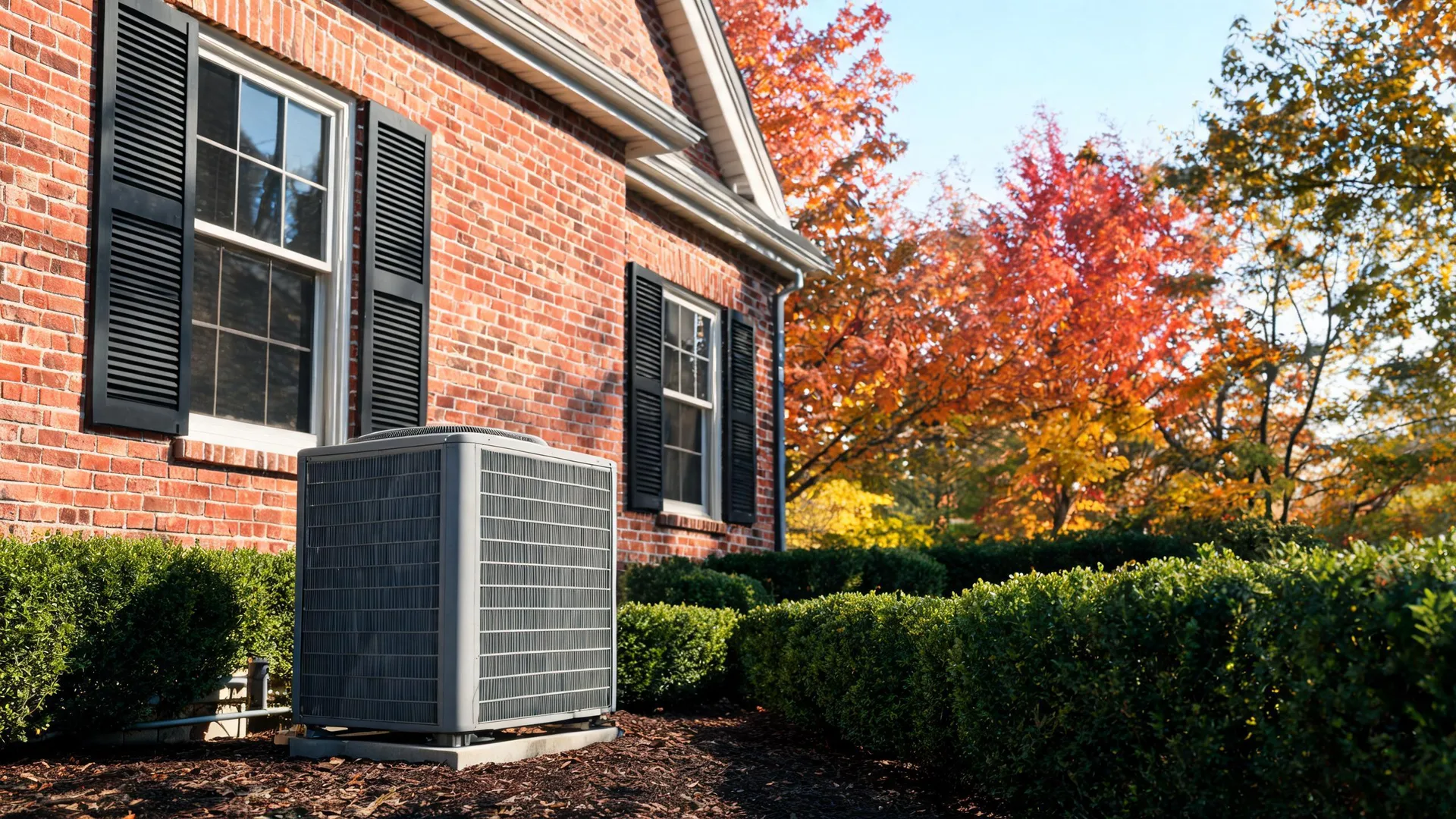
A gray air-source heat pump mounted on a concrete pad next to a house with gray vinyl siding, surrounded by gravel and flanked by green shrubs and white hydrangea flowers.

Ask for the system's age before you decide on the repair

A contractor can check the system's age in a few minutes, from the nameplate or the install record. Ask for that number along with the diagnosis. A heat pump that's run since the house was built has been through decades of defrost cycles, and that kind of use adds up differently than a few years of normal running. The age tells you how much life is likely left, and that should weigh as much as what the repair itself involves.

Check the thermostat and the breaker first

Make sure the thermostat is set to heat or cool as needed and the batteries are good if it uses them. Check the breaker box too. A tripped breaker or a thermostat stuck on the wrong setting looks exactly like a failed heat pump, and both are worth ruling out before anyone needs to come look at it.

Look at the outdoor unit and the filter

Walk outside and see if the outdoor unit is covered in ice, blocked by leaves or debris, or has snow packed against it. Then check the filter inside. A dirty filter or a blocked outdoor coil makes the system work harder and can look like a bigger problem than it is. Clear what you can reach safely, but leave the refrigerant lines and electrical connections alone.

Most heat pump failures trace back to a handful of parts. The reversing valve is a common one, since it's what switches the system between heat and cooling, and it can stick in one position after years of use. Capacitors wear out too, and when one goes weak the compressor or fan motor struggles to start, which puts even more strain on it. The defrost control board is another. It tells the system when to melt off ice that builds up on the outdoor coil, and if it fails the unit either stays iced over or runs defrost too often. Low refrigerant almost always means a leak somewhere in the lines, not a fluid that just runs low on its own. Any of these can start as a small issue, a short cycle here, a longer runtime there, before it turns into a system that won't hold temperature at all.

A diagnostic visit starts with the thermostat and the readings at the unit itself, not guesswork. A contractor will check the pressures on the refrigerant lines, test the capacitor, and watch how the system responds when it's told to switch between heat and cooling. They'll check the temperature difference between the air going in and the air coming out, since that number says a lot about whether the system is actually doing its job. If the outdoor coil has been icing over, they'll watch a defrost cycle run to see if the board is timing it right. Most of this gets done with gauges and a multimeter, not by replacing parts one at a time to see what helps. By the end, the problem should have a name, not just a guess at one.