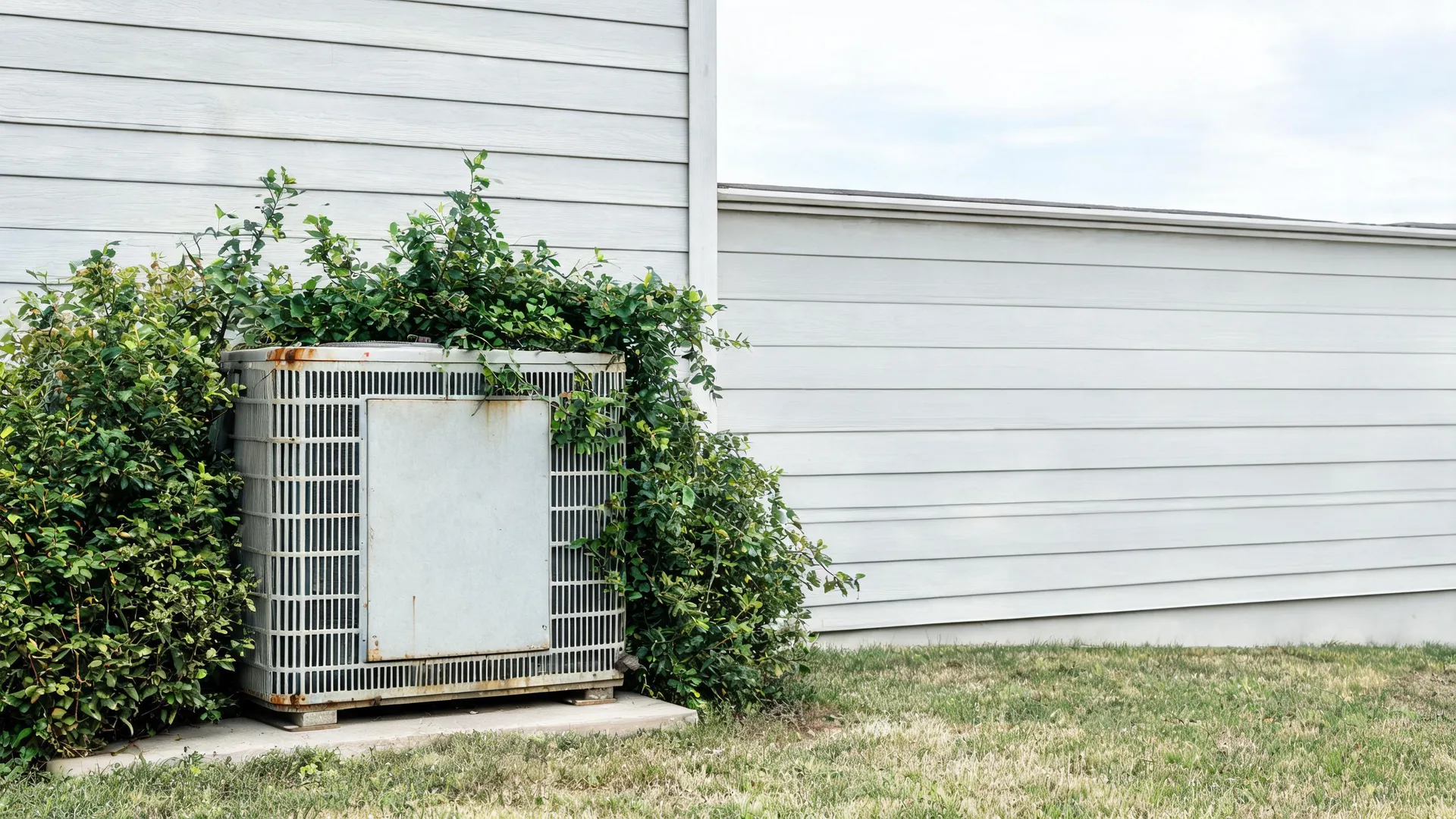
An outdoor air conditioning condenser unit mounted on a concrete pad in front of a single-story suburban house.

Heat Pump Repair in Eureka, IL

Tell us about the job

Takes about a minute. No obligation.

RepairHeat PumpWoodford County, IL
Step 1 of 2

What ZIP code is the job in?

Winter is the hard season here

Eureka heat pumps work hardest in the cold months, with overnight lows averaging 19°F through December, January and February. A heat pump that struggles to keep up on those nights is usually dealing with a low charge, a failing defrost control or a reversing valve stuck in the wrong position, not something unusual to this area.


Diagnose before you replace

A heat pump that runs constantly, blows cool air in heating mode, or trips off on its own usually has one identifiable cause. Finding which part failed, the defrost board, the compressor contactor, the reversing valve, tells you whether a repair solves it or whether the unit is worth replacing.

8 months
October through May, your system heats
4 months
June through September, it cools
19°F
the average winter night it heats against
84°F
the average summer afternoon it cools against
Isometric line illustration of a cutaway house showing interior rooms with furniture, ceiling ductwork connected to an indoor air handler, and a line running outside to an outdoor condenser unit.
Your system heats October through May and cools June through September.

NOAA nClimDiv, 1991–2020 normals

Heat here starts in October, right after a September where the heat pump barely ran.

The first cold snap finds whatever part was already weak.

Half the homes here are old enough that their heat pump may be on its last stretch

Half the homes here were built by 1972
70 damaging wind events from 2015 to 2024
41 hail events from 2015 to 2024

Illinois electricity ran 15.87 cents per kilowatthour in 2024, and a heat pump leans on electric power harder than a gas furnace does. A heat pump that's short on charge or stuck defrosting doesn't just heat poorly, it pulls power the whole time it's struggling. That cost shows up on the bill whether the unit gets fixed or not. A short in the compressor contactor or a reversing valve stuck mid-cycle can run the system hard without actually heating the house. The sooner a contractor finds which part failed, the sooner that waste stops.

Nothing unusual here, just a part that failed

Woodford County sees its share of wind, hail and winter storms, same as most of the Midwest. None of that is what's wrong with your heat pump. A system that won't heat right or keeps cycling off has one failed part behind it, and a contractor can find which one.

Find a contractor
A man in a cap, dark long-sleeved shirt and tan work pants climbs porch steps toward a teal front door, carrying a worn canvas tool bag beside a potted shrub.
A gray heat pump outdoor unit mounted on a concrete pad next to a residential house with lap siding and stone accents.

Know what you're repairing before you pay for it

If your heat pump came with the house, ask the contractor for its age before you approve a repair. Half the homes in Woodford County were built in 1972 or earlier, so plenty of these systems have already been replaced once or are due. A failing defrost board or reversing valve is a straightforward fix on a unit a few years old. On one that's older than the repair itself, ask what else on it is close to failing before you pay to fix just the one part.

What you'll actually notice first

A heat pump in trouble rarely just shuts off. It runs longer than it used to, blows air that feels cool instead of warm, or ices up and never seems to finish defrosting. Some owners notice the outdoor unit humming without the fan turning, or hear a clicking as it tries to start and fails. Any of these means something inside has already failed, not that the system is simply working hard.

Noise and smell tell you where to look

A grinding or screeching sound points to the compressor or a failing fan motor. A burning smell near the indoor unit often means an electrical connection is overheating, which is worth shutting the system off for until a contractor looks at it. A hissing sound can mean refrigerant escaping, and that loss is also why the unit struggles to heat even as it keeps running.

A capacitor weakens before it fails outright, so the outdoor fan or compressor starts slower each time until one cold morning it doesn't start at all. Contactor points pit and burn from the daily cycling of the contacts, and once they're bad enough the unit won't pull in power even though the thermostat is calling for heat. The reversing valve is the part unique to a heat pump, and it can stick from a weak solenoid or from debris, leaving the system stuck heating or stuck in cooling no matter what the thermostat says. Low refrigerant charge almost always means a leak somewhere in the line set or coil, never just the system running low on its own. The defrost control board reads a sensor on the outdoor coil, and when that sensor drifts or the board itself fails, the unit either never defrosts or never stops trying to.

A repair is worth doing when the failed part is small and the rest of the system is sound. A contactor, a capacitor, a defrost sensor, these are cheap compared to the compressor, and replacing one doesn't tell you anything bad about the unit as a whole. The compressor is different. It's sealed, it's expensive, and a failing one usually means the refrigerant circuit has been stressed for a while, so other parts nearby may not be far behind. Age matters less than what else has already gone wrong. A unit that keeps coming back for new repairs year after year is telling you something a single repair bill won't fix. Ask the contractor what failed and why, not just what it costs to fix it.