







Three lit brick homes on a tree-lined residential street photographed at dusk.

Heat Pump Repair in Freeport, IL

Tell us about the job

Takes about a minute. No obligation.

RepairHeat PumpStephenson County, IL
Step 1 of 2

What ZIP code is the job in?

Winter here runs cold. Overnight lows average 15°F across December, January and February, and Freeport sits in zone 5A, where heating is the bigger job for any system. That's normal duty for a heat pump. It doesn't mean anything is wrong with yours. If it's blowing cool air, cycling too often, or running nonstop without warming the house, something specific is causing it. A low refrigerant charge. A failing defrost control. A reversing valve stuck in one position. None of that has to do with Freeport's weather. It has to do with a part that needs a look.

8 months
October through May, your system heats
3 months
June through August, it cools
15°F
the average winter night it heats against
82°F
the average summer afternoon it cools against
Isometric line illustration of a cutaway single-story house showing interior rooms, ceiling ductwork connected to an indoor air handler, and refrigerant lines running to an outdoor condenser unit on a pad.
Your system heats October through May and cools June through August.

NOAA nClimDiv, 1991–2020 normals

Heat here runs October through May.

September is when a weak part gets found, before the first cold month puts real load on it.

Stephenson County doesn't ask more of a heat pump than most places do

124 severe weather events from 2015 to 2024
16% of homes statewide lost power a day or more in 2024
67 damaging wind events from 2015 to 2024
Half the homes here were built in 1960 or earlierHalf the homes in Stephenson County were built in 1960 or earlier. If your system came with the house, it may be near the end of its life.

Illinois homes paid 15.87 cents per kilowatthour in 2024. A heat pump runs on electricity the whole time it's heating or cooling, so every hour it runs poorly shows up on that meter. A system low on refrigerant or stuck on its backup heat strips pulls a lot more power to do the same job. Over a winter here, that difference is not small. Paying for it every month while you put off a fix costs more than the fix will.

A heat pump running wrong costs you every month it's not fixed

A heat pump that's low on charge or stuck on backup heat strips runs up your bill every day it's left alone. Get the cause found and fixed.

Find a contractor
A man in a cap, gray long-sleeve shirt and brown work pants climbs wooden porch steps toward a dark teal front door, carrying a canvas tool bag, with a potted shrub beside the entry.
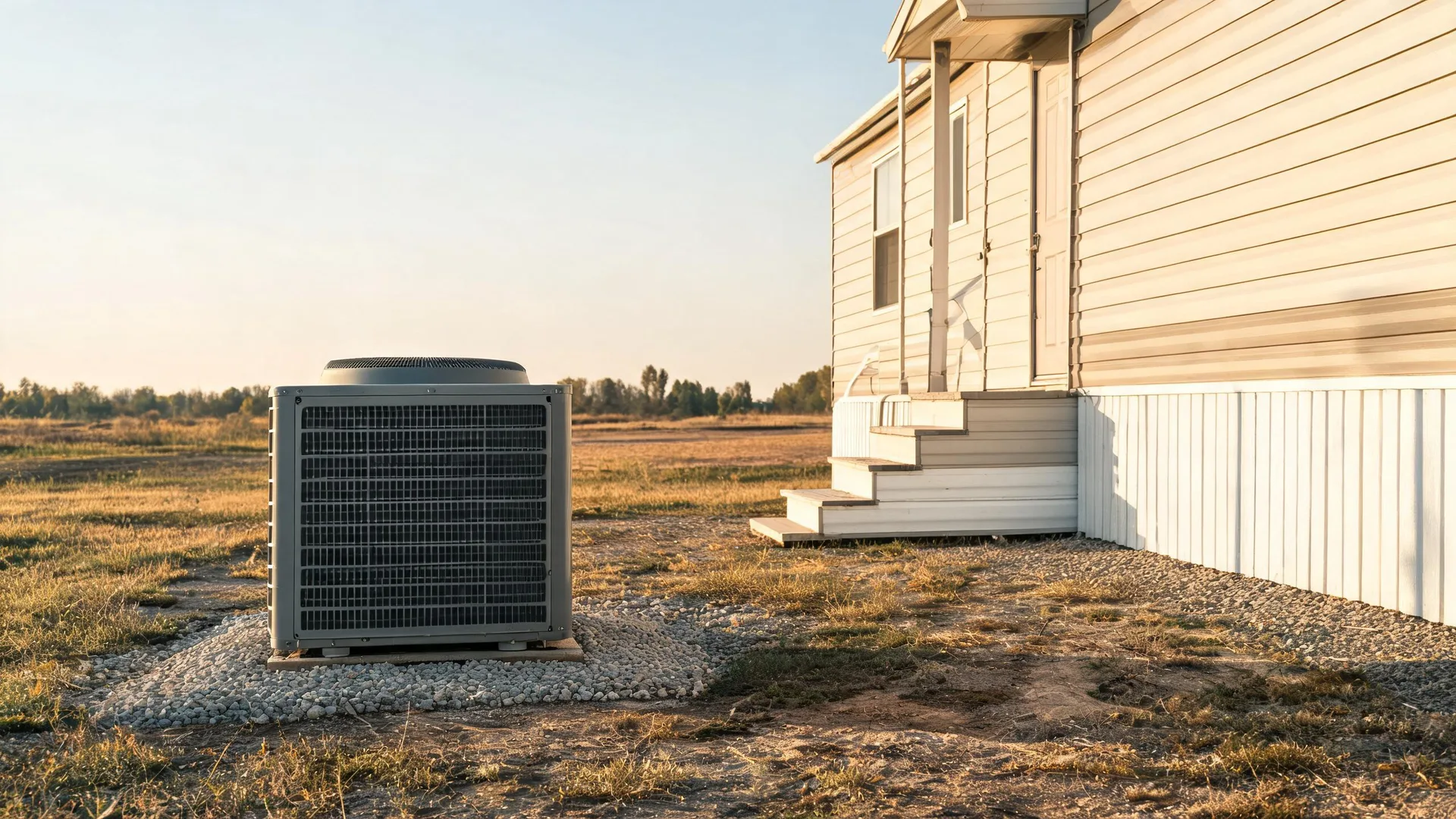
A gray heat pump outdoor unit mounted on a concrete pad next to a residential house with lap siding and stone accents.

What you can check before anyone comes out

Before anyone comes out, go to the thermostat and check the mode and the set temperature. A heat pump set to emergency heat will run the backup strips instead of the compressor, and it'll feel like something's wrong when it's just set wrong. Next, look at the outdoor unit. If it's covered in ice beyond a thin coating, or buried in snow or leaves, that blocks airflow the system needs to work. Check the indoor filter too. A clogged filter starves the system of airflow and can make it run constantly without catching up. Walk around the house and feel the vents. Air that's cool but still moving is often normal for a heat pump, not a sign of failure. Air that's barely moving at all points to something blocked or a blower motor having trouble. None of these checks require tools or opening any panel. If the mode is right, the outdoor unit is clear, and the filter is clean, and it's still not warming the house, the cause is inside the system and needs a tech to find it.

A new sound is worth paying attention to

A heat pump that hums and clicks on schedule is doing what it should. A grinding or screeching noise from the outdoor unit usually means a fan motor bearing is wearing out. A loud bang at startup or shutdown often means a compressor mount has worked loose. A sound that's new and getting worse over a few days is worth a call.
The symptom and the cause are rarely the same thing

A house that won't hold its set temperature or a unit that won't stop running doesn't point straight at one part. A tech has to trace it through refrigerant pressure, airflow, and the defrost controls to find what's actually failing. Guessing at the part from the symptom alone usually means paying for a repair that doesn't fix it.

A heat pump that's struggling doesn't fix itself by running longer. If the charge is low, the compressor keeps working against a system that can't move heat properly, and it runs harder for the same result. Ice on the outdoor coil is the clearest case. A little frost comes and goes with normal defrost cycles. Ice that builds up and stays means the defrost cycle isn't clearing it, and every hour the unit runs with that coil iced over, it's pulling in less air and working harder to do less. Left alone, that ice spreads, airflow drops further, and the compressor can end up flooded with refrigerant it was never meant to handle. A reversing valve stuck halfway is the same story. It won't seat itself just because the system keeps cycling. Each cycle puts the same strain on a part that's already failing, and what starts as the wrong temperature air can end up as a compressor that won't start at all.

A tech weighing repair against replacement is looking at the compressor first. That's the part that can't be swapped out on its own, it has to be replaced as a full outdoor unit, and it's the most expensive part in the system. A failed capacitor, a bad contactor, a stuck reversing valve, those get replaced and the system runs like it did before. A compressor that's failed, or a coil leaking refrigerant in more than one spot, is a different question, because the cost of chasing it can start to rival putting in a new system that won't need chasing. Age matters less than what's actually broken. A heat pump years into its life with a clean compressor and one bad part is still worth fixing. One with a tired compressor and a growing list of repairs behind it is telling you something, even if any single fix looks small on its own.