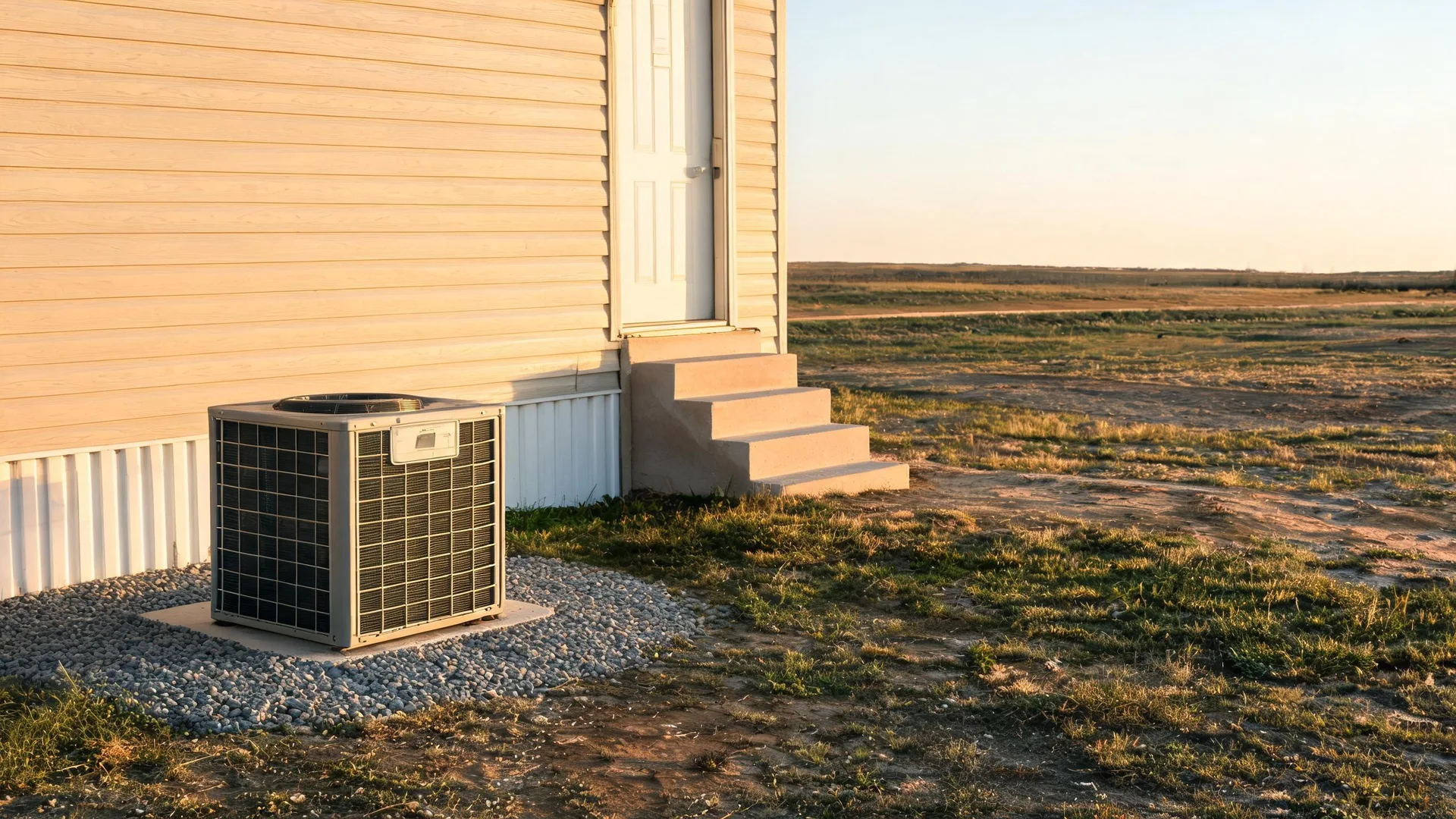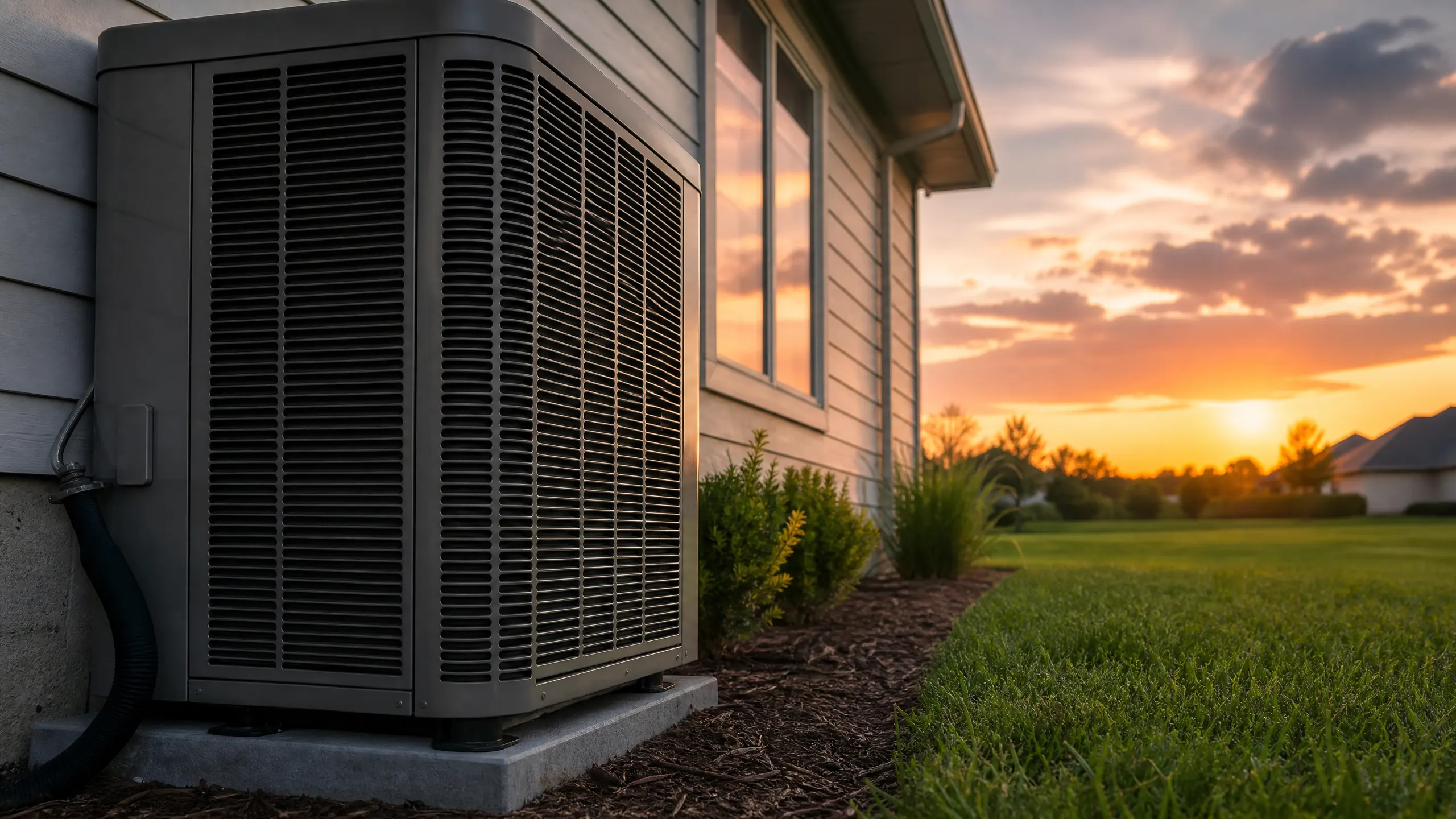
An outdoor air conditioning condenser unit mounted on a concrete pad beside a house at sunset.

Heat Pump Repair in Galesburg, IL

Tell us about the job

Takes about a minute. No obligation.

RepairHeat PumpKnox County, IL
Step 1 of 2

What ZIP code is the job in?

Winter is the bigger job here

Overnight lows average 18°F through December, January and February in Knox County, and heating is the larger load on a heat pump in this area. That's normal demand, not strain. If your system is losing heat or running nonstop, the usual causes are a low refrigerant charge, a failing defrost control, or a reversing valve stuck in the wrong position.


Storms here aren't unusual

Knox County sees wind, hail and winter storms most years, but none of it marks your heat pump out for special wear. After a bad storm it's worth checking for a tripped breaker or a branch against the outdoor unit. Outside of that, most repair calls trace back to the same parts. A weak capacitor, a worn contactor, a sensor that's drifted out of calibration.

8 months
October through May, your system heats
3 months
June through August, it cools
18°F
the average winter night it heats against
83°F
the average summer afternoon it cools against
Isometric cutaway illustration of a single-story house showing interior rooms, ceiling ductwork connected to an air handler, and an outdoor condenser unit linked by a line set.
Your system heats October through May and cools June through August.

NOAA nClimDiv, 1991–2020 normals

Heat pumps here run heat from October through May, about eight months of the year.

September is when a weak part gets found, before the first cold morning asks more of it.

Knox County weather is normal for a heat pump. Most repairs come down to a part, not the storm.

134 severe weather events from 2015 to 2024
16% of homes statewide lost power a day or more in 2024
74 damaging wind events from 2015 to 2024
Your heat pump may be older than you thinkHalf the homes in Knox County were built in 1957 or earlier.

Illinois electricity ran 15.87 cents per kilowatthour in 2024, higher than a lot of the country, and your heat pump leans on it heavily all winter. A system that's low on charge or short-cycling on a bad sensor draws power without delivering the heat you're paying for. That gap shows up on every bill until the actual cause gets fixed. A weak capacitor or a stuck reversing valve doesn't get better on its own, it just keeps costing you at that rate.

A bad part costs you every month it runs

At 15.87 cents a kilowatt-hour, a heat pump that's low on charge or short-cycling is spending your money without heating the house. Getting the actual cause found and fixed stops that waste on every bill after.

Find a contractor
A person in a dark long-sleeved shirt and brown work pants, seen from behind, climbs porch steps toward a teal front door while carrying a canvas tool bag, with a potted shrub beside the steps.
A gray heat pump outdoor unit mounted on a concrete pad next to the stone-accented exterior wall of a house.

Ask what's left in it, not just what's wrong

If your heat pump came with the house, ask the contractor for its age and condition before paying for a repair that only buys it one more season. A unit from that era may be close to the end of its working life. A straight answer on what's left in it is worth more than a quick fix on a part that's about to be followed by another one.

What you'll actually notice first

One room runs warm and another stays cold, or the air coming out doesn't feel hot even though the unit is running. Sometimes it's the outdoor unit caked in ice and never switching into defrost. Sometimes it's the system cycling on and off every few minutes instead of running a steady stretch. These are the signs that show up before anyone pulls a cover off and looks at a part.

When to get someone out now

A heat pump blowing cold air on a cold day, tripping its breaker, or making a grinding or clicking noise from the outdoor unit needs a call that day, not next week. A system that's just a little weaker than it used to be, or cycling a bit more than normal, can wait for a scheduled visit. Waiting on the first kind usually means a bigger repair once someone does get out there.

A heat pump with a failing part doesn't just run weaker, it runs longer trying to make up for what the part isn't doing. A low refrigerant charge means the compressor has to work a longer stretch to move the same heat into the house, and it keeps doing that every cycle until the charge is corrected. A reversing valve stuck halfway lets the system send refrigerant somewhere it isn't supposed to go, so parts built to handle one temperature end up handling another. Ice on the outdoor coil that never clears because the defrost control isn't switching over blocks airflow, and the system pulls harder against that blockage instead of resting. None of this is the system struggling against the weather. It's one part failing to do its job and everything around it compensating, and that compensation is what turns a small fix into a bigger one if it sits too long.

Some repairs are worth it and some aren't, and the difference usually comes down to the compressor. If the compressor is still good, replacing a capacitor, a contactor, or a reversing valve brings the system back to normal and it will run that way for years. If the compressor itself is failing, worn from strain or just old, no other repair fixes that, and the cost of swapping a compressor on an old unit often isn't far off from a new system. A contractor can check refrigerant pressures and compressor amp draw and tell you which situation you're in. Ask that question directly before agreeing to a repair, because it tells you whether you're fixing the system or just delaying the real decision.