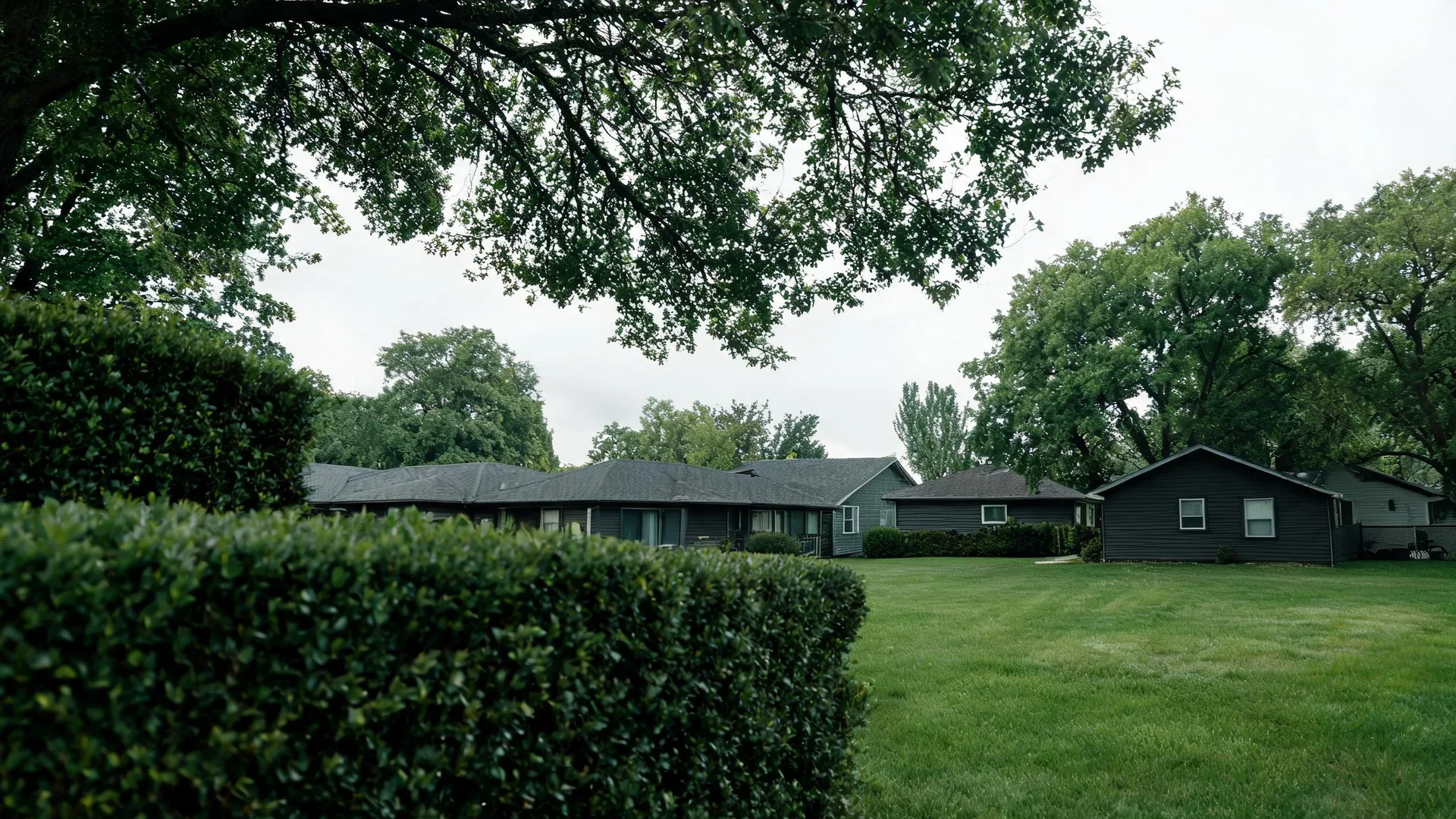
A mowed lawn bordered by a tall trimmed hedge, with single-story houses and large leafy trees under an overcast sky.

Heat Pump Repair in Granite City, IL

Tell us about the job

Takes about a minute. No obligation.

RepairHeat PumpMadison County, IL
Step 1 of 2

What ZIP code is the job in?

April is when a weak heat pump gets found out

Heat pumps in Granite City switch over to cooling in May, and September is the last month before heat starts back up. A unit that limped through last season on a tired capacitor or a low charge usually fails when that first real load hits it, not before.


The switchover is the best time to catch the real cause

A heat pump that struggles in the first week of a new season is telling you something was already wrong before the season began. Getting it looked at right when the load changes, rather than after a week of running hard, gives a contractor the best shot at finding what actually failed instead of patching around it.

7 months
October through April, your system heats
5 months
May through September, it cools
25°F
the average winter night it heats against
86°F
the average summer afternoon it cools against
Isometric line illustration of a cutaway single-story house showing interior rooms, ceiling ductwork, an indoor air handler unit, and an outdoor condenser connected by a line set.
Your system heats October through April and cools May through September.

NOAA nClimDiv, 1991–2020 normals

A heat pump blowing air that feels barely warmer than the room is not doing its job, even if the fan runs fine.

A reversing valve or a failing compressor are the usual cause, and neither one gets better by waiting.

At 15.87 cents a kilowatt-hour, a heat pump working harder than it should costs you every month it runs that way

Power costs 15.87 cents a kWh statewide
86 damaging wind events from 2015 to 2024
40 hail events from 2015 to 2024

Half the homes in Madison County were built in 1971 or earlier. If your house is one of them, that doesn't mean the heat pump outside is that old too. A system gets replaced over a house's life, sometimes more than once. But if the unit did come with the house, or you don't know when it was last replaced, that's worth finding out before you pay for a big repair. An older heat pump works harder to hold the same temperature, and a part like the compressor or reversing valve only gets more likely to fail the longer it's been running.

Your heat pump's problem is the usual one, not something about Granite City

Madison County sees its share of wind, hail and the odd tornado, but none of that points to why your heat pump is struggling now. The usual causes are a reversing valve stuck in one position, a low refrigerant charge, or a compressor that's been working harder than it should for a while. A contractor can check which one it is and tell you what it takes to fix.

Find a contractor
A gray heat pump condenser unit mounted on a concrete pad against the gray lap-siding exterior wall of a house.

Check its age before you approve the repair

Look for a permit or install record before you approve the repair. It will have a date on it. No record at all is worth knowing too, since it points toward the unit being original to the house. A contractor can also read a lot off the data plate and the condition of the unit itself. Ask them straight how many years of life is left in this one. That answer should weigh as much as the repair quote when you decide what to spend.

Running it harder covers up the real fault

A heat pump with a low charge or a sticking reversing valve will still blow some air, so it's tempting to let it keep going. But the compressor ends up working past what it was built for, trying to make up what the refrigerant circuit can't deliver. That's the part this habit wears out, and once it fails the whole repair changes.

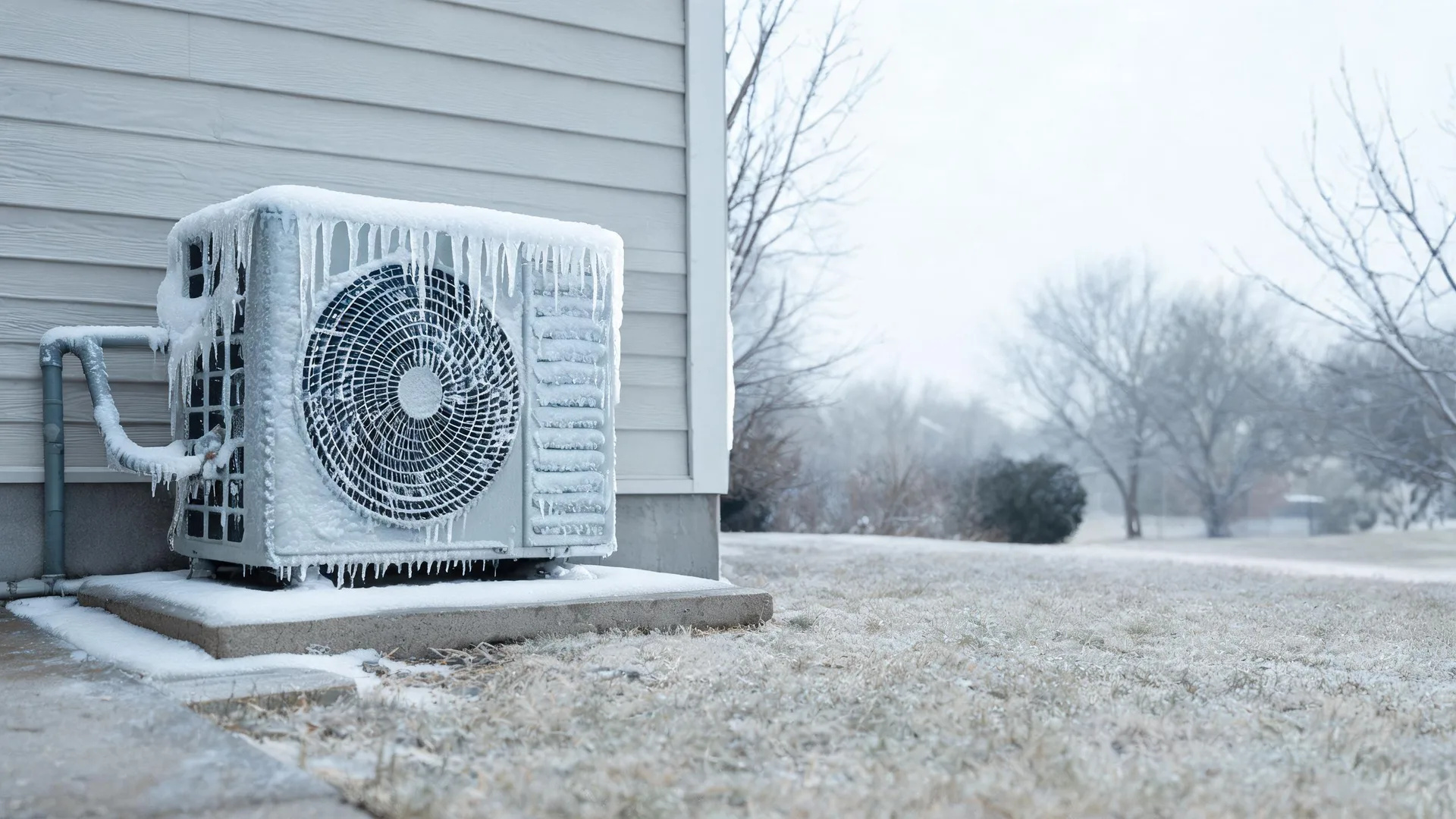
Ice on the outdoor unit is a sign, not the problem

A heat pump that keeps running with a frozen coil is fighting itself. Airflow drops, the system pulls harder to move heat through ice, and the compressor takes the strain. Left alone, what starts as a defrost cycle issue or a dirty coil can end with a compressor that has to be replaced instead of a coil that just needed cleaning.

There are a few things worth checking before anyone comes out. Look at the outdoor unit and clear away anything blocking it, leaves, a fallen branch, anything stacked too close to the sides. Check the air filter and swap it if it is gray and matted. Go to the thermostat and make sure it is actually calling for heat or cool, since a dead battery or a setting bumped to the wrong mode will look exactly like a broken system. Check your breaker panel for a tripped switch. None of this fixes a stuck reversing valve or a low charge, but it rules out the simple stuff first, and it gives the contractor a clearer picture of what you've already tried.

A diagnostic visit starts with questions before it starts with tools. The tech wants to know when the problem shows up, whether it's running nonstop, cycling oddly, or blowing air that never gets warm or cool. Then the unit gets watched running in whichever mode it's struggling in, because a problem that only shows up under load won't show up standing still. Gauges go on to check the refrigerant charge, and the reversing valve gets tested directly rather than guessed at, since a valve stuck partway can mimic a low charge or a bad compressor. Electrical readings on the compressor tell their own story, since a compressor drawing the wrong amperage is often failing before it ever stops running outright. The goal isn't to catch the system acting up. It's to find the one part causing it, so the repair fixes that and not just the symptom.