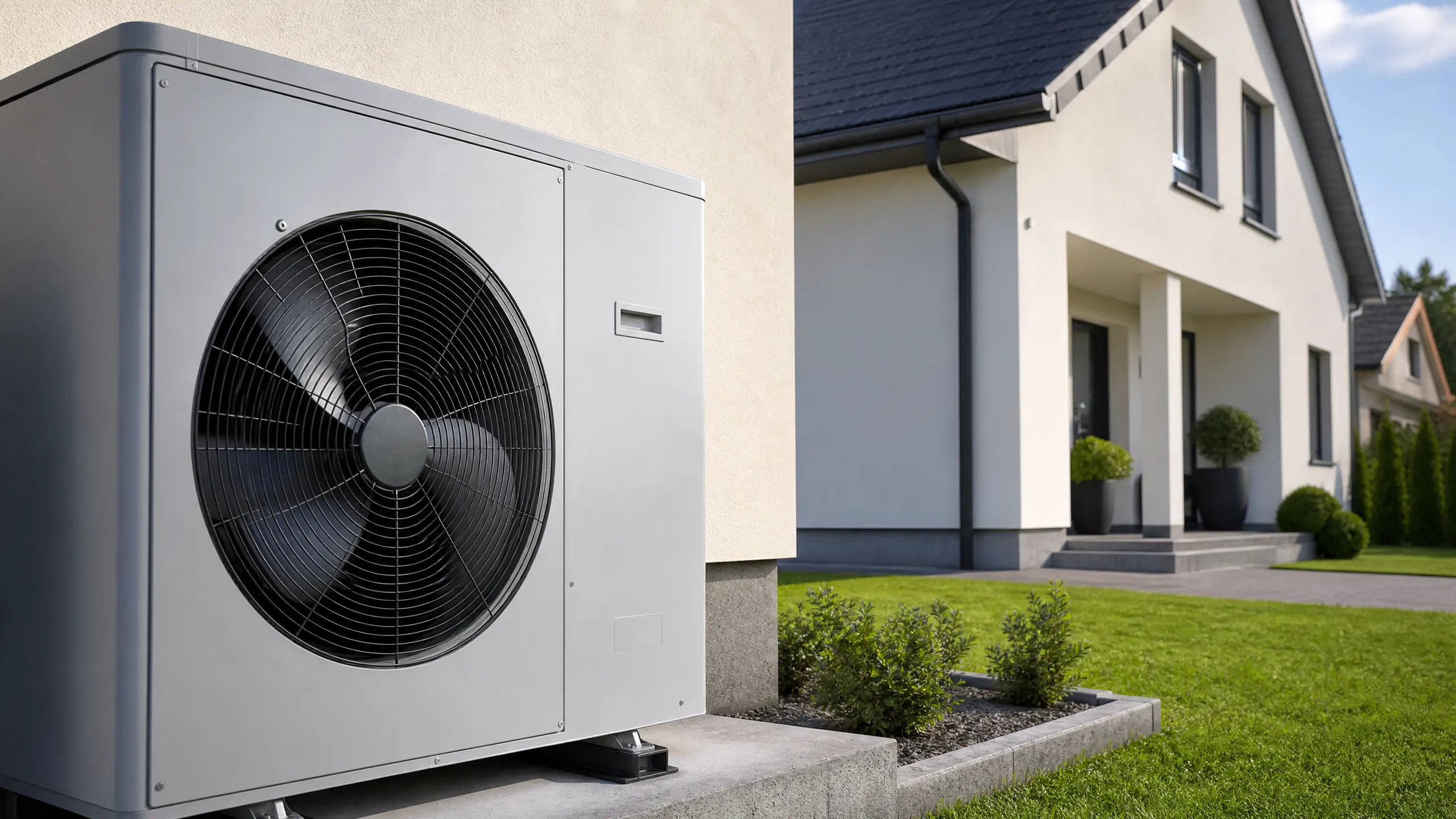





A grey air-source heat pump outdoor unit mounted on a concrete pad next to a modern white-rendered residential house.

Heat Pump Repair in Kankakee, IL

Tell us about the job

Takes about a minute. No obligation.

RepairHeat PumpKankakee County, IL
Step 1 of 2

What ZIP code is the job in?

A heat pump in Kankakee County works most of the year. Heat runs October through May, about eight months, then it switches over for cooling in June through August. May is worth a service call if the system struggled last winter, since that's the month before it has to carry the full cooling load. The same goes for September, right before heat season starts. A unit that ran fine all summer can show a bad igniter or a weak capacitor the first cold night in October, because that's the first time all year that side of the system has to work.

8 months
October through May, your system heats
3 months
June through August, it cools
20°F
the average winter night it heats against
83°F
the average summer afternoon it cools against
Isometric cutaway illustration of a small house showing interior rooms with furniture, an indoor air handler with ductwork, and lines running to an outdoor condenser unit beside the building.
Your system heats October through May and cools June through August.

NOAA nClimDiv, 1991–2020 normals

Kankakee winters average 20°F at night from December through February.

A heat pump has to work for that every night, and a weak system shows it first on the coldest ones.

A heat pump that's struggling runs on power priced at 15.87 cents a kWh, all day, every day it's broken

Power costs 15.87 cents a kWh statewide
99 damaging wind events from 2015 to 2024
21 hail events from 2015 to 2024

Half the homes in Kankakee County were built in 1972 or earlier. If your heat pump came with a house that old, it's probably not the original unit, but whatever is out there has already been working for years before this breakdown. Older systems lose capacity before they fail outright, so a unit struggling now may be nearing the end of what it has to give rather than suffering a one-time fault. That changes the math on a repair. Before paying for a major fix, it's worth asking the contractor how many years of service are left in the unit, not just what's wrong with it today.

Your heat pump problem is likely the usual one

Kankakee County gets its share of wind, hail and winter storms, same as this part of Illinois generally does. None of that points to anything unusual going on with your heat pump. It's almost always a part that's failed or worn out, a capacitor, a contactor, a defrost sensor, and those get found and fixed the same way they do anywhere else. Get a contractor out to find the actual cause before paying for anything.

Find a contractor
A dark gray heat pump unit mounted on a concrete pad next to a house with gray siding and a stone veneer wall.

One bad part or a system winding down

A repair makes sense when one part failed and the rest of the system is still carrying its share of the load fine. A capacitor, a contactor, a defrost sensor, these fail on their own schedule and don't say anything about the compressor or the coils. Replace the one part and the unit goes back to doing what it was doing before. Replacement starts to make more sense when the failures stop being isolated, when a unit that just had its capacitor replaced is back for a stuck reversing valve the following season, then a weak compressor the season after that. That pattern means the system is wearing out generally, not failing in one spot, and the next repair is just a down payment on the one after it. The compressor is the part that settles the question most of the time. It's the most expensive part in the unit and the one that's hardest to justify replacing on its own, since a compressor old enough to fail is usually running alongside a coil and a reversing valve that are just as old and just as close to the end. A contractor who's found the failed part can also tell you what shape the rest of the unit is in, and that's worth asking for directly.

What you'll notice first

Air coming out of the vents that doesn't feel warm, a unit that runs without ever catching up to the thermostat, or ice building up on the outdoor coil that never melts off during the defrost cycle. Sometimes the system blows cold air while it's set to heat, which usually means the reversing valve stuck in the wrong position. A clicking sound when the unit tries to switch modes and can't is another one worth paying attention to.
What those signs mean for the job

A sensor or control board problem usually still lets the unit run, just poorly, so it can hold on for a short while without getting worse. A unit that won't start at all, trips a breaker, or has ice built up past the coil and onto the refrigerant lines needs attention right away, since that kind of damage spreads the longer the system keeps trying to run.

Before anyone comes out, a few things are worth a look. Check the thermostat first, since a dead battery or a setting bumped to the wrong mode causes real symptoms with nothing actually wrong with the unit. Go outside and look at it. If it's buried in ice or snow, or leaves and debris are packed against the outdoor coil, that alone can stop it from heating or cooling right, and clearing it off is safe to do by hand. Check the breaker panel for a tripped switch, since a heat pump that won't start at all sometimes just lost power and never reset. Look at the air filter while you're at it. A filter choked with dust cuts off airflow and can look like a failing system when the real problem is something you can fix yourself. If the outdoor fan isn't spinning at all, or it's straining and clicking without turning, that's worth telling the contractor but not something to take apart on your own.

A diagnostic visit starts outside, at the unit itself. The contractor checks refrigerant pressure, looks at the reversing valve, and watches how the compressor and fan behave when the system is asked to switch modes. Inside, they check the air handler, the filter, and the readings at the thermostat against what the outdoor unit is actually doing. Capacitors, contactors, and the defrost board get checked under load, not just looked at. A part can sit still and look fine, then fail the moment it has to start something. Most of this gets done with the system running, because a problem that only shows up under load won't show up any other way. By the end, the contractor should be able to point to the specific part that failed and explain why, not just that something somewhere is wrong.