A row of illuminated two-story brick houses with front porches and mature trees photographed at twilight.

Heat Pump Repair in Kewanee, IL

Tell us about the job

Takes about a minute. No obligation.

RepairHeat PumpHenry County, IL
Step 1 of 2

What ZIP code is the job in?

The first cold snap finds the weak spot

Heat pumps here switch over to heating in October. Whatever was marginal in a unit, a weak capacitor, a low charge, a contactor on its way out, tends to show up in the first hard pull of the season rather than in the easy months.


September is worth a call too

A heat pump that's struggling to cool a house in late summer often has the same problem waiting for it in October. Catching it in September, before the switchover, means one repair instead of a breakdown on the first cold morning.

8 months
October through May, your system heats
3 months
June through August, it cools
18°F
the average winter night it heats against
83°F
the average summer afternoon it cools against
Isometric line illustration of a cutaway house showing interior rooms with furniture, ceiling ductwork connected to an indoor air handler, and an outdoor condenser unit linked by refrigerant lines.
Your system heats October through May and cools June through August.

NOAA nClimDiv, 1991–2020 normals

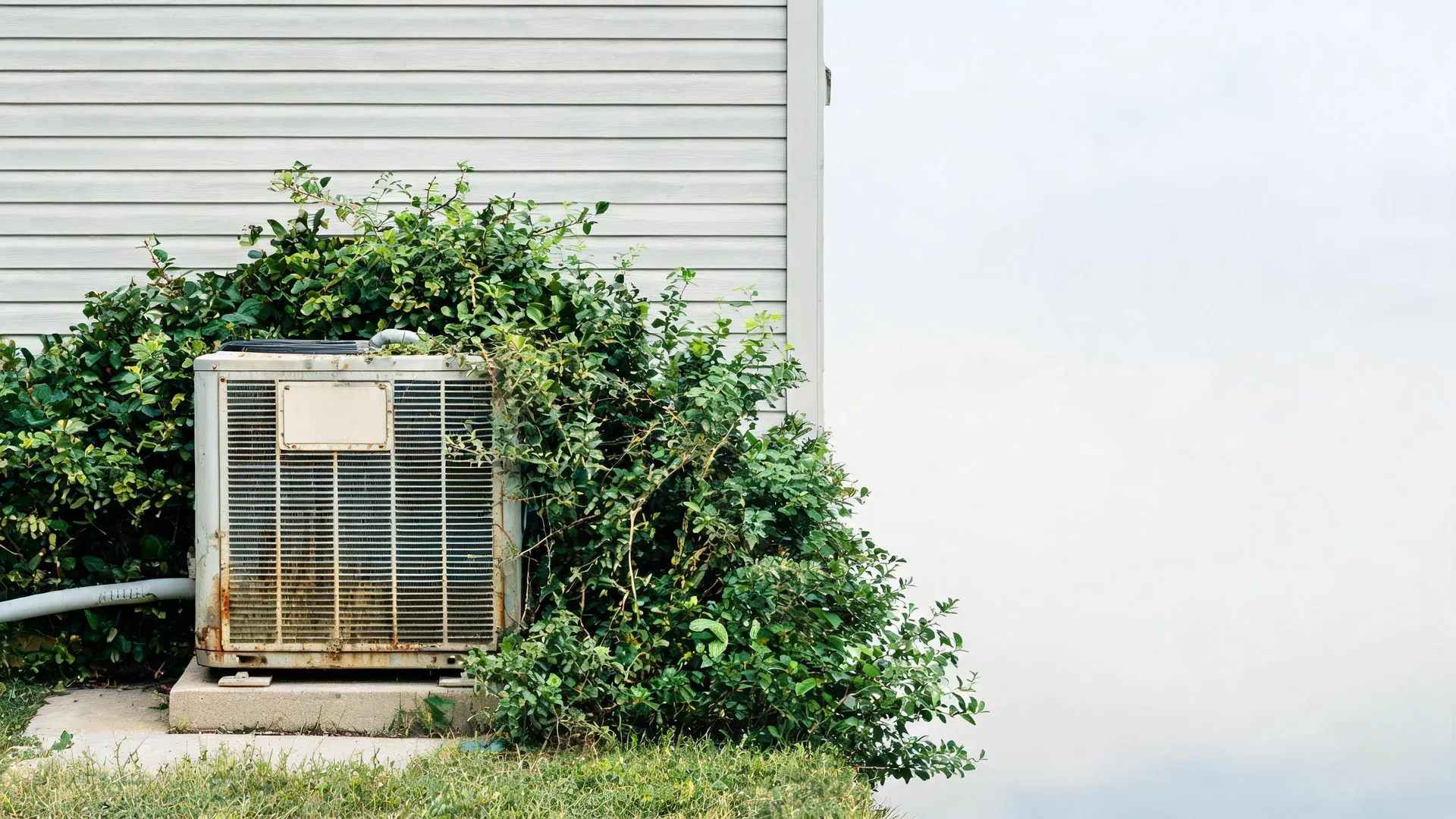
Check the outdoor unit before anything else, it needs clear space on all sides to pull in air.

A unit packed in with leaves or snow can't move heat either direction, and the fix might be nothing more than clearing it out.

Kewanee's weather is ordinary. A heat pump problem here is ordinary too.

229 severe weather events from 2015 to 2024
16% of homes statewide lost power a day or more in 2024
103 damaging wind events from 2015 to 2024

Electricity in Illinois ran 15.87 cents per kilowatthour in 2024. A heat pump that's short on refrigerant or running on a weak capacitor doesn't just work less well, it pulls more power to do the same job. That cost shows up on every bill until the actual problem gets fixed, not just eased. Waiting it out doesn't save you anything. The repair is usually smaller than a season of paying extra to run a unit that's struggling.

Your heat pump may be older than you think

Half the homes in Henry County were built in 1961 or earlier. If your heat pump came with a house that old, it may be on its original equipment, or close to it. An older unit can still be repaired, but it's worth knowing how much life is left in it before you put money into a big fix.

Find a contractor
A gray heat pump outdoor unit mounted on a concrete pad next to a residential house with lap siding and stone accents.

Running it longer doesn't buy you time

A heat pump that's struggling doesn't fail quietly. A weak capacitor makes the compressor work harder to start every cycle, and every hard start wears the contactor points a little more. A low refrigerant charge makes the compressor run hotter than it should, and heat is what kills a compressor over time. Ice that isn't melting between defrost cycles builds on itself, the coil gets worse at moving heat, so the unit runs longer to do less, which means more frost, not less. None of these fix themselves by running. The part that's already failing is doing the same job every cycle, under the same strain, and strain doesn't reverse on its own.

The reversing valve is the part that's unique to it

A heat pump fails the same ways an air conditioner does, but it has one part a straight AC doesn't. The reversing valve switches it between heating and cooling. When that valve sticks, the unit gets stuck in one mode, or it starts blowing air that's not the temperature you asked for. It's a common failure point precisely because nothing else in the system has to move that way.

Most calls are the same handful of parts

A weak capacitor. A failing contactor. A low refrigerant charge. A dirty outdoor coil. These cause most of the no-heat and no-cool calls a heat pump gets, and none of them mean the unit is done. They're wear parts and maintenance items, not signs of a dying machine. The compressor itself failing is rarer and more serious, and it's usually the last thing to go, not the first.

Most of the time the unit tells you something's wrong before it quits altogether. Air coming out that isn't warm or cool, just moving, is one of the first signs, especially if the system runs and runs without the house changing temperature. Ice on the outdoor unit in anything but the coldest weather usually means it isn't defrosting the way it should. A clicking at startup that doesn't resolve into the unit actually running points at a contactor or capacitor, not something that fixes itself. Short cycling, where it kicks on and off every few minutes instead of running a full stretch, wears on the parts that are already stressed. Any of these is worth a call before the day it stops entirely, because a unit that's struggling rarely gets better on its own.

A diagnostic call starts outside, at the unit itself, before any gauges come out. The tech checks static readings, looks at the coil, listens to it run through a cycle if it can. Gauges go on next to check refrigerant pressure, since too little or too much both point at specific problems rather than a general one. Electrical testing comes after, checking the capacitor's actual output against what it's rated for and checking the contactor for pitting or a coil that's failing. If the unit runs in both directions, the tech forces it into the other mode to see whether the reversing valve actually switches or just hangs there. None of this takes guessing. Each test either clears a part or points straight at it, and that's what tells you whether you're looking at a quick fix or something bigger.