




A quiet residential street at dusk lined with illuminated two-story brick houses and mature trees.

Heat Pump Repair in Oswego, IL

Tell us about the job

Takes about a minute. No obligation.

RepairHeat PumpKendall County, IL
Step 1 of 2

What ZIP code is the job in?

Heat pumps here work hardest right at the start of each season, when they first get asked to carry a full load. That's October, as heat takes over, and it's June, when cooling starts. A part that was already weak over the summer can hang on until that first cold morning in October, then fail right when you need heat. If your heat pump is struggling now, look at when it started. Trouble that shows up right as the season turns usually points to something that was already wearing down.

8 months
October through May, your system heats
3 months
June through August, it cools
19°F
the average winter night it heats against
83°F
the average summer afternoon it cools against
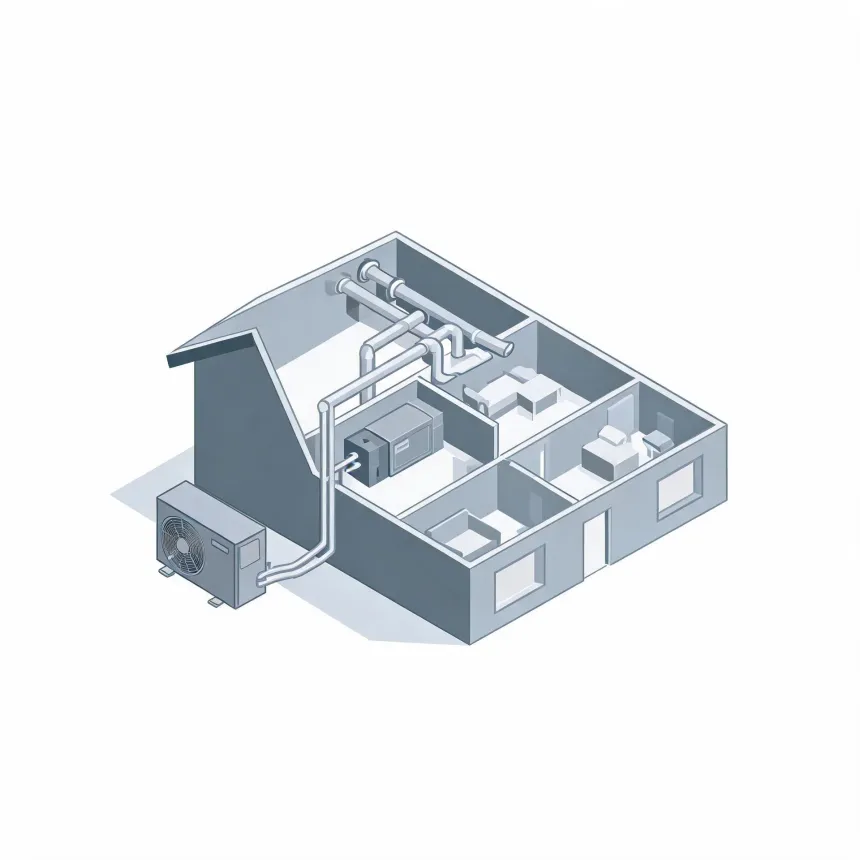
Isometric grayscale illustration of a cutaway house showing interior rooms, ducted air handler and duct runs, connected by pipes to an outdoor condenser unit beside the building.
Your system heats October through May and cools June through August.

NOAA nClimDiv, 1991–2020 normals

Kendall County winters average 19°F overnight through December, January and February.

A heat pump still has to pull heat out of cold air at that temperature, so a weak part gets found fast.

Electricity here runs 15.87 cents a kilowatt-hour, so a heat pump that's struggling is costing you more while it does

Power costs 15.87 cents a kWh statewide
70 damaging wind events from 2015 to 2024
34 hail events from 2015 to 2024

Kendall County gets its share of rough weather, including 70 damaging wind events and 16 tornadoes over the past ten years. But none of that targets a heat pump sitting beside the house any more than it targets anything else outdoors. Wind and hail cause problems when they hit something directly, a bent fan cage, a cracked panel, debris pulled into the coil. If nothing hit yours, this weather isn't why it's acting up. The more common cause is a part that wore down on its own and picked a bad time to quit.

Your heat pump is likely young enough to fix, not replace

Half the homes in Kendall County were built in 2001 or later. If your house is one of them, your heat pump is probably newer too, and a system that age is usually worth repairing rather than replacing.

Find a contractor
A residential heat pump outdoor unit mounted on a concrete pad next to a house with gray vinyl siding.

What a tired system sounds and feels like before it fails

A heat pump that's been running a long time without attention tends to tell you before it quits outright. Short cycling is one of the clearest signs, the system kicking on, running a few minutes, then shutting off before it's actually satisfied the thermostat. That's hard on the compressor and it usually means a refrigerant or airflow problem, not something that fixes itself. Warm air coming out of the vents when it's set to heat is another one. People assume the whole system is dead, but often it's the reversing valve stuck in the wrong position, or the unit stuck in defrost when it shouldn't be. Listen for the unit outside too. A grinding or screeching sound is a motor bearing going. A loud clicking that keeps repeating without the system starting is usually a failed capacitor or a relay that's given out. Any of these getting worse over weeks instead of staying the same is the system telling you the part behind it is still wearing down.

Check the obvious before you call

Look at the outdoor unit first. If the fan isn't spinning, check the breaker before anything else, a tripped breaker is the most common reason a heat pump sits dead. Walk around the unit and clear anything blocking the sides or the top, leaves, mulch, a cover left on by mistake. Inside, check the thermostat is set to heat and the set point is actually above room temperature. Then check the filter. A filter packed with dust chokes airflow and can make a working system act like a broken one.
What you shouldn't touch

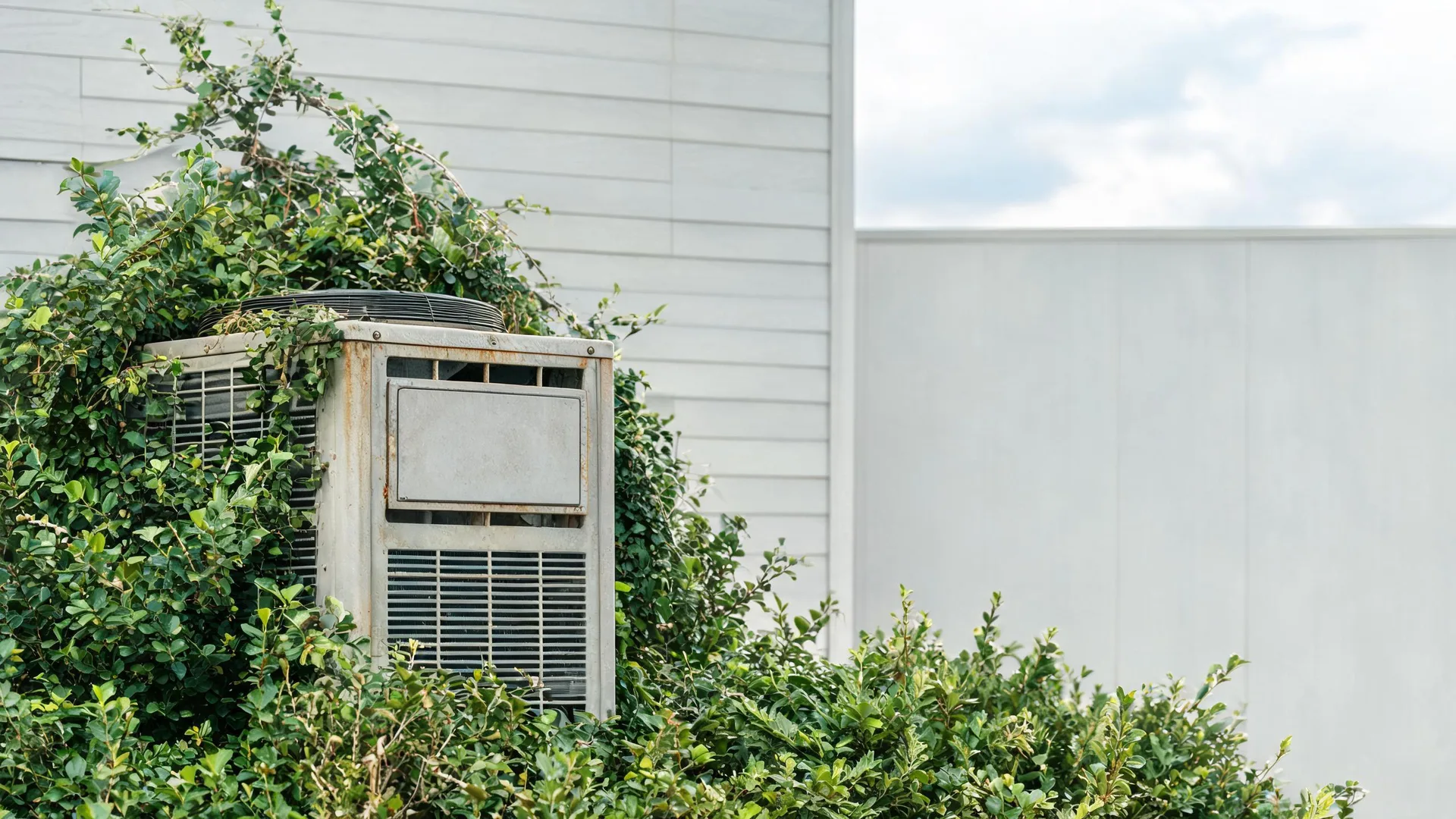
Don't take the panels off the outdoor unit or go near the coil. If the unit is frosted over or coated in ice, let it be, most heat pumps clear that themselves with a defrost cycle and forcing it can bend a fin or damage the coil. If you smell anything electrical or hear grinding or screeching, shut the system off at the thermostat or breaker and leave it off. Those are signs for a contractor to look at, not something to chase down yourself.

A heat pump that's struggling will keep trying to hit the set point, and that's where the damage spreads. A compressor working against a low refrigerant charge runs hotter than it should, every cycle, and heat is what wears a compressor down. A fan motor with a failing bearing will keep turning instead of seizing right away, so a sound that started as a minor annoyance ends as a replaced motor. Ice that isn't clearing through a normal defrost cycle means something else is already wrong, and a unit left to run iced over can damage the coil underneath. None of this means shut the system off and wait. It means a weak part found early stays a small problem, and the same part ignored takes other components down with it.

A diagnostic starts with the thermostat and the readings at the unit, not with guessing. The tech checks refrigerant pressure, the temperature split between the air going in and the air coming out, and the amp draw on the compressor and fan motor. Each of those numbers points somewhere different. Low pressure usually means a leak somewhere in the line set or the coil. Normal pressure with a bad temperature split points at airflow, a dirty coil or a failing blower. A compressor pulling too many amps is working harder than it should, often because of electrical wear inside it. The outdoor unit gets opened up and checked for a failing capacitor, a cracked contactor or corrosion on the board, things that don't show from outside. None of this is guesswork. The readings narrow it down to one part before anything gets replaced.