






An outdoor heat pump unit mounted on a concrete pad in front of a two-story suburban house.

Heat Pump Repair in Pekin, IL

Tell us about the job

Takes about a minute. No obligation.

RepairHeat PumpTazewell County, IL
Step 1 of 2

What ZIP code is the job in?

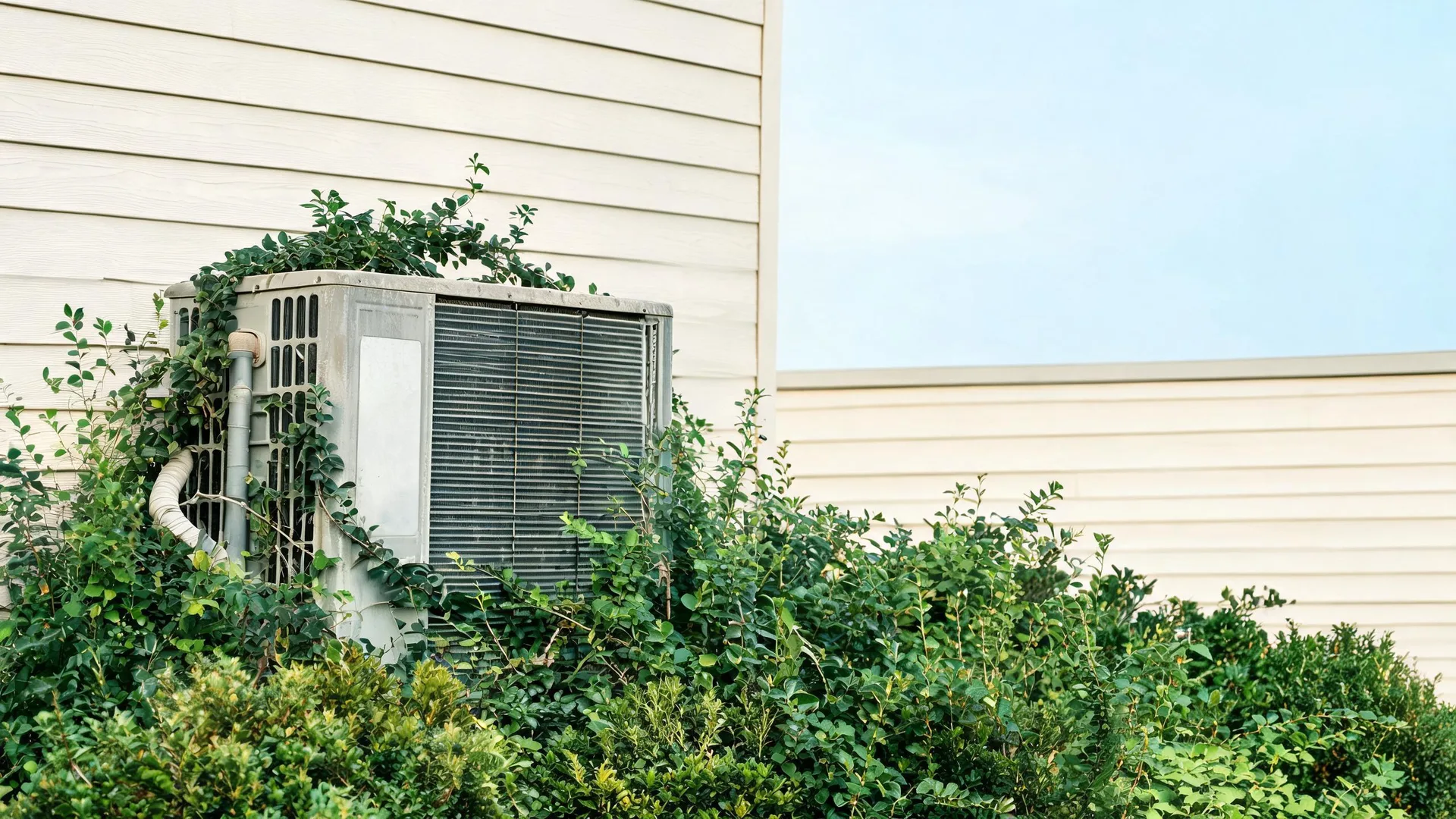
Tazewell County saw 261 severe weather events between 2015 and 2024. Damaging wind came through 154 times, hail fell 82 times, and 15 tornadoes touched down in that same stretch. A heat pump's outdoor unit sits right out in that weather, with coil fins exposed to whatever the wind throws at them and a fan grille over the top that hail can dent or crack. None of that always stops the unit from running. A bent fin or two can choke airflow across the coil without killing the system outright, so it keeps working while it loses efficiency or strains the compressor. If a storm has come through your property, it's worth having the outdoor unit looked at even if the heat pump still turns on and blows air.

8 months
October through May, your system heats
4 months
June through September, it cools
20°F
the average winter night it heats against
84°F
the average summer afternoon it cools against
Isometric cutaway illustration of a single-story house showing interior ductwork, an indoor air handler and furnace unit, and an outdoor condenser connected by a line, on a white background.
Your system heats October through May and cools June through September.

NOAA nClimDiv, 1991–2020 normals

Half the homes in Tazewell County were built in 1969 or earlier.

A heat pump that came with a house that old is closer to the end of its life than its repair bill suggests.

Your heat pump works hardest the first cold snap in October and the first hot stretch in June

Cooling runs June through September
Heat runs October through May
Climate zone 5A

Tazewell County sits in zone 5A, a cool climate where the heat pump spends more time on heating than cooling. Summer still brings its own load. The dew point here averages 64°F through June, July and August, and a heat pump pulling moisture out of air that heavy runs longer on every cooling cycle than it would somewhere drier. More runtime means more hours on the compressor and the fan motor, and more chances for a weak part to show itself. If your heat pump is short cycling, not keeping up, or running longer than it used to, that pattern of hard use is usually part of why. A proper diagnosis finds the part that's actually failing instead of guessing, so the repair holds.

After the storm passes, get the unit looked at

If your outdoor unit took a hit in a storm, don't wait for it to stop working. Get it checked.

Find a contractor
A man in a cap, dark shirt and tan pants carries a canvas tool bag as he steps up onto a porch toward a dark teal front door, with a potted shrub beside him.
A gray air-source heat pump mounted on a concrete pad next to a house with gray vinyl siding, surrounded by gravel and flanked by green shrubs and white hydrangea flowers.

How many winters has this one already been through

If your heat pump came with the house and the house dates back to 1969 or earlier, ask the contractor how much life is left in it before you put money into this repair. A unit that old has likely already put in long hours through summers here and cold snaps every winter, and a repair bill on a system near the end doesn't tell you what's coming next year. Get an age and condition check alongside the diagnosis, not just a fix for what's broken today.

A refrigerant leak gets worse with every hour

A heat pump low on refrigerant will still blow air, so it's easy to let it run while you wait for a repair slot. Running it low forces the compressor to work against a charge it wasn't built for, and compressors don't recover from that kind of strain. What starts as a slow leak and a lighter repair can end as a seized compressor and a full system swap.
A frozen coil needs the system off, not cranked higher

If the outdoor coil ices over, turning the thermostat down doesn't fix it, it just keeps feeding the problem that caused the ice in the first place, whether that's a dirty filter, a failing fan motor, or low charge. Ice blocks airflow across the coil, and a coil that can't move air can't move heat. Shutting the system down and calling for a diagnosis stops the ice from spreading into the lines and the fan housing.

Most heat pump problems announce themselves before the system quits outright. Air coming from the vents that's cooler than usual in heating mode, or warmer than usual in cooling mode, often means the system is stuck trying to meet a load it can't reach. A unit that cycles on and off every few minutes instead of running a full cycle is short cycling, and that wears the compressor faster than steady runtime would. Listen for anything new: a grinding or squealing from the outdoor fan motor, a clicking that continues after startup, a hissing that could point to a refrigerant leak. Ice on the outdoor coil in any season is never normal and means something is already wrong, whether that's airflow, charge, or a failing part. A unit that runs constantly without the house ever feeling comfortable is working harder for less, and that pattern rarely fixes itself.

Electricity in Tazewell County averaged 17.94 cents per kilowatt-hour in 2025, higher than most US counties pay. A heat pump that's losing refrigerant, icing up, or running constantly is pulling more power to do less heating or cooling, and at this rate that shows up on the bill fast. A unit working against a bad part doesn't use a little more power, it uses a lot more, because the compressor and fan motor are straining to reach a temperature they can't hit. Fixing the actual problem costs less over a year than paying these rates to run a struggling system. The repair bill is in front of you now. The cost of waiting shows up next month.