Peoria County sees real storm damage
Peoria County logged 280 severe weather events between 2015 and 2024, including 147 damaging wind events, 106 hail events and 11 tornadoes. That outdoor unit sits outside year round with no cover from any of it.
Takes about a minute. No obligation.
Peoria County logged 280 severe weather events between 2015 and 2024, including 147 damaging wind events, 106 hail events and 11 tornadoes. That outdoor unit sits outside year round with no cover from any of it.
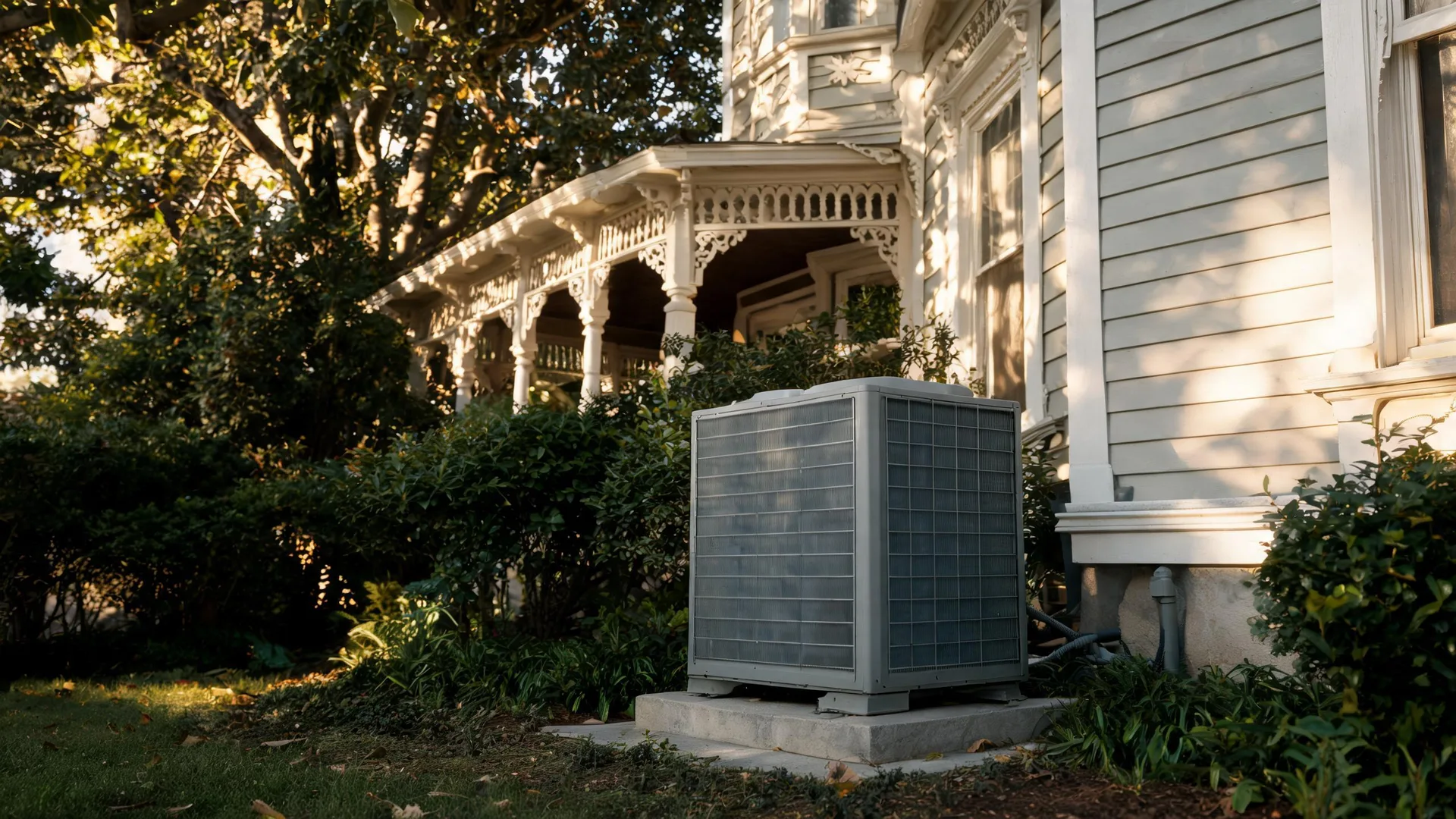
Hail can dent fins and bend the cabinet without stopping the heat pump right away. A tree branch or wind-blown debris can do the same. If the outdoor unit came through a storm, a running compressor doesn't mean the coil or fan escaped damage.
NOAA nClimDiv, 1991–2020 normals
Heat still has to carry a Peoria County house through May, before cooling takes over in June.
A weak heat pump often makes it through fall and then fails once the cold settles in.



A heat pump does not get an offseason. It pulls humidity out of the air all summer, with the dew point here averaging 64 degrees across June, July and August, then switches over and carries the heat load once winter sets in. A furnace or an AC unit only works half the year. This one runs both halves, and the same compressor and outdoor coil handle both jobs. That outdoor unit also takes whatever the weather sends. Peoria County logged 106 hail events and 147 damaging wind events between 2015 and 2024, and either one can leave a dent or a bent fin that strains the system months later. With a machine running this many hours in this much weather, a problem showing up now is often wear that has been building for a while. Worth finding out which part is actually failing before paying to replace the whole unit.
If hail or wind came through recently and the heat pump is acting up now, that is probably not a coincidence. A compressor that still runs can be sitting behind a coil or fan that took the hit. Get it looked at before deciding whether this is a repair or something bigger.
Find a contractorThis unit runs on both sides of the year, so it doesn't get an off season to coast through. Whatever is already worn gets found faster, not slower. If it's acting up now, that's the time to have someone trace the problem back to the actual part, compressor, reversing valve, coil, rather than guess.
A heat pump struggling to start or hold a cycle is already telling you something is wrong. Keep running it and a weak capacitor can take the compressor down with it, or a refrigerant leak that was a simple fix becomes a compressor replacement once it runs low enough to starve. The part that failed first is rarely the only one that pays for it.
A breaker that keeps tripping, a burning smell, ice building on the outdoor coil, or a compressor that hums but won't start are reasons to shut the system off and wait for a tech, not run it another day. Pushing through those signs usually turns a repair into a bigger one, and in some cases risks the compressor for good.
A heat pump that needs attention usually says so before it quits outright. It might blow air that is not as warm or as cool as it used to be, or run longer to get there. Short cycling is another one, where it kicks on, stops, then starts again a few minutes later instead of holding a steady run. Some units start making a noise that was not there before, a clicking at start up, a rattle, a hiss near the lines. Ice forming on the outdoor coil when it should not be there points to a refrigerant problem or an airflow problem, not something to wait out. A reversing valve that is sticking will show up as the system blowing cold air when it should be heating, or the other way around. None of these mean the same repair, but all of them mean the system is already telling you where to look.
Electricity in Peoria County runs 18.04 cents per kilowatt hour, higher than most of the country pays. A heat pump that's losing its charge or struggling to start still draws power trying to do its job, it just does less with it. That shows up on the bill before it shows up as a breakdown. A reversing valve stuck in the wrong position, a dirty coil making the compressor work harder, a capacitor too weak to get a clean start, all of it costs you every month it runs that way. Fixing it sooner means fewer months of paying for a system that isn't earning the cost.