





A lit residential street at dusk featuring large two-story brick houses with glowing windows, mature trees, and a street lamp.

Heat Pump Repair in Pontiac, IL

Tell us about the job

Takes about a minute. No obligation.

RepairHeat PumpLivingston County, IL
Step 1 of 2

What ZIP code is the job in?

Heat pumps in Pontiac earn their keep over eight months of heat and three months of cooling, and that switch between modes is where a weak part usually gives out first. October is when the strain shows up, because the system has to reverse and start pulling heat from outside air it hasn't dealt with since spring. June does the same thing in the other direction. If a capacitor or a reversing valve was already marginal, it tends to fail right at that changeover rather than in the middle of the season. That's why a heat pump acting up in early fall or early summer is worth getting looked at quickly instead of waiting to see if it sorts itself out.

8 months
October through May, your system heats
3 months
June through August, it cools
19°F
the average winter night it heats against
83°F
the average summer afternoon it cools against
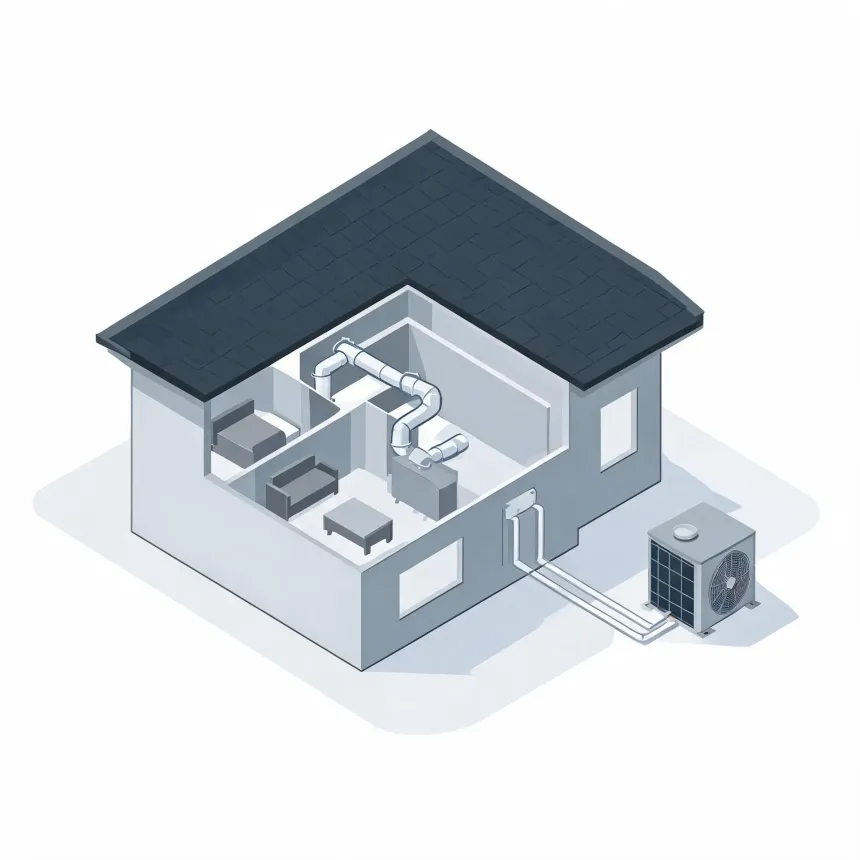
Isometric illustration of a cutaway single-story house showing interior ductwork, an indoor air handler and simple furniture, connected by lines to an outdoor condenser unit beside the building.
Your system heats October through May and cools June through August.

NOAA nClimDiv, 1991–2020 normals

Winter nights in Livingston County average 19°F, well within what a heat pump is built to handle.

A heat pump struggling here most likely has a part worth fixing, not a climate working against it.

At 15.87 cents a kilowatt-hour, a heat pump running wrong is costing you all day

Power costs 15.87 cents a kWh statewide
62 damaging wind events from 2015 to 2024
20 hail events from 2015 to 2024

Half the homes in Livingston County were built in 1961 or earlier. If your heat pump came with a house that old, the system itself may be just as old, since nobody swaps a heat pump on the same schedule as the roof or the siding. An older unit has had more winters and more of those fall and spring switchovers to wear on its parts. Before paying for a repair on a system that old, it's worth asking how much life is left in it.

A heat pump running wrong adds up fast at 15.87 cents a kilowatt-hour

A heat pump short cycling or running constantly to keep up is burning power the whole time it does it. Getting the actual cause checked, whether that's a capacitor or a reversing valve, stops the meter from paying for a problem instead of heat or cooling.

Find a contractor
A man in a dark cap, dark jacket and tan work pants, seen from behind, carries a canvas tool bag up concrete steps toward a dark teal front door of a gray lap-sided house with a blue planter beside it.
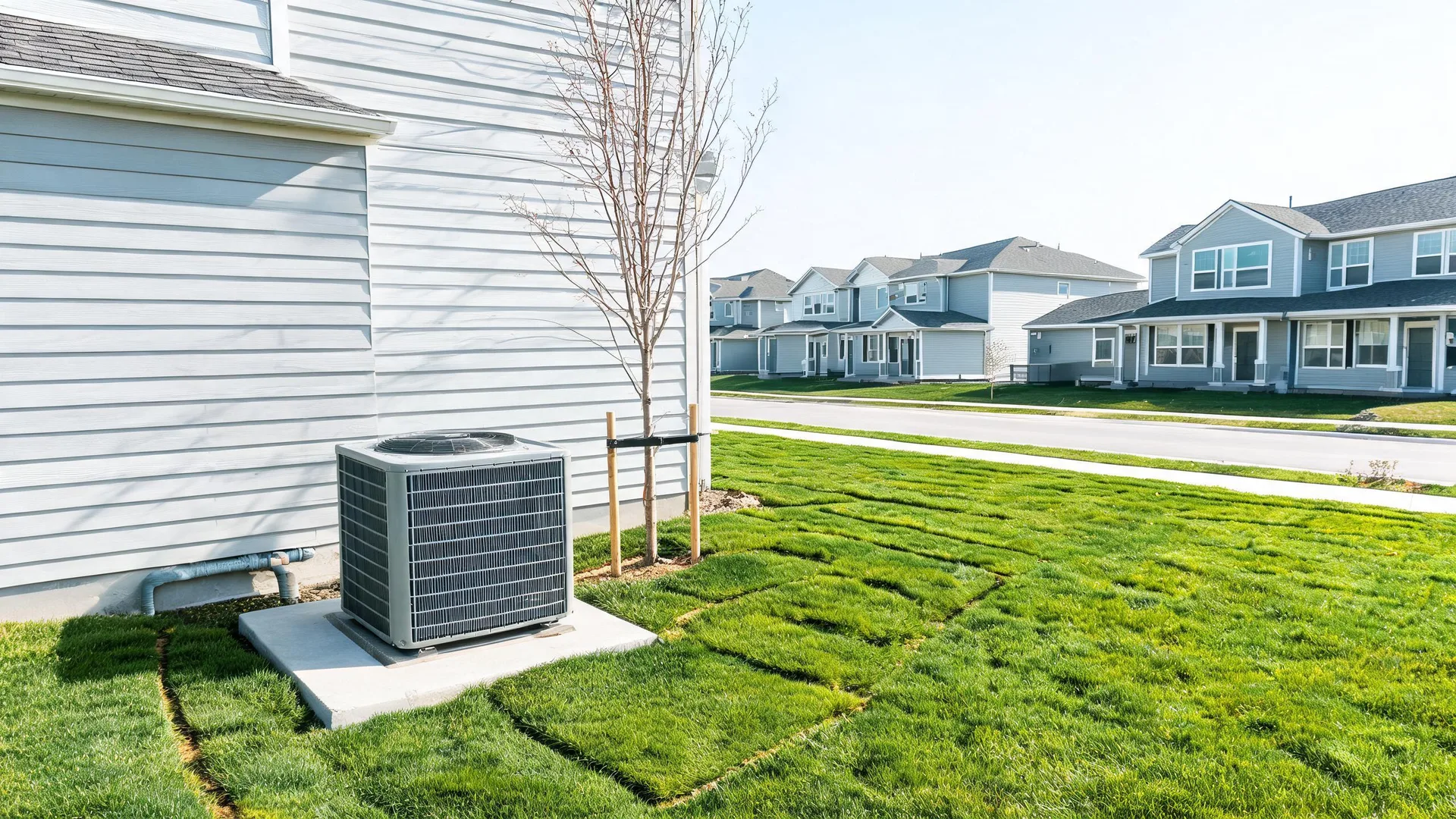
A gray heat pump outdoor unit mounted on a concrete pad next to a residential house with lap siding and stone accents.

Ask what the repair is buying you

If a repair quote comes in on a system that old, ask the contractor straight out how many years it likely has left. That answer matters as much as the repair itself when deciding whether it's worth doing.

A small fault turns into a bigger one

A failing capacitor makes the compressor try to start on too little power. It draws more current than it should and heats up doing it. Run it that way long enough and the compressor itself can fail, instead of just the capacitor that caused the trouble.
Ice doesn't fix itself

If the outdoor coil starts icing over, the system needs to shut down and defrost before it does more work. Keep it running and the ice just builds, blocking airflow across the coil until it can't pull heat from the air at all. Shutting it off and getting someone out beats letting it fight through that on its own.

A heat pump that's struggling usually tells you before it quits outright. Warm air out of the vents when it should feel hot, or cool air that isn't quite cool enough, often means the system is running but losing the fight. Short cycling, where it kicks on and off every few minutes instead of running a full stretch, points to a sensor or a control board that isn't reading things right. A unit that runs constantly and never seems to catch up is working against something, whether that's a low charge or a part that's lost its grip. Listen for anything new too. A hum without the fan starting, a clicking that repeats, a hiss near the lines. None of those sounds belong there, and none of them get quieter on their own.

Repair versus replacement comes down to what's failing and what else is likely to follow it. A capacitor, a contactor, a fan motor, these are parts that fail on their own without taking the rest of the system down with them, and replacing one is usually worth it even on an older unit. A compressor is different. It sits at the center of everything, and when it's failing or already gone, a repair means paying to keep the rest of an aging system running on a part that costs nearly as much as starting over. Age matters less by itself than how many of these parts have already been replaced. A unit that's had a motor and a board swapped in the last couple years is worth fixing again. One that's original throughout and now needs a major part is telling you something about what's likely to fail next, not just what failed this time.