






A illuminated two-story red brick house on a quiet residential street at dusk, flanked by mature trees under a deep blue evening sky.

Heat Pump Repair in Princeton, IL

Tell us about the job

Takes about a minute. No obligation.

RepairHeat PumpBureau County, IL
Step 1 of 2

What ZIP code is the job in?

Winter is the hard part for a heat pump here. Bureau County sits in zone 5A, a cool climate where heating carries the bigger load, and the overnight low averages 18°F across December, January and February. That's cold enough that your heat pump is leaning on its backup heat some mornings, and cold enough that ice on the outdoor coil is a normal thing to see, not a sign anything is wrong. None of that means your system is under unusual strain. It means that when something does go wrong, a frozen coil that won't defrost or a unit blowing cool air on a cold morning is probably a known failure with a known fix, not a mystery.

8 months
October through May, your system heats
3 months
June through August, it cools
18°F
the average winter night it heats against
83°F
the average summer afternoon it cools against
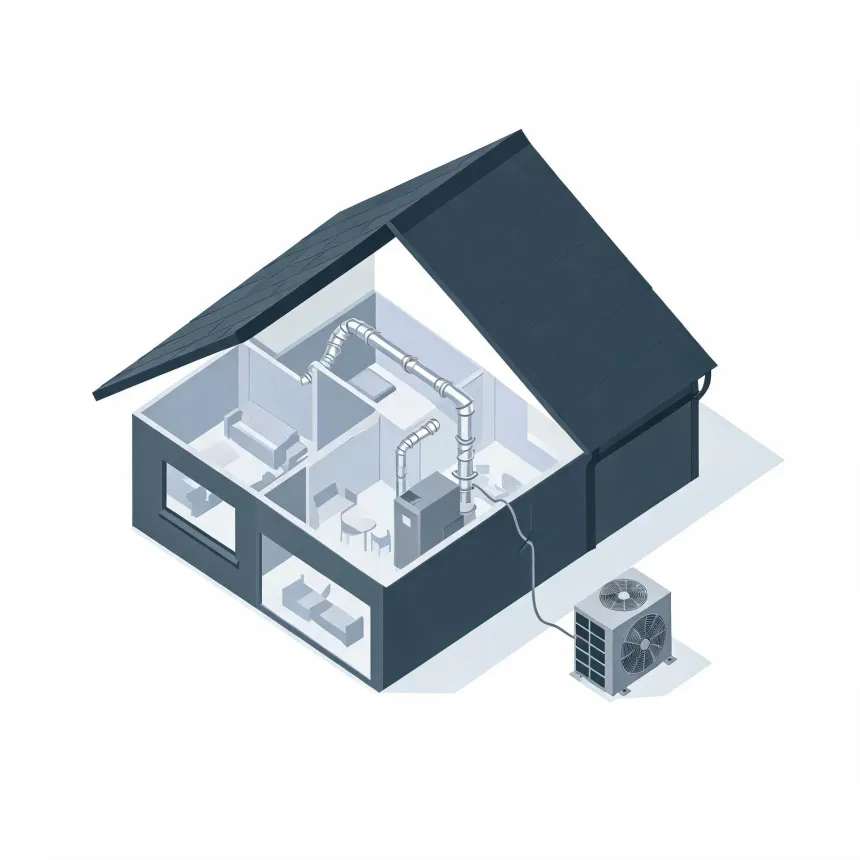
Isometric illustration of a cutaway house showing interior rooms with furniture, a furnace and ductwork, connected by a line to an outdoor condenser unit on the ground outside.
Your system heats October through May and cools June through August.

NOAA nClimDiv, 1991–2020 normals

Heat here runs October through May, eight months on the heat pump.

September is when a weak part gets found before it has to work.

Half the homes here are old enough that the heat pump could be original equipment

Half the homes here were built by 1958
72 damaging wind events from 2015 to 2024
46 hail events from 2015 to 2024
Power here costs moreIllinois electricity ran 15.87 cents per kilowatthour in 2024, so a heat pump running wrong costs you every month it's not fixed.

Bureau County sees its share of rough weather, 150 severe events over the past decade between wind, hail and tornadoes. That's not nothing, but it's rarely why a heat pump quits. A unit hit by a falling branch or a lightning strike looks different from one that just failed, and most calls here are the second kind, a bad capacitor, a stuck reversing valve, a thermostat that stopped reading right. Power does go out in Illinois. 16% of households here lost power for a day or more in 2024, and a heat pump that sat dead for a stretch can need a reset once it's back on. Outside of that, the weather isn't the reason your system is down. Something inside it failed, and that's a known part with a known fix.

Worth asking before you fix it

If your heat pump came with the house, it may be close to the end of what it can give you. Before paying for a repair, ask the tech how much life is left in the unit. That answer is worth having alongside the diagnosis.

Find a contractor
A man in a cap, dark long-sleeved shirt and tan work pants walks up concrete steps toward a teal front door, carrying a worn canvas and leather tool bag.
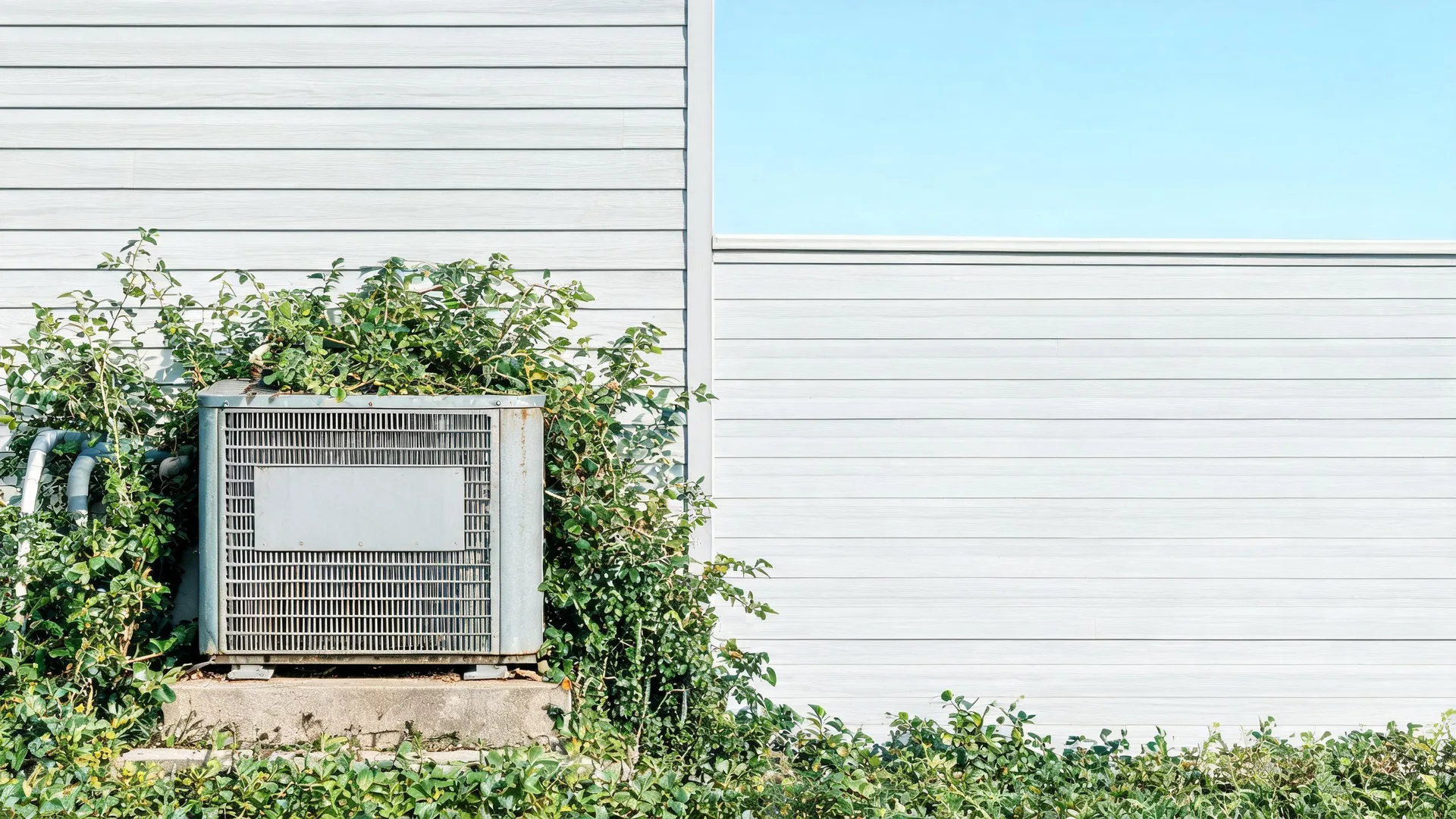
A gray outdoor HVAC unit mounted on a concrete pad beside a house with gray lap siding and a stone foundation.

Running it while it struggles doesn't buy you time

A heat pump that is struggling does not get better by staying on. If the reversing valve is sticking, every cycle works that same valve a little harder. If the outdoor coil is icing and not defrosting right, the compressor keeps pushing against a coil that cannot do its job. That is hard running for no heat delivered. A refrigerant leak follows the same pattern. Low charge makes the compressor strain to move what is left, and a compressor that strains all day wears faster than one that runs normal cycles. None of these problems fix themselves by running longer. They move further into the part that is harder to replace.

Some parts fail on their own schedule

A capacitor, a contactor, a bad thermostat sensor. These parts wear out and quit on their own timeline, and it has nothing to do with how old the compressor is. Replacing one doesn't mean the rest of the heat pump is in trouble. A unit can need this kind of repair now and then for its whole working life and still be sound.
A failed compressor is a different call

The compressor can't be swapped on its own without the cost running close to a new system anyway. If that's the part that failed, the question isn't whether to fix it. It's whether the rest of the unit is worth building a repair around. A tech who finds a bad compressor is giving you very different news than one who finds a bad capacitor, even though the visit starts the same way.

A heat pump fails in a few predictable ways. The reversing valve sticks, so the system gets stuck heating when you want cool or stuck cooling when you want heat. The defrost board or sensor goes bad, and the outdoor coil ices over without clearing. A contactor or capacitor wears out and the outdoor unit won't start even though the indoor fan runs fine. Low refrigerant from a slow leak shows up as weak heat and long run times, not a sudden stop. A dirty filter or blocked return looks like a bigger problem than it is, and it's worth ruling out before anything gets taken apart. Most of these are parts a tech carries on the truck. The compressor failing is the one that isn't, and it's usually the difference between a repair and a replacement conversation.

A diagnostic visit starts outside, at the unit itself. A tech checks what the system is actually doing, whether the outdoor fan spins, whether the compressor hums or stays silent, whether the coil has ice on it and where. Gauges go on the refrigerant lines to read pressure, because that tells a different story than just looking. Inside, the thermostat gets checked against what the system is actually doing, since a sensor reading wrong can make a fine unit look broken. Electrical parts get tested with a meter rather than guessed at, a capacitor either holds its charge or it doesn't. The filter and airflow get a look early, since a restriction can mimic a refrigerant problem and there's no reason to chase the wrong one. By the time a tech has walked that path, the failing part usually isn't in question anymore, just what it takes to replace it.