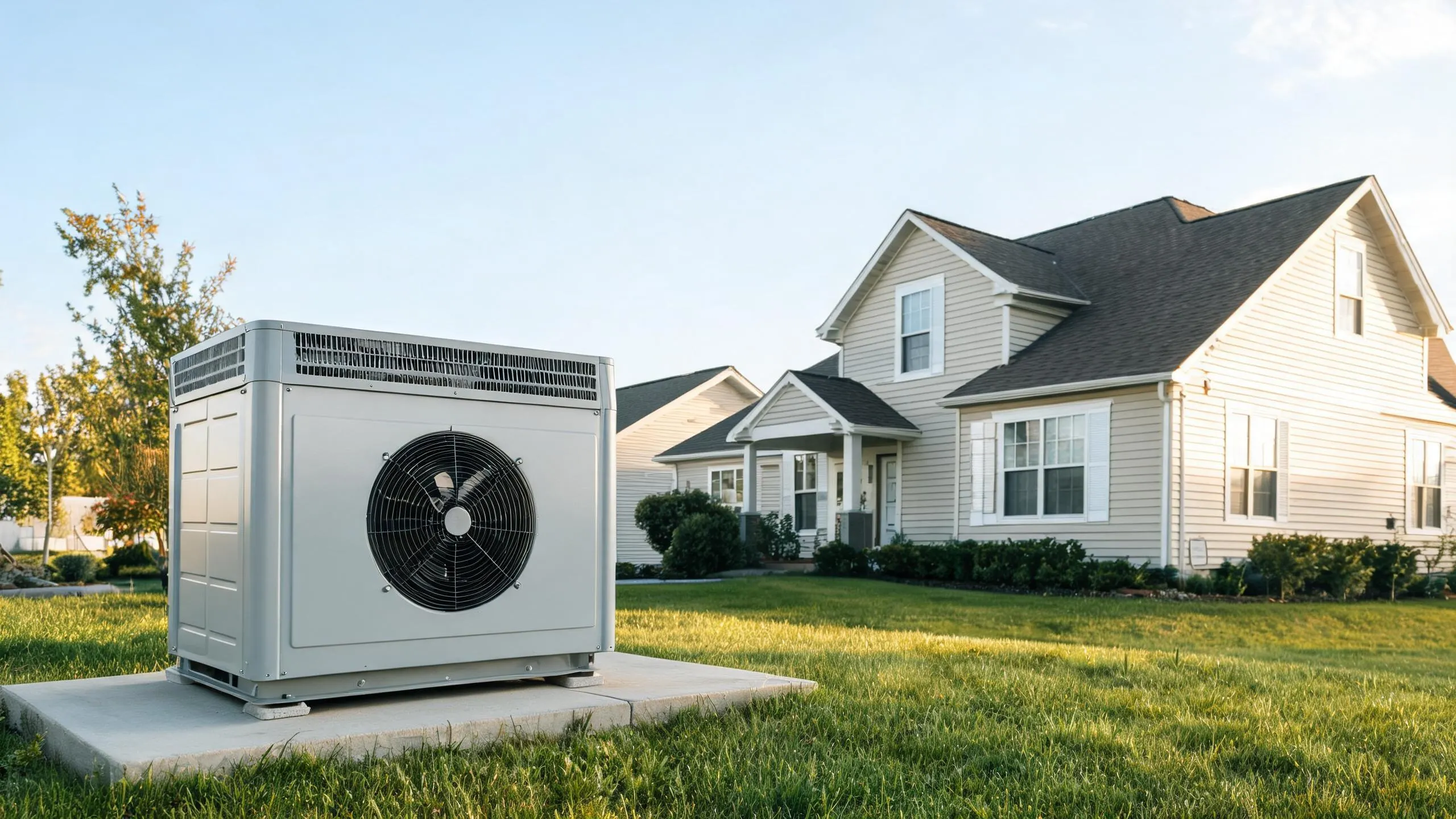





An outdoor heat pump unit mounted on a concrete pad in the front yard of a gray suburban house.

Heat Pump Repair in Rockford, IL

Tell us about the job

Takes about a minute. No obligation.

RepairHeat PumpWinnebago County, IL
Step 1 of 2

What ZIP code is the job in?

Winnebago County sits in zone 5A, a cool climate where heating carries more of the load on a heat pump than cooling does. Overnight lows average 16°F across December, January and February, and that's the stretch when a heat pump works hardest to pull warmth out of cold air. A weak capacitor, a low charge, or a failing defrost control tends to show itself right in that cold stretch. None of that means the area is unusually hard on the equipment. It means a system that's already struggling gets found out in the coldest months. The fix is almost always a known one once a contractor gets eyes on it.

8 months
October through May, your system heats
3 months
June through August, it cools
16°F
the average winter night it heats against
82°F
the average summer afternoon it cools against
Isometric grayscale illustration of a cutaway single-story house showing interior rooms, ductwork and an air handler, an exterior condenser unit connected by lines, and dark solar panels on the roof.
Your system heats October through May and cools June through August.

NOAA nClimDiv, 1991–2020 normals

Heat pump season starts in October here and runs through May.

A weak part that made it through summer usually fails in October, once the heat pump has to work for real.

A heat pump running on a bad part is racking up charges at 15.87 cents a kWh right now

Power costs 15.87 cents a kWh statewide
131 damaging wind events from 2015 to 2024
54 hail events from 2015 to 2024

Electricity in Illinois ran 15.87 cents a kilowatthour in 2024. A heat pump that's low on charge or struggling to defrost runs longer to put out the same heat, and every extra hour shows up on the bill at that rate. This isn't a machine you can wait out until spring. The sooner a contractor finds what's wrong, the sooner it stops costing you to leave it alone.

Your heat pump most likely has a known problem with a known fix

Winnebago County sees its share of hail, wind and winter storms, same as a lot of places. None of it points to anything unusual going on with your heat pump. It's most likely a known part failing in cold weather, the kind a contractor sees all the time and knows how to fix. Getting it looked at now stops the guessing.

Find a contractor
A dark gray heat pump unit mounted on a concrete pad next to a house with gray siding and a stone veneer wall.

A diagnostic visit checks the system in order, not at random

A diagnostic starts outside at the unit itself, checking how it sounds and whether it's icing over or cycling the way it should. From there a contractor checks refrigerant charge and pressures, since low charge shows up as weak heat and a system that won't shut off. They'll test the capacitor and the compressor's electrical draw, run the reversing valve through a cycle to see if it switches clean, and check the defrost board and sensors to see if the unit is reading outdoor temperature correctly. Airflow gets checked too, since a dirty coil or a failing blower motor can mimic a refrigerant problem without being one. Most of this gets done with gauges and a multimeter, not guesswork, and a contractor can usually tell you what's wrong before anything gets opened up or replaced.

The reversing valve is the part unique to a heat pump

A heat pump has a reversing valve so it can switch between heating and cooling, a part a furnace or a straight air conditioner doesn't have. When the valve sticks, the system can get stuck in one mode or blow air that's not the temperature you asked for. It fails often because it's the one part doing a job nothing else in the system has to do.
Defrost problems show up as ice that won't clear

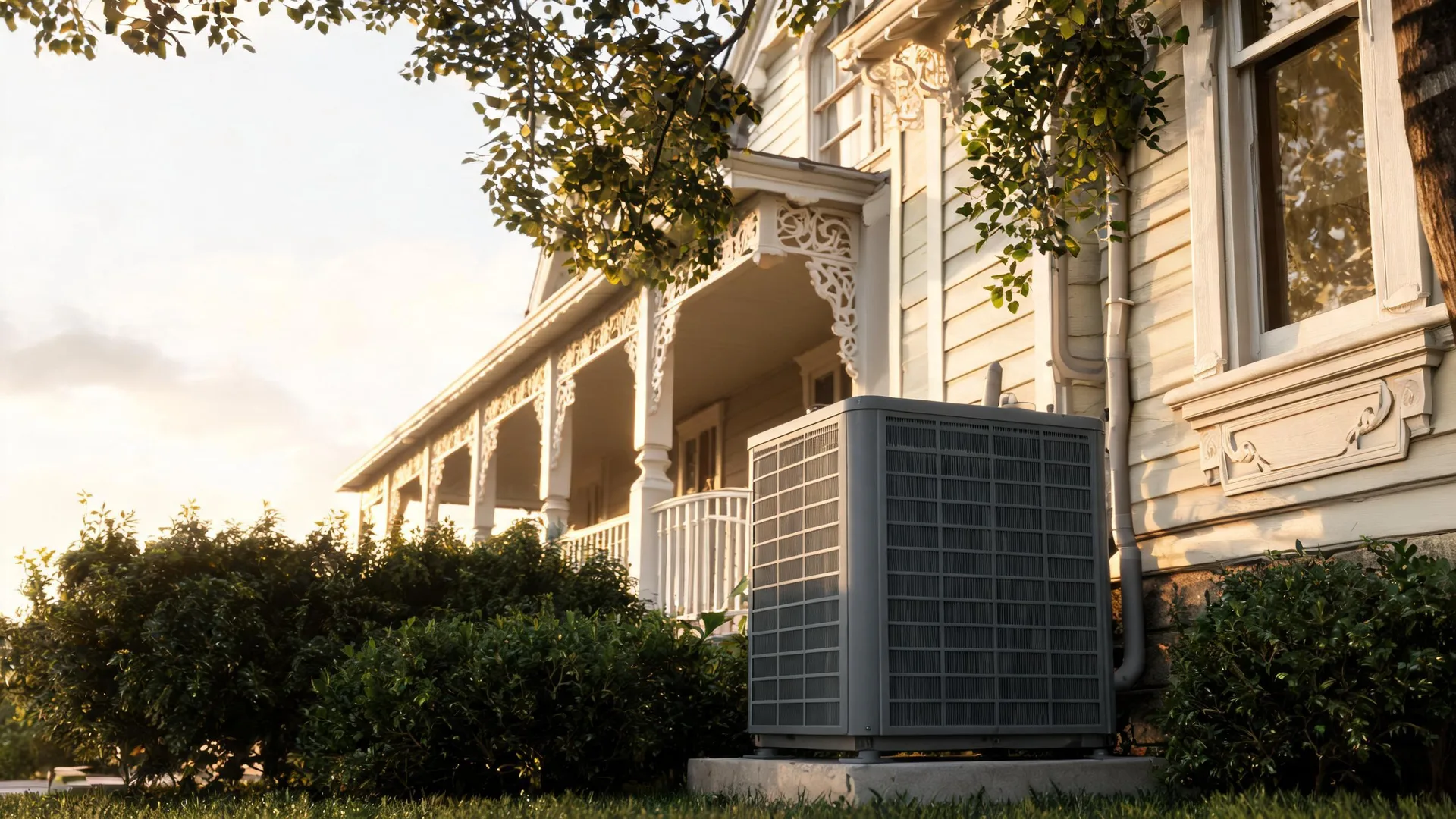
The outdoor unit is built to melt frost off itself on a timer, reversing briefly to push warm refrigerant through the outdoor coil. A failed defrost control or a bad sensor stops that from happening on schedule, and frost builds up until it chokes off airflow across the coil. An outdoor unit caked in ice that never seems to melt on its own means the defrost cycle isn't doing its job.

A heat pump that needs a contractor usually tells you before it quits outright. Warm air that doesn't feel warm is the most common complaint. Heat pumps put out air that's milder than a furnace's even when everything's working right, but if it feels closer to room temperature than warm, something's off, often the refrigerant charge or a reversing valve not fully switching. Short cycling is another sign worth noticing. The system kicks on, runs a few minutes, shuts off, then starts again before the house has caught up, and that points to a sensor misreading the temperature or a compressor struggling to stay running. A low hum from the outdoor unit is normal. Clanking, grinding, or a hard buzz at startup usually means a failing motor or a compressor on its way out. An outdoor unit that never cycles off is working harder than it should to hit the thermostat setting, which usually means low charge or a coil that can't move enough heat.

A repair is the right call when the part that failed is one part doing one job, like a capacitor, a sensor, or a defrost control. Swap it and the system goes back to running the way it did before. Replacement starts to make more sense when the compressor itself is the problem. It's the one part that doesn't get swapped on its own, since the labor and refrigerant work involved puts it close to the cost of a new outdoor unit anyway. Age matters alongside the failure, not instead of it. A younger system with a bad capacitor is worth fixing without a second thought. An older system with the same failure is worth asking the contractor whether this is the first real repair it's needed or another one in a string of them. A system that's needed several different repairs over a short stretch is usually telling you it's wearing out broadly, not failing in one spot, and that's a different conversation than a single part letting go.