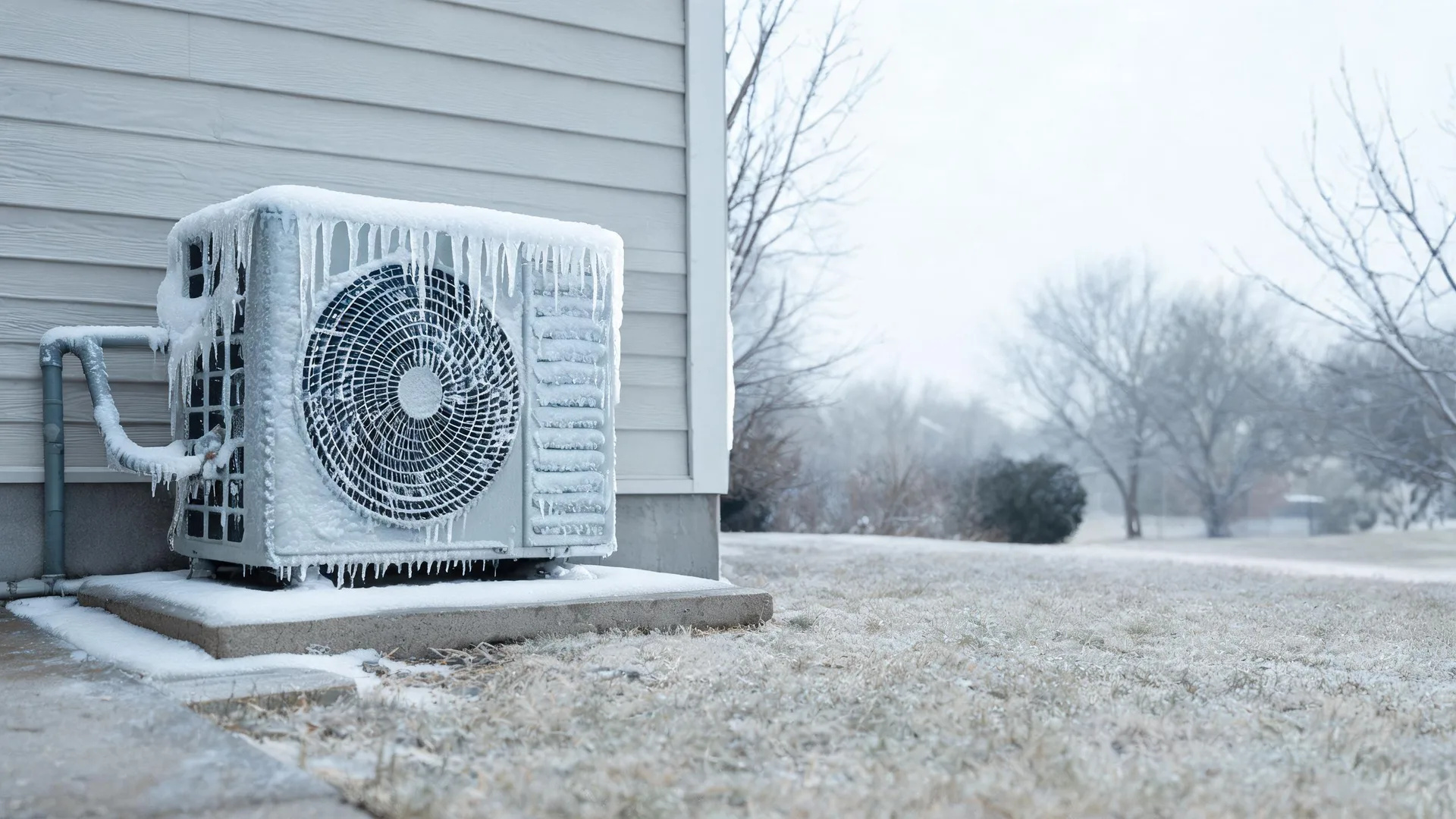
A gray outdoor HVAC condenser unit mounted on a concrete pad in the front yard of a two-story suburban house.

Heat Pump Repair in Sterling, IL

Tell us about the job

Takes about a minute. No obligation.

RepairHeat PumpWhiteside County, IL
Step 1 of 2

What ZIP code is the job in?

Winter here is the real workload

Whiteside County sits in zone 5A, where heating runs longer and harder than cooling. The overnight low averages 17°F across December, January and February. A heat pump here spends most of its year keeping a house warm, not cool. So trouble tends to show up as weak heat or a system that won't keep up on the coldest nights.


Nothing here runs a heat pump into the ground

Sterling winters are ordinary for this machine. They aren't harder on a heat pump than anywhere else in this climate zone. So a system that's struggling probably has a plain cause. A low charge. A failing defrost control. A worn contactor. A thermostat asking for more heat than the system can deliver. Finding which one it is settles whether the unit is worth repairing.

8 months
October through May, your system heats
3 months
June through August, it cools
17°F
the average winter night it heats against
83°F
the average summer afternoon it cools against
Isometric line illustration of a cutaway single-story building showing interior rooms, ceiling ductwork, an indoor air handler, and an outdoor condenser unit connected by refrigerant lines.
Your system heats October through May and cools June through August.

NOAA nClimDiv, 1991–2020 normals

Heat here starts in October, with September the month to get a heat pump checked.

A weak part usually fails once the system has to run flat out, not before.

Illinois electricity averages about 15.87 cents per kilowatthour. A heat pump that's short on charge or struggling with a bad defrost control still runs, it just runs longer to put out the same heat. That's not a small difference once you're into a Sterling winter, with the system working hard for months at a stretch. The cost of ignoring a weak part shows up on the power bill before it shows up as a breakdown.

Know how old your heat pump actually is before you repair it

Half the homes in Whiteside County were built in 1961 or earlier. If your heat pump came with a house that old, it's worth finding out its actual age before paying for a major repair. An older unit can still be the plain, fixable cause the page already pointed to, but it can also be old enough that a big repair isn't worth it. The age of the system, not the house, is what settles that.

Find a contractor
A man in a cap, long-sleeved shirt and work pants, seen from behind, carries a canvas tool bag up wooden porch steps toward a teal front door, with a potted shrub in a blue-green planter beside him.
A gray heat pump condenser unit mounted on a concrete pad against the gray lap-siding exterior wall of a house.

What to check before you call

Start with the thermostat. Set it to heat and a few degrees above room temperature so it has a reason to run. Go look at the outdoor unit. Frost across the coil is normal in cold weather, a heat pump melts it off on its own on a timer. Ice that never clears, or a coil caked thick, is not. Leave it alone either way. Chipping at it or hosing it down can damage the coil. Check that nothing is stacked against the unit or blocking its sides. It needs open air to pull heat from. Inside, pull the air filter and hold it to a light. If no light comes through, replace it. A clogged filter chokes airflow and can make a working system act like a failing one. Check the breaker panel for anything tripped on that circuit, and look for a reset button on the outdoor unit. Then feel the vents. Heat pump air runs cooler than a furnace's even when it's working right, so warm but not hot air is normal. What matters is whether the house is actually gaining ground. Cold air with no warmth to it, or a system that runs without stop and never catches up, is beyond what a homeowner can fix standing outside with a flashlight.

Most failures start outside

The outdoor unit does the hard work of pulling heat from cold air, and that's where trouble usually starts. A low refrigerant charge means the system can't move enough heat no matter how long it runs. A failing defrost control leaves frost built up on the coil instead of clearing it on schedule. A worn contactor can keep the outdoor unit from starting at all, so the indoor fan blows air with no heat behind it.

The reversing valve is the part unique to this machine

A heat pump has to switch directions to make heat instead of cold, and that job falls to the reversing valve. When it sticks, the system can get stuck in the wrong mode or stop switching cleanly between cycles. It's not a part a furnace or a plain air conditioner has, which is why a technician who knows heat pumps specifically matters more here than it would for a standard AC call.

Most people notice a heat pump problem through the vents before they see anything outside. Air that's blowing but never feels like it's catching up is the first sign, not just cool air, but a house that keeps losing ground no matter how long the system runs. Short cycling is another one. A heat pump that kicks on, runs a couple minutes, then shuts off again isn't completing a heating cycle, and that stop-start pattern wears on the parts that are already struggling. Listen for it changing sound too. A clicking at startup that doesn't resolve into a steady run, or a new rattle from the outdoor unit, usually means a part is failing rather than just dirty. If the system runs constantly and the house still feels cold, or it won't stay on long enough to do anything, that's not something to wait out.

A diagnostic visit starts with questions, not tools. When did it start, is it heat that's weak or heat that never comes, does it happen all the time or just on the coldest nights. The answers narrow things down before the panels come off. Gauges go on next to check the refrigerant charge, since too little or too much both throw off how the system heats. Electrical readings come after that, testing the contactor and capacitor to see if they're sending and holding power the way they should. The defrost control gets checked too, since a board that isn't timing things right leaves frost sitting on the coil instead of clearing it. None of this is guesswork. Each test rules something out or points at the part actually causing the trouble, and that's what tells you whether you're looking at a small fix or a bigger one.