




A quiet suburban street at twilight featuring two-story brick homes with illuminated windows and large trees lining the sidewalk.

Heat Pump Repair in Waukegan, IL

Tell us about the job

Takes about a minute. No obligation.

RepairHeat PumpLake County, IL
Step 1 of 2

What ZIP code is the job in?

A heat pump in trouble usually tells you before it quits outright. The most common sign is a system that runs and runs but never quite gets the house to temperature, especially when it's trying to switch between heating and cooling. Ice building up on the outdoor unit is another one. A little frost in cold weather is normal, but a coil caked in ice means the defrost cycle isn't doing its job. Listen for clanking or a hard buzz when it starts up, that often points to the compressor or the fan motor. If you feel cool air coming out of the vents when it should be heating, the reversing valve may be stuck. Short cycling, where it kicks on and off every few minutes instead of running a full cycle, is also worth having someone look at.

8 months
October through May, your system heats
3 months
June through August, it cools
19°F
the average winter night it heats against
81°F
the average summer afternoon it cools against
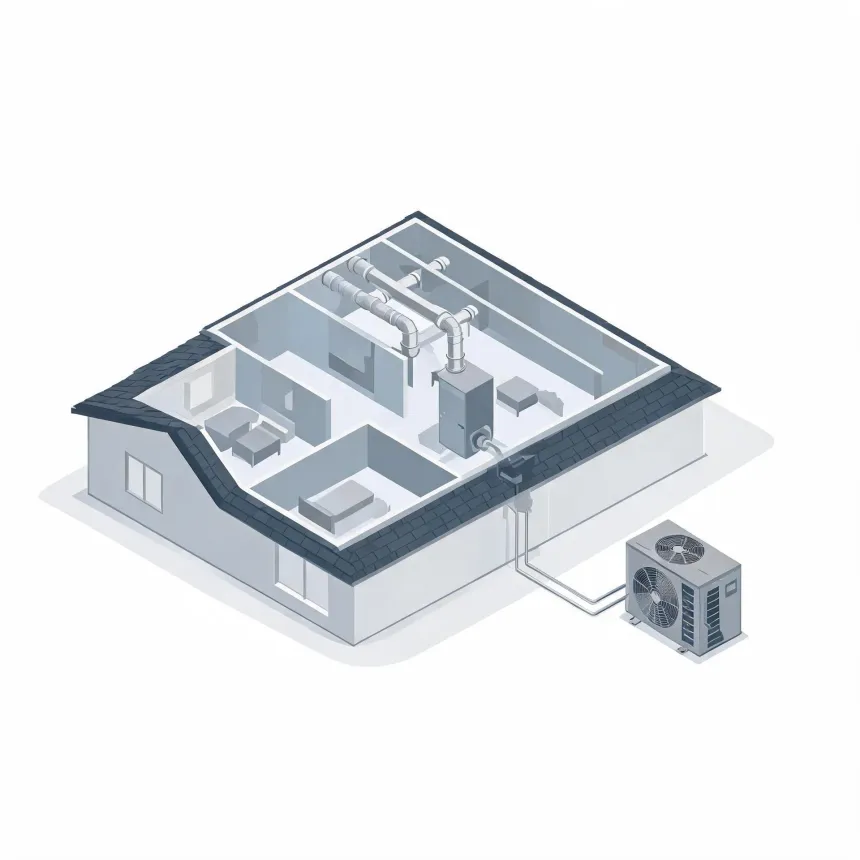
Isometric cutaway illustration of a single-story house showing interior rooms with ductwork, a furnace or air handler, and refrigerant lines running outside to a condenser unit on a pad.
Your system heats October through May and cools June through August.

NOAA nClimDiv, 1991–2020 normals

Winter nights in Waukegan average 19°F.

A heat pump works its defrost cycle and reversing valve hardest on cold nights like that, so that's usually where a repair starts.

A heat pump that's struggling costs more here every month it runs that way

Power costs 15.87 cents a kWh statewide
138 damaging wind events from 2015 to 2024
64 hail events from 2015 to 2024

Half the homes in Lake County were built in 1983 or later, so there's a good chance yours is one of them. If your heat pump came with a newer house, it hasn't necessarily put in the years people assume a struggling system has. A reversing valve or defrost control acting up isn't usually a sign the unit is worn out. It's more often one part failing while the rest of the system still has plenty of life left. That's worth knowing before anyone talks about replacing it instead of fixing what's actually wrong.

Waukegan doesn't stress a heat pump more than anywhere else, so look for the usual cause

Lake County sees its share of wind, hail and winter storms, but none of that points to why your heat pump is struggling. The cause is almost always the same handful of parts. A reversing valve stuck in one position. A defrost control that's lost its timing. A compressor on its way out. A tech can usually find which one it is in a single visit and repair it without guessing.

Find a contractor
A gray heat pump condenser unit mounted on a concrete pad against the gray lap-siding exterior wall of a house.

A newer system is worth repairing, not replacing

If the system came with a newer house, that's a point toward fixing it over replacing it. Get the reversing valve or defrost control repaired and the rest of the unit should keep running without issue.

The reversing valve wears from switching, not from running

Every time the system changes between heating and cooling, the reversing valve shifts a slide inside it. That slide is what fails, usually from a weak solenoid that can't push it all the way over anymore. The valve ends up stuck partway, and the system blows the wrong temperature air or can't commit to one mode.
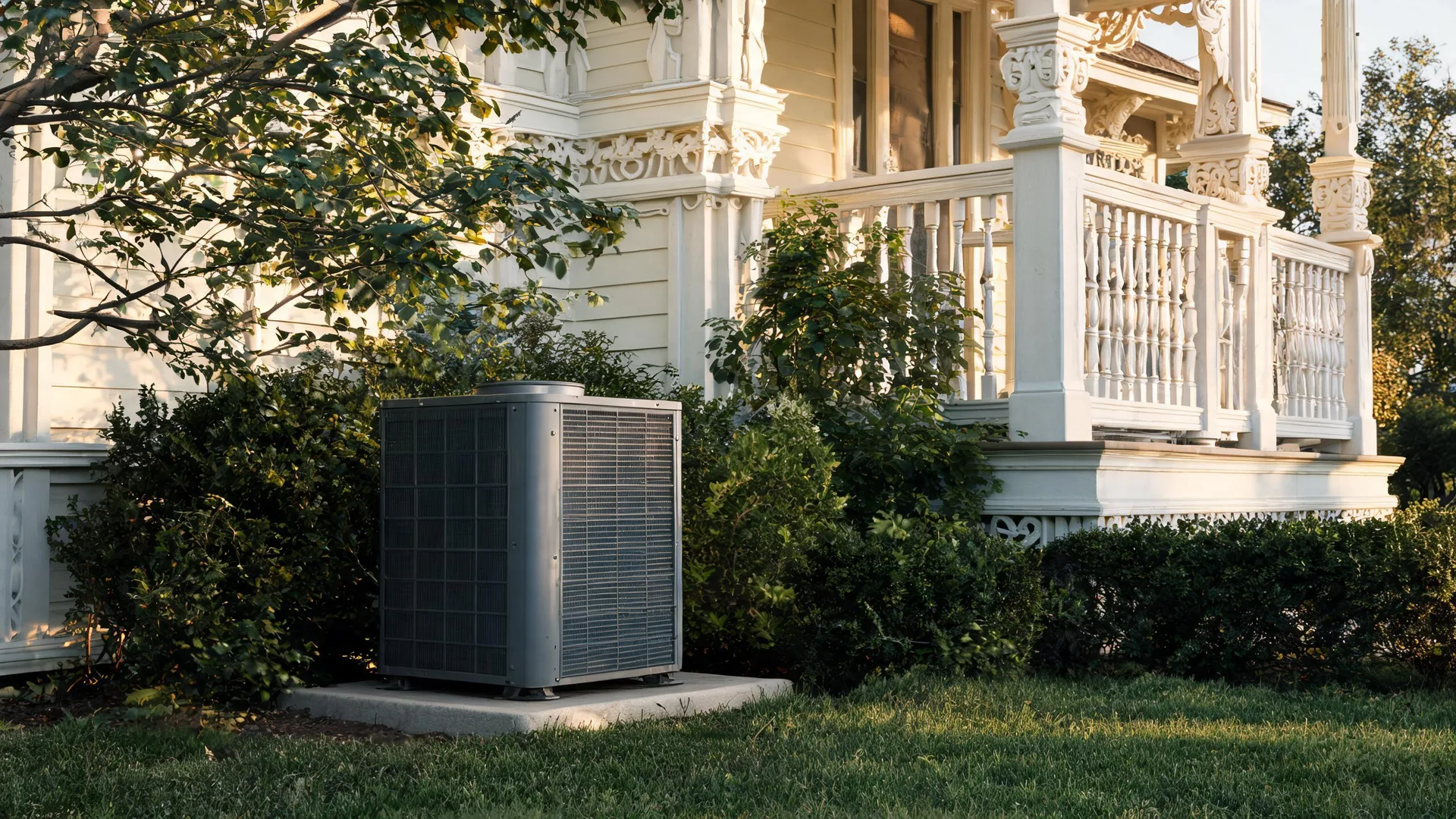
A failing capacitor shows up as a hard start

The compressor and fan motor both need a jolt from the capacitor to get spinning. When it weakens, the motor hesitates or hums before it catches, and that strain is what eventually takes out the motor itself. A tech can test the capacitor directly and often catch this before the motor goes with it.

A stuck reversing valve or a failing defrost control doesn't stay a small problem if the system keeps running. When the valve is stuck partway, the compressor still fires and still tries to move refrigerant, but it's working against itself instead of moving heat where it should. That strain lands on the compressor, and a compressor is the one part that doesn't get repaired, only replaced. A defrost cycle that isn't timing right leaves frost to build on the outdoor coil, and once ice covers the coil the system can't pull heat from the outside air at all. Run it long enough in that state and you're not looking at a valve or a control board anymore, you're looking at a compressor job. Catching it early is what keeps this a small repair instead of a big one.

A diagnostic visit starts outside, at the unit itself. A tech will run the system in both modes, heating and cooling, and watch how it responds when it's told to switch. That's how a stuck reversing valve shows up, the system either won't change modes or it changes and blows the wrong temperature air. From there it's gauges on the refrigerant lines and a meter on the electrical components, checking pressures against what the system should be running and testing the capacitor and the defrost control directly rather than guessing from symptoms. A failing part usually gives a clear reading once it's tested, even when the sound or the frost pattern could point to a couple different causes. The outdoor coil gets a close look too, since how the ice sits on it says something about whether the defrost cycle is timing correctly or not firing at all. Most of this happens in one visit, and the goal is to walk away knowing which part is failing, not just that something is.