A nighttime street view of several illuminated two-story red brick homes with front porches, flanked by a large tree.

Heat Pump Repair in West Frankfort, IL

Tell us about the job

Takes about a minute. No obligation.

RepairHeat PumpFranklin County, IL
Step 1 of 2

What ZIP code is the job in?

Franklin County asks a lot of a heat pump year-round

Zone 4A means this area needs real heating and real cooling, not just one or the other. A heat pump here works through summer cooling and winter heating with no off season, so a breakdown is just wear catching up with it, not a sign something unusual is going on.


The wind and hail numbers point somewhere else

Franklin County has seen its share of damaging wind and hail over the years, but that history is about the outdoor unit's cabinet and coil fins, not what's likely wrong when a heat pump stops heating or cooling right. Most calls trace back to a failing capacitor, a low refrigerant charge, or a thermostat or defrost board acting up, the same causes you'd find anywhere.

7 months
October through April, your system heats
5 months
May through September, it cools
27°F
the average winter night it heats against
87°F
the average summer afternoon it cools against
Isometric cutaway illustration of a house showing interior ductwork, an indoor air handler, and beds, with an outdoor condenser unit connected by lines outside the wall.
Your system heats October through April and cools May through September.

NOAA nClimDiv, 1991–2020 normals

Heat pumps here switch from cooling to heating in October.

A weak part that made it through summer on cooling often fails in the first cold snap, when the system reverses and leans on the defrost board and reversing valve.

Half the homes here were built by 1963, old enough that a heat pump nearing the end of its life is the more likely story

Half the homes here were built by 1963
80 damaging wind events from 2015 to 2024
24 hail events from 2015 to 2024

Electricity in Illinois ran 15.87 cents per kilowatthour in 2024, and a heat pump leans on that power every month of the year. A failing capacitor or a low refrigerant charge does not just mean weak heating or weak cooling. It means the compressor works harder to get the same result, and every one of those hours shows up on the bill. A thermostat or defrost board acting up can do the same thing, cycling the system on and off when it should run steady. None of that gets cheaper by waiting. The longer a bad part stays in, the more it costs to run.

A bad part costs more to run every month it stays in

Get the capacitor, charge, or board checked now, before another month of West Frankfort power prices runs through a system working harder than it should.

Find a contractor
A white mini-split heat pump outdoor unit mounted on a concrete pad beside a gray-sided house, surrounded by gravel and green shrubs.

How old is the system, not just the house

A heat pump does not usually fail out of nowhere. If yours is the one that came with the house, and the house is one of the older ones here, age is worth ruling out before paying for a repair. Ask whoever comes out how much life is left in it. A compressor or coil near the end does not always justify sinking money into a board or a valve.

A weak capacitor forces the compressor to strain

A capacitor that is starting to go will still kick the compressor on, just slower and with a harder jolt each time. That hard start heats the windings more than a normal one. Keep that up long enough and the compressor itself can fail, and a compressor failure is a different kind of repair than swapping a capacitor.

Low refrigerant starves the compressor, not just the air

A heat pump low on charge still runs, just moving less heat than it should, so the compressor has to work longer to keep up. Refrigerant also carries the oil that lubricates the compressor, so a low charge means less of that too. The compressor is sealed inside the unit, not something swapped out on its own, which is why this one is worth catching early.

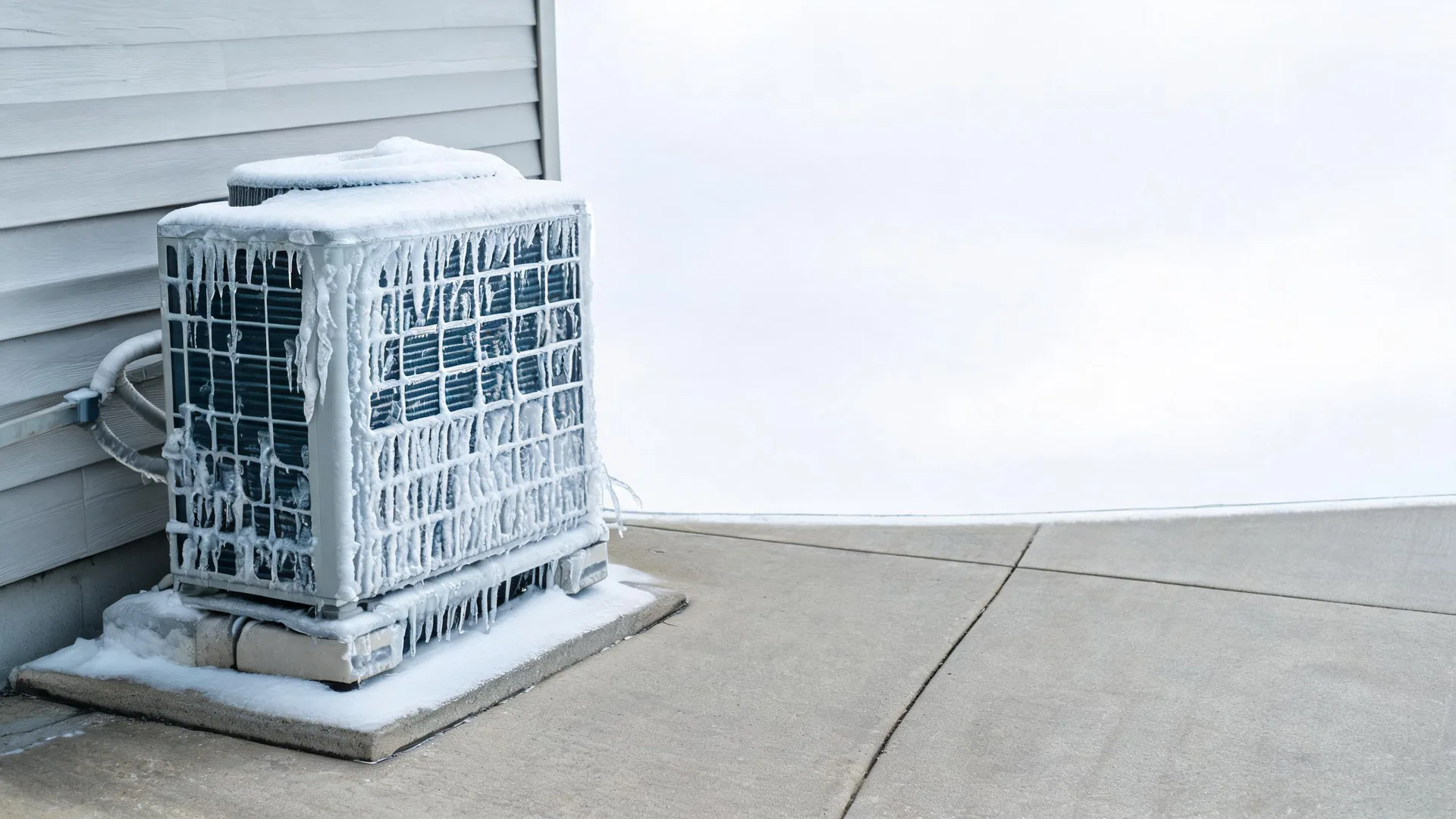
Most heat pump problems announce themselves before the system quits outright. Weak airflow from the vents, a unit that runs long stretches without warming or cooling the room, warm air blowing during a heating cycle, or a breaker that trips once and then again are all signs worth paying attention to. Ice building up on the outdoor coil and not clearing during the defrost cycle points to a defrost board or reversing valve that isn't doing its job. A clicking or humming outdoor unit that won't start up is often a capacitor giving out. None of these mean the system is done, but none of them fix themselves either, and the part that's struggling now is usually the one that fails outright later.

Repair versus replacement usually comes down to what's failing, not just how old the unit is. A capacitor, a contactor, a run of refrigerant line, a defrost board, these get swapped out on their own and the rest of the system keeps going. The compressor is different. It's sealed inside the cabinet, and when it's the one failing, a tech is often pricing out a new system against a repair that might not hold anyway. A heat pump nearing the end of its life tends to show more than one problem at once, not just the single complaint that prompted the call. That pattern, several small things going wrong close together, is usually worth asking about directly before paying for any one of them.