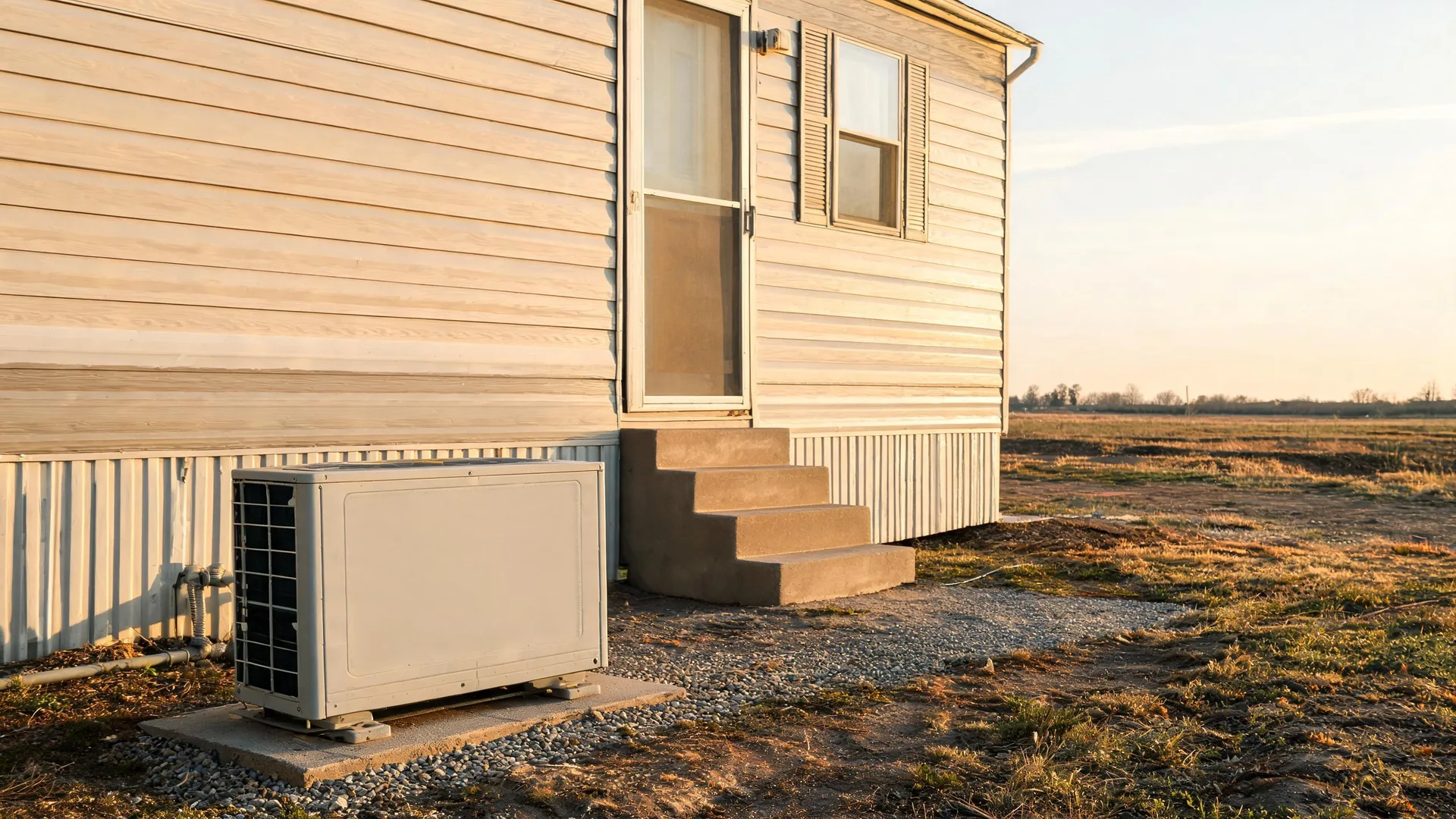
Gas heat is standard here
Utility gas heats 78.2% of homes in Boone County. Most of these houses already have gas furnaces, with the air conditioner paired to run off the same ductwork and blower.
Takes about a minute. No obligation.
Utility gas heats 78.2% of homes in Boone County. Most of these houses already have gas furnaces, with the air conditioner paired to run off the same ductwork and blower.
If your home has a gas furnace, a new AC unit goes in as a matched outdoor condenser working off the existing ducts and the furnace's blower. There's no new ductwork to plan around.

NOAA nClimDiv, 1991–2020 normals
Cooling in Belvidere runs June through August.
May is the month to put in a new AC, before the first hot stretch asks anything of it.



Belvidere sits in climate zone 5A, a cool zone where furnaces carry more of the year's work than air conditioners do. Any split-system air conditioner installed new here still has to meet the federal minimum of 13.4 SEER2, the same floor that applies across the country for units under 45,000 Btu/h. That number is a efficiency rating, not a measure of how much cooling a unit puts out, so it doesn't tell you what size to buy. It does narrow the field some, since older low-efficiency units no longer get built to sell. A contractor sizing your system will still size it to your house first and pick from what meets that minimum.
Three months of real heat a year, with afternoons averaging 81°F, is not a hard summer. Belvidere's air conditioner will spend most of its life barely working. A reliable, correctly sized system handles that load without trouble, and there's no reason to pay for more cooling capacity or efficiency than a short, mild summer asks for.
Find a contractor
Three months of real work a year is not much wear on a condenser. When you're comparing units, put your money into correct sizing and a solid install rather than chasing the highest efficiency number on the shelf. A unit that's sized right for your house and installed well will cool it fine through a Belvidere summer and hold up for years doing it.
A contractor has to size the condenser to your house, your ductwork and how much shade and sun the place gets, not just swap in whatever matched the old unit. Getting that sizing right usually means a load calculation, and that work is part of what you're paying for. A unit that's too big cools the air fast but never runs long enough to pull the moisture out, and one that's too small runs constantly without catching up. Either mistake costs more down the line than doing the sizing right at install.
If the ductwork, the line set and the electrical are all sized for the new unit, the install is mostly swapping the condenser and coil and charging the system. If the ducts are undersized, the breaker's too small, or the line set has to be replaced instead of reused, that's added work beyond the equipment itself. None of that shows up until a contractor actually looks at what's there, which is why the same AC unit can cost different amounts to put in from one house to the next.
Estimates for a typical Boone County home, from EIA household energy data, Illinois fuel prices and NOAA climate normals. Your home will differ.
Install day starts outside, not at the thermostat. The old condenser comes out, the pad gets checked or replaced, and the new unit gets set and leveled before anyone touches the refrigerant lines. A tech will braze the line set connections if new lines are needed, then pressure test the whole system with nitrogen to check for leaks before anything is charged. Once that holds, the system gets evacuated to pull moisture and air out of the lines, then charged with refrigerant to the weight the manufacturer specifies for that unit and that length of line set. The last step is running the system and checking the temperature split across the coil, to confirm the charge is right instead of just close. A unit charged correctly on day one is a unit you won't be calling someone back about.