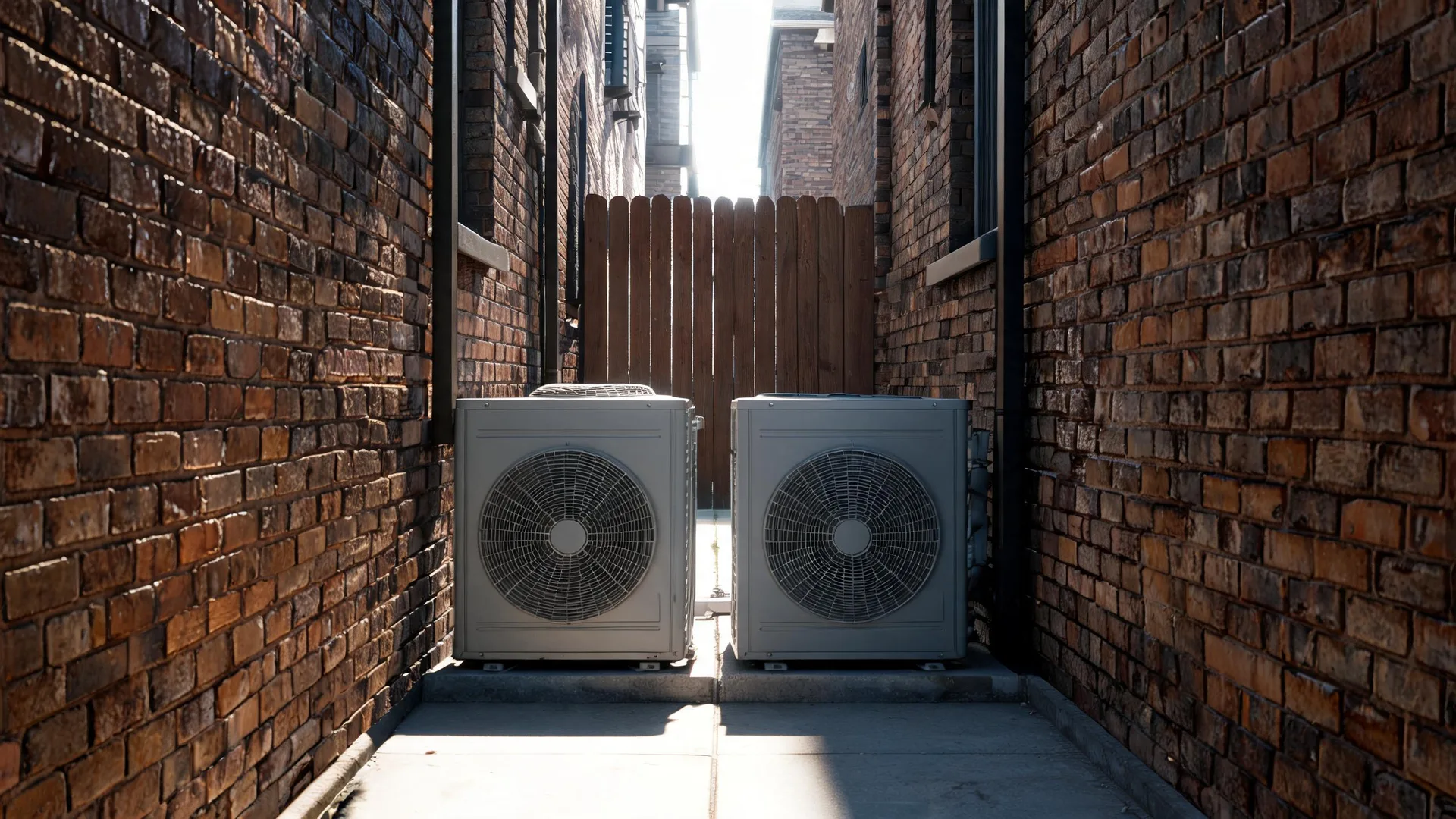
Electricity here runs 18.18 cents a kilowatt-hour
That is higher than what most US counties pay. An air conditioner here draws on that rate every time it cycles on, all summer long.
Takes about a minute. No obligation.
That is higher than what most US counties pay. An air conditioner here draws on that rate every time it cycles on, all summer long.
The dew point in Macon County averages 65°F through June, July and August, so the air stays heavy and the system works to pull moisture out as well as cool. A unit sized and installed well handles that load without wasting power. One that is not will show it on the bill.

NOAA nClimDiv, 1991–2020 normals
Cooling runs June through September here.
Install before June and the job happens on your schedule, not during the first hot week.



Gas heats most homes here, 73.5 percent, and central air almost always shares that house with a gas furnace. The two systems share the ductwork but not much else. The furnace moves air through the coil, and the coil is where the new AC system does its work, so the match between them matters more than either one alone. If the furnace and air handler are staying put, the coil and condenser going in need to fit what's already there, the same ducts, the same airflow. Electric heat is a smaller share here, 20.8 percent, often paired with a heat pump or an air handler sized differently than a gas setup. Either way, the fuel already running the house decides what the installer is matching the new AC to.
That rate applies to every cycle the system runs, all summer. An efficient system draws less power to move the same amount of heat, and a well matched install is what gets you that. The choice made now is the one the bill reflects later.
Find a contractor
The age of the house does not tell an installer what is behind the walls. It tells them to check rather than assume. A system sized off square footage alone can come in wrong for a duct run that has been there since 1964 or earlier, and wrong in either direction costs you: too big and it cycles on and off without pulling the moisture out, too small and it runs long into the evening trying to catch up. The contractor sizing your unit needs to look at what is actually in the house, the ducts, the layout, the insulation, before settling on a unit. That is the step that makes the new system fit the old one.
A condenser and coil are matched to each other by design, and that match is also matched to the refrigerant it was built to run. Once a system is old enough to replace, the new equipment runs on different refrigerant than what is likely in the old lines. The old unit comes out. None of it carries over into the new install.
The refrigerant in the old system can't be released into the air. A technician connects recovery equipment to the old lines and draws the refrigerant out into a tank before any part of the old system is disconnected. That step happens before the old condenser or coil is removed, not after.
Estimates for a typical Macon County home, from EIA household energy data, Illinois fuel prices and NOAA climate normals. Your home will differ.
Installation starts with the old system coming apart before the new one goes in. The condenser outside gets disconnected first, once the refrigerant is out of it, then the line set and the indoor coil come out. If ductwork is being modified or a new line set run, that happens next, before anything new is set in place. The new condenser gets set on its pad, the coil goes in above or beside the furnace, and the line set connecting them gets run, brazed and sealed. Once the lines are tight, the system gets pressure tested to check for leaks before any refrigerant goes in. After that it's charged to the right level, the electrical and controls get wired in, and the whole system runs through a cycle while the installer checks airflow, pressure and temperature split to confirm it's working the way it's supposed to.