




A nighttime street view of several illuminated two-story red brick homes with front porches, flanked by a large tree.

AC Installation in Eureka, IL

Tell us about the job

Takes about a minute. No obligation.

New system or replacementCentral ACWoodford County, IL
Step 1 of 2

What ZIP code is the job in?

Electricity in Woodford County runs about 17.77 cents per kilowatt-hour, more than most US counties pay. The dew point here averages 64°F across June, July and August, and that kind of moisture keeps an air conditioner cycling on and off most of the day. More cycling means more power drawn at a rate that is already high. A unit with a higher efficiency rating does the same cooling on less power, and at this rate that difference shows up fast on the bill. Two systems cooling the same house the same summer can land on very different numbers, and the difference is the equipment, not the weather.

4 months
June through September, your air conditioner is on duty
84°F
the average summer afternoon it cools against
41 hail events
in ten years, and hail bends the fins on outdoor coils
13.4 SEER2
the federal minimum any new unit must meet
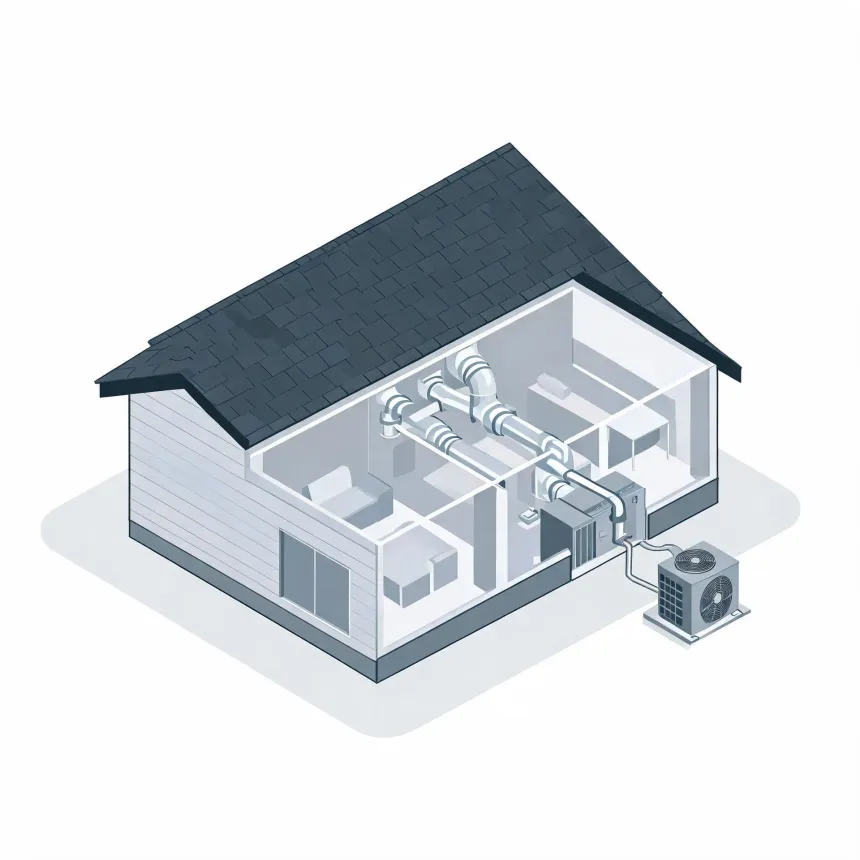
Isometric cutaway illustration of a house with a dark shingled roof, showing interior ductwork connected to an indoor air handler and an outdoor condenser unit beside the building.
Your air conditioner works hardest from June through August.

NOAA nClimDiv, 1991–2020 normals

May is the month before cooling starts in Woodford County.

Put the new system in before June and it's running on day one, not mid-breakdown.

Most homes here run on gas, which is what the furnace side of a new system will use

65.6% of homes heat with gas
Climate zone 5A
Power here costs 17.77 cents per kilowatt-hour

Woodford County sits in climate zone 5A, a cool zone where heating carries more of the load than cooling, but the humidity still counts for something. Any split-system air conditioner installed here, if it's under 45,000 Btu an hour and built from 2023 on, has to hit at least 13.4 SEER2, the federal floor. That number sets the minimum, not the ceiling. A contractor can still offer something that clears 13.4 by a wide margin, and given what power costs here, that gap is worth asking about. The rating itself only tells you how much cooling comes out per watt-hour put in, nothing about tonnage or how the system was sized for the house.

Ask what rating you're getting, not just what it costs to put in

Power here costs more than in most places, and a system that barely clears the efficiency floor will draw on that rate every time it cycles on. Ask what rating is being quoted before the install, not after the first bill.

Find a contractor
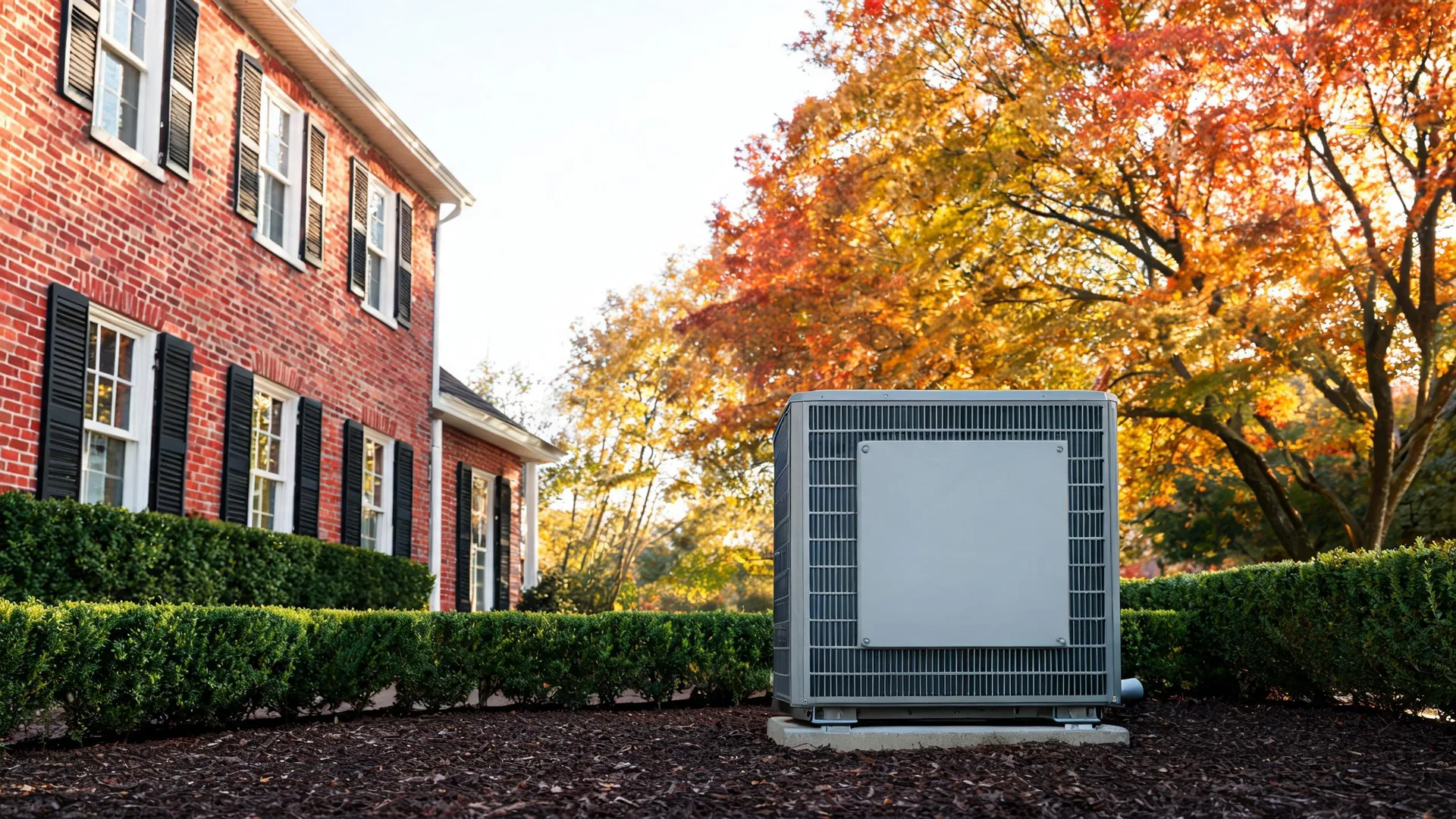
A gray metal air conditioning condenser unit mounted on a concrete pad in a flat grassy field under a partly cloudy sky.

Half these homes date to 1972 or earlier

Half the homes in Woodford County were built in 1972 or earlier. A system going into one of those is tying into ductwork and wiring that's already there, not starting from nothing. Old duct runs were sized for whatever unit was in the house decades ago, and the new system still has to push air through them. A contractor sizing the job should be measuring the house you actually have, room by room, rather than matching the tonnage of whatever is being pulled out.

Bigger isn't better

An oversized air conditioner cools the air fast and shuts off before it pulls the moisture out of the room. That leaves a space that feels cold and damp at once, and the unit short cycling that way wears out the compressor faster than steady, longer runs would.

The math behind the size

Sizing a system means working out how much heat the house actually gains on the hottest day, room by room, counting windows, insulation, and square footage. That's a room-by-room measurement, not a number copied off the unit coming out, and it's the only way to land on a system that matches the house instead of just the last one installed there.

Overhead view of an outdoor AC condenser unit on a concrete pad next to a house with a dark shingle roof.

A higher-efficiency unit would save about $30 a year to run in Woodford County compared with a new unit at the federal minimum.

  • A higher-efficiency unit$210 a year
  • A new unit at the federal minimum, 13.4 SEER2$240 a year

Estimates for a typical Woodford County home, from EIA household energy data, Illinois fuel prices and NOAA climate normals. Your home will differ.

Installation starts with the old system coming out, indoor coil and outdoor condenser both, along with the line set if it's not being reused. The new outdoor unit gets set on a pad, leveled, so the compressor inside isn't running at an angle for years. Line sets get run, joints brazed, then the whole system gets pulled into a vacuum to clear out air and moisture before any refrigerant goes in. That vacuum step matters more than it looks: any moisture left in the lines turns to acid once the system runs, and that acid eats at the compressor from the inside. Once the system holds vacuum, it gets charged to the weight the manufacturer specifies, not just topped off until pressures look right. Last comes the startup check: airflow across the coil, static pressure in the ducts, temperature split between the air going in and the air coming out. A system can be installed and still not be set up right, and that startup check is what catches it before the house is depending on it.