Aerial view of a residential air conditioning condenser unit mounted on a concrete pad next to a house with vinyl siding and a sliding glass door.

AC Installation in Freeport, IL

Tell us about the job

Takes about a minute. No obligation.

New system or replacementCentral ACStephenson County, IL
Step 1 of 2

What ZIP code is the job in?

Most homes here run on gas heat

Gas heats 67.3% of homes in Stephenson County. The rest split mostly between electric and propane. An AC installation almost always pairs with an existing furnace, so the cooling side has to match ducts and a blower that were sized for a gas system.

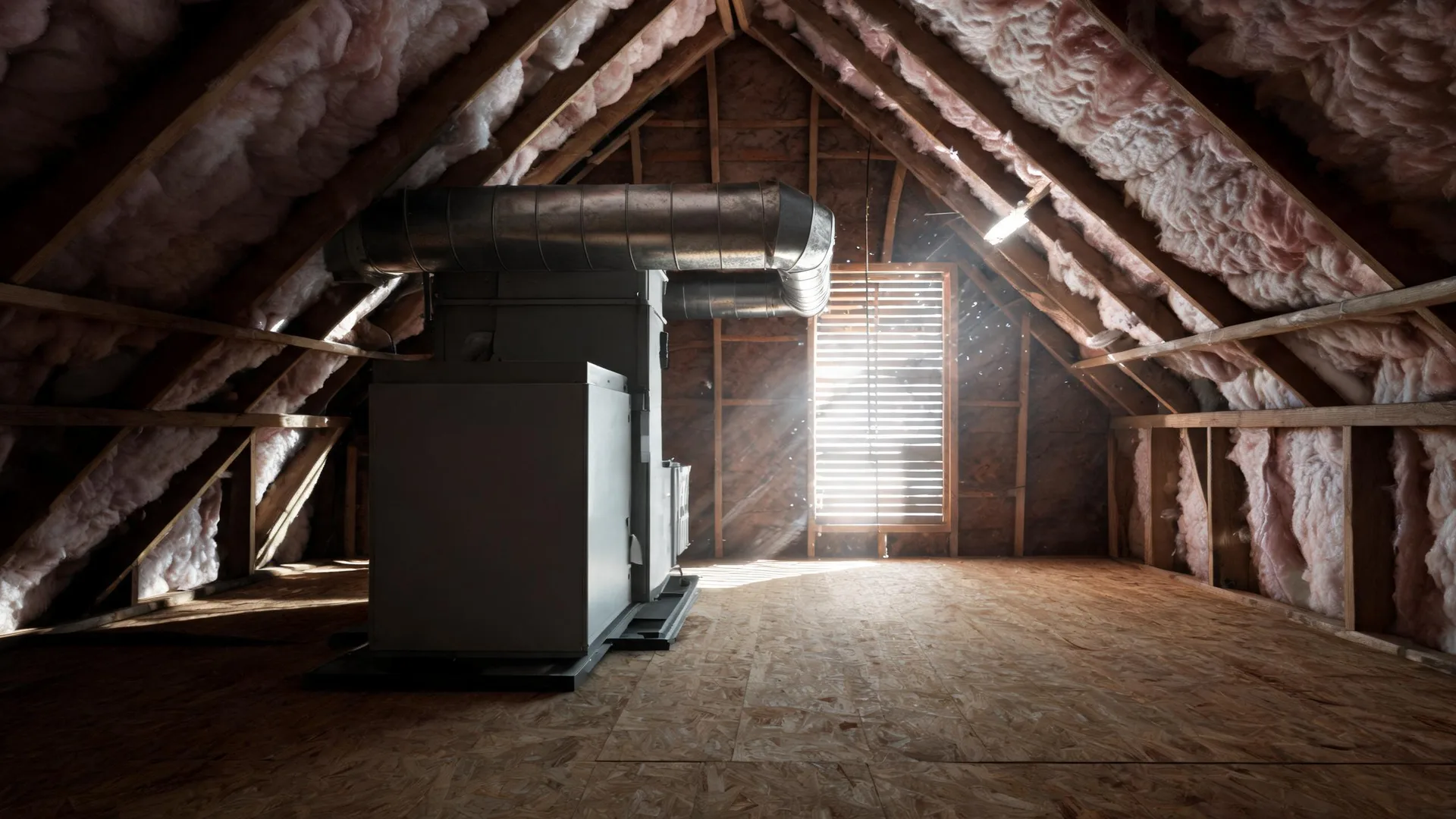
The furnace connection matters for sizing

When a contractor installs a new air conditioner, the indoor coil has to work with the furnace already in the house. If your home heats with gas, as most do here, that furnace and its ductwork are already set. The AC install has to fit what's there, not the other way around.

3 months
June through August, your air conditioner is on duty
82°F
the average summer afternoon it cools against
24 hail events
in ten years, and hail bends the fins on outdoor coils
13.4 SEER2
the federal minimum any new unit must meet
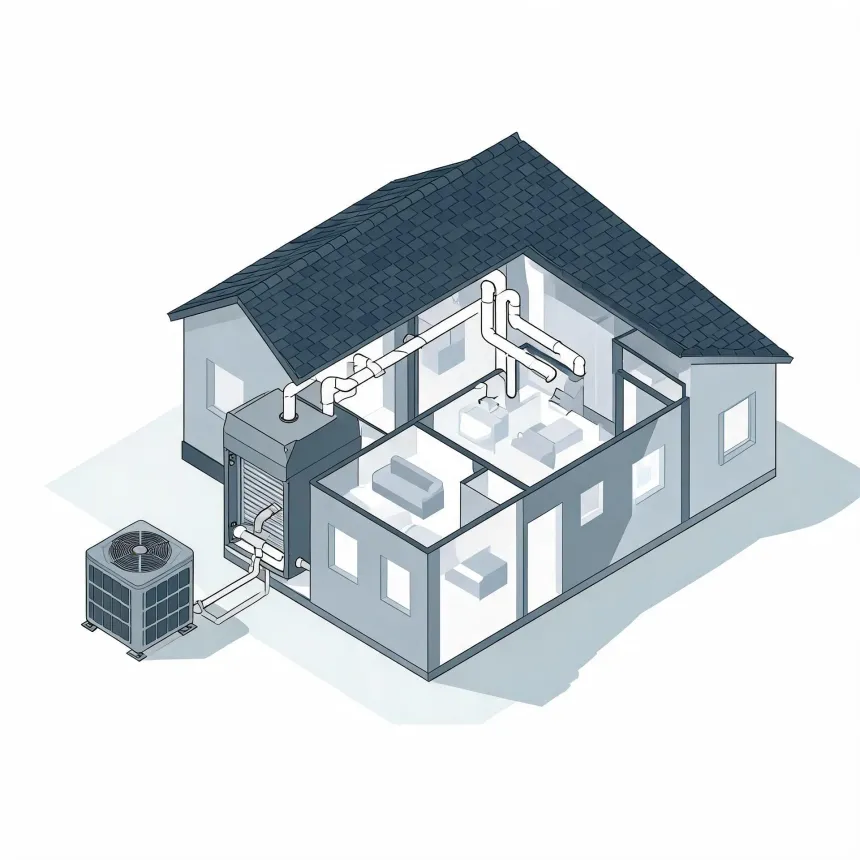
Isometric illustration of a cutaway single-story house showing interior rooms, ductwork running from an indoor air handler, and an outdoor condenser unit on a pad beside the building.
Your air conditioner works hardest from June through August.

NOAA nClimDiv, 1991–2020 normals

Summer here runs about three months, June through August, with afternoon highs averaging 82.

A system that size doesn't need top-tier efficiency to handle a Freeport summer.

Three months of cooling start in June, so May is when to replace it

Cooling runs June through August
Summer afternoons average 82°F
67 damaging wind events from 2015 to 2024

Stephenson County falls in zone 5A, a cool climate where the energy code treats heating as the bigger job. That same code sets a floor for cooling equipment too. Any split-system air conditioner under 45,000 Btu/h has to meet a federal minimum of 13.4 SEER2. That's a federal rule, not a local preference, so it holds whether the quote is for a base unit or something higher. A system rated below that minimum can't legally go into a new installation. Whatever gets installed this year will clear that bar before it reaches the house.

Weather here doesn't change what the AC needs to be

Stephenson County sees its share of severe weather, including damaging wind and hail most years. None of that calls for a bigger or sturdier air conditioner than code requires. A standard system, properly installed, holds up fine here. There's no local case for oversizing the unit or paying for efficiency beyond what a Freeport summer actually needs.

Find a contractor
A man in a cap, dark t-shirt and tan work pants walks up steps toward a dark teal front door carrying a canvas tool bag, with a planter of greenery beside the porch.
An outdoor residential air conditioning condenser unit mounted on a concrete pad, surrounded by gravel with a blue sky in the background.

Half these homes were built before central air was standard

Half the homes in Stephenson County were built in 1960 or earlier. A house that age usually wasn't built with central air. The ducts, if they're there at all, may have been added later or sized for a furnace blower rather than a cooling system. A contractor sizing a new AC for a house like this has to look at what's actually in the walls and attic now, not just the square footage. Fitting the equipment to the house is the job, more so here than in a newer subdivision.

Ask for the load calculation, not a guess off square footage

A proper sizing calculation accounts for window area, insulation, and duct location, not just the size of the house. Homes that look alike on paper can call for different equipment. If a contractor quotes a number before looking at any of that, ask what it's based on.

Ask what happens to the existing ductwork

A new outdoor unit and indoor coil only move air as well as the ducts carrying it. If the ducts leak or were never sealed well, the new system inherits that problem on day one. Ask whether the ducts get inspected or just reused as is.

Overhead view of a gray outdoor AC condenser unit on a concrete pad beside a mulched garden bed and a house with vinyl siding.

Going above the federal minimum saves little here, about $20 a year.

  • A higher-efficiency unit$150 a year
  • A new unit at the federal minimum, 13.4 SEER2$170 a year

Estimates for a typical Stephenson County home, from EIA household energy data, Illinois fuel prices and NOAA climate normals. Your home will differ.

Installation day starts with the old equipment coming out, not the new unit going in. The outdoor unit, the indoor coil, and the line set connecting them all have to come out before anything new goes in their place. Once the old coil is out, a contractor can see the ductwork and connection it's actually working with, which sometimes changes the plan from what was quoted. The line set usually gets replaced rather than reused, since old refrigerant lines can carry contamination into a new system. After the new coil and outdoor unit are set, the system gets evacuated to pull moisture and air out of the lines before refrigerant goes in. Only after that charge is set does the contractor run the system and check that it's cooling and holding pressure the way it should.