







A nighttime street view of several illuminated two-story red brick homes with front porches, flanked by a large tree.

AC Installation in Granite City, IL

Tell us about the job

Takes about a minute. No obligation.

New system or replacementCentral ACMadison County, IL
Step 1 of 2

What ZIP code is the job in?

Electricity in Madison County runs 17.35 cents per kilowatt-hour, higher than most of the country pays. An air conditioner here is not an occasional machine. Summer air sits heavy, with a dew point averaging 66°F across June, July and August, so the system is pulling moisture as much as it's cooling air. Expensive power and long, hard runtime together mean two systems with the same price tag can leave you with very different bills. What you install decides which one you end up with.

5 months
May through September, your air conditioner is on duty
86°F
the average summer afternoon it cools against
40 hail events
in ten years, and hail bends the fins on outdoor coils
13.4 SEER2
the federal minimum any new unit must meet
Isometric cutaway illustration of a house with a dark shingled roof, showing interior ductwork connected to an indoor air handler and an outdoor condenser unit beside the building.
Your air conditioner works hardest from June through August.

NOAA nClimDiv, 1991–2020 normals

Utility gas heats 60.7% of homes in Madison County.

Most homes here already have a gas furnace, so this installation is usually about the AC side alone.

Half these homes were built before central air was standard

Half the homes here were built by 1971
Climate zone 4A
Power here costs 17.35 cents per kilowatt-hour
Installed before May earns its keep for five months straightCooling season runs May through September here, so April is the month to get this done.

Madison County sits in climate zone 4A, a mixed zone that asks real work of both the furnace and the AC. Because of that, any split-system central air conditioner installed here, under 45,000 Btu an hour, has to meet a federal minimum: at least 13.4 Btu of cooling for every watt-hour it draws over the summer. That floor was set for units built from 2023 onward, so it already rules out the lower-efficiency models sold before then. It doesn't pick a system for you. It just sets the baseline everything on the market has to clear before you start comparing.

What you install here, you pay for every summer after

The efficiency rating on the unit you choose is what decides your bill every summer after this one. Power here costs more than most places pay, and the system runs hard for months at a time. Ask what SEER2 number each quote is built around before you pick one.

Find a contractor
A man in a cap, dark jacket and tan pants, seen from behind, steps onto a porch toward a teal front door while carrying a waxed canvas tote bag; a potted shrub in a blue planter sits to the right.
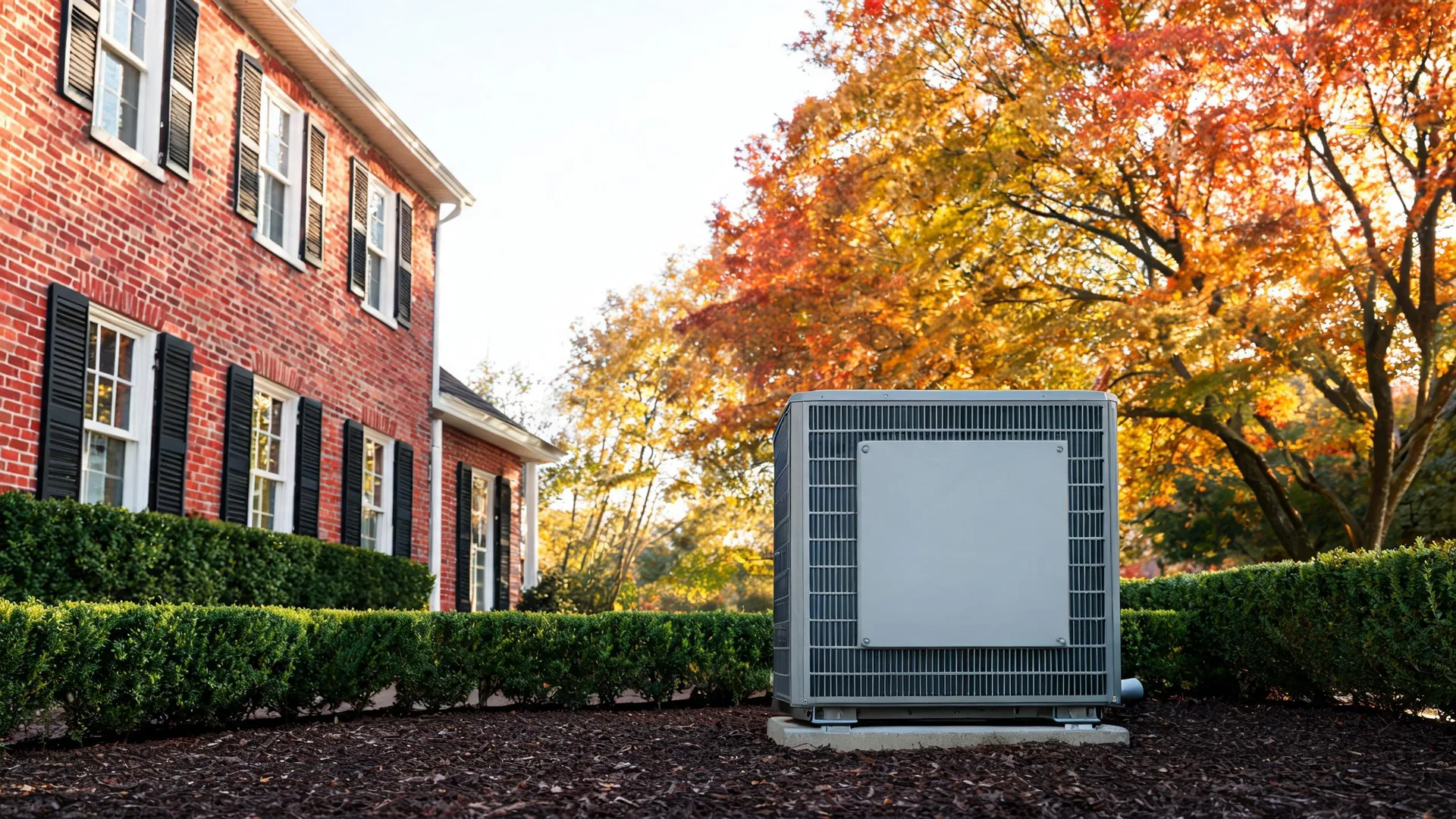
A gray residential air conditioner condenser unit mounted on a concrete pad in an open grass field.

An old house needs the new system sized to fit it

Half the homes in this county were built in 1971 or earlier. A house that old was built for a window unit or nothing at all, not a whole-house system. If your ductwork or electrical came with a house that age, have the installer check it can handle the new equipment before it goes in. Sizing matters too. The right tonnage depends on the house, not just the square footage, and a system picked for a different kind of home will run wrong in this one.

The number on the label is a ratio, not a grade

SEER2 compares the cooling a system delivers against the power it draws to do it. A higher number means the compressor and coil are getting more cooling out of the same electricity, not that the unit cools a room faster or better. Two systems can feel identical in the house and still pull very different amounts of power to get there.

That rating assumes the rest of the job was done right

The number on the label is measured in a lab, with the refrigerant charge exact and airflow across the coil where it should be. A system that's undersized, oversized, or paired with a duct run that chokes it will never hit the efficiency printed on its sticker. The install decides whether that rating is real or just a number on a sheet.

Overhead view of an outdoor AC condenser unit on a concrete pad next to a house with a dark shingle roof.

A higher-efficiency unit would save about $40 a year to run in Madison County compared with a new unit at the federal minimum.

  • A higher-efficiency unit$300 a year
  • A new unit at the federal minimum, 13.4 SEER2$340 a year

Estimates for a typical Madison County home, from EIA household energy data, Illinois fuel prices and NOAA climate normals. Your home will differ.

Install day starts with the old system coming out, the indoor coil, the outdoor unit, and the line set that connects them. Before anything new goes in, a tech should check the ductwork for leaks and the right duct size for the new equipment, since matching that airflow is what lets the system hit its rated efficiency. Setting the outdoor unit and indoor coil is straightforward work. What takes the time is pulling a vacuum on the line set to clear out moisture and air, then charging it with refrigerant to the exact weight the manufacturer calls for. A charge that's off, even slightly, costs you efficiency and shortens the life of the compressor. Once it's running, a good installer checks the airflow across the coil and the temperature split between the air going in and the air coming out, because that's what confirms the system is actually doing what the label says it should.