A row of dark-sided houses with brown shingled roofs behind trimmed hedges, lawn, and large deciduous trees under an overcast sky.

AC Installation in Joliet, IL

Tell us about the job

Takes about a minute. No obligation.

New system or replacementCentral ACWill County, IL
Step 1 of 2

What ZIP code is the job in?

Storms come through often

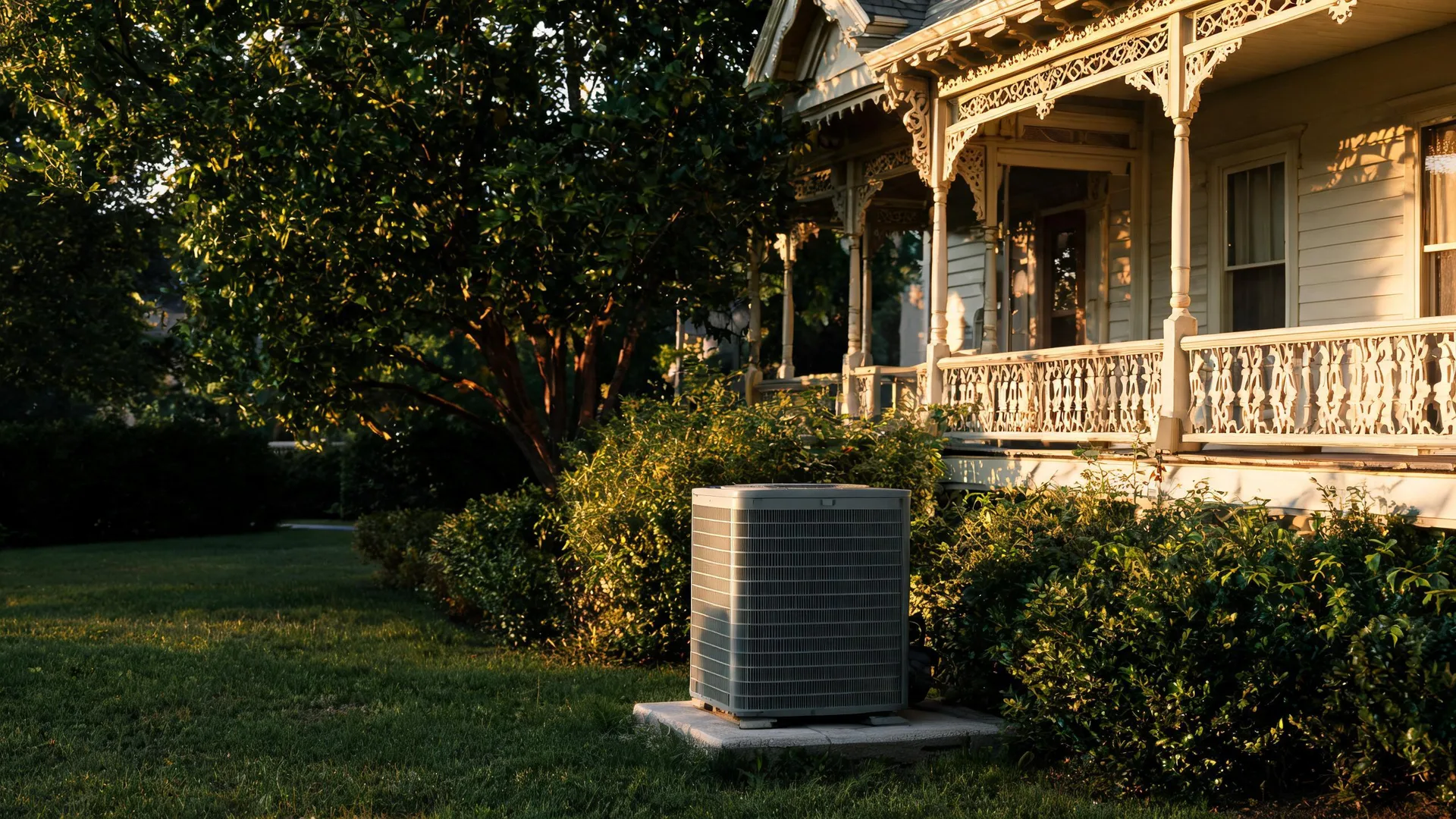
Will County logged 346 severe weather events between 2015 and 2024, including 202 damaging wind events, 89 hail events and 33 tornadoes. An outdoor condenser sits outside through all of it, exposed to hail and flying debris.


Power doesn't always hold

16% of Illinois households went at least 24 hours without power in 2024. A new air conditioner has to fit into a home where the power can go out for a stretch, not just where it runs most days.

3 months
June through August, your air conditioner is on duty
83°F
the average summer afternoon it cools against
89 hail events
in ten years, and hail bends the fins on outdoor coils
13.4 SEER2
the federal minimum any new unit must meet
Isometric grayscale illustration of a cutaway house showing interior rooms, ceiling ductwork connected to an indoor air handler, and an outdoor condenser unit linked by lines along the exterior wall.
Your air conditioner works hardest from June through August.

NOAA nClimDiv, 1991–2020 normals

Almost 9 in 10 homes in Will County heat with gas.

Your new air conditioner only has to handle cooling, so a straight swap for the same type of system is usually the simplest path.

Three months of summer, run hard

Cooling runs June through August
Summer afternoons average 83°F
202 damaging wind events from 2015 to 2024

Will County falls under zone 5A in the 2021 energy code, a cool zone where heating carries more of the load than cooling does. Any split-system air conditioner installed here still has to meet the federal minimum for units under 45,000 Btu an hour: at least 13.4 Btu of heat removed for every watt-hour of electricity it uses over a season. That rule applies to any central air conditioner of this size built from 2023 onward, so it sets the floor for what a contractor can put in, not a ceiling. Some homeowners qualify for a federal tax credit on top of that when the system installed meets the efficiency level the credit requires.

Plan this installation around the outages too

Ask where the new condenser will sit and what might shield it when hail or wind comes through. Ask what happens to cooling, and to anything else on the same circuit, if the power drops for a day. Settling that now, while the system is being chosen, is easier than working around it later.

Find a contractor
A man in a dark cap, olive jacket and tan work pants carries a worn canvas tool bag up steps toward a dark green front door, with a potted shrub to the left.
An outdoor residential air conditioning condenser unit mounted on a concrete pad, surrounded by gravel with a blue sky in the background.

Before June, not during it

Cooling runs June through August here, three months out of the year. May is the month before it starts, and that's the window to get a new system in. A contractor can take time picking the right size and setting the condenser somewhere it's protected, instead of rushing a swap once the heat has already arrived. Wait for a hot week to force the decision and the choice narrows to whatever unit is on hand and whatever slot is open on the schedule.

The old condenser and coil both come out

A straight swap means the outdoor condenser gets disconnected and hauled off, and the indoor coil above the furnace comes out too. Leaving the old coil in place with a new condenser is a mismatch that will cost efficiency and can shorten the life of the new compressor. The refrigerant lines running between the two usually get replaced or at least flushed clean, since old oil and debris left behind will contaminate the new system.

The refrigerant has to be recovered, not vented

Old systems hold refrigerant under pressure, and a contractor has to recover it into a tank rather than release it into the air. This is a legal requirement, not a courtesy. It also means the old unit cannot just be unbolted and dragged away while still charged. Once it is empty, the line set, disconnects and pad are clear for whatever the new installation needs.

An outdoor air conditioning condenser unit on a concrete pad next to the gray vinyl siding of a residential home.

A higher-efficiency unit would save about $30 a year to run in Will County compared with a new unit at the federal minimum.

  • A higher-efficiency unit$190 a year
  • A new unit at the federal minimum, 13.4 SEER2$220 a year

Estimates for a typical Will County home, from EIA household energy data, Illinois fuel prices and NOAA climate normals. Your home will differ.

A contractor starts by sizing the new system to the house, not just matching the old tonnage, since duct layout and insulation change what size actually fits. The indoor coil has to match the new condenser, and the line set gets flushed or swapped so nothing from the old system contaminates it. Once that's set, the installer runs new electrical connections and a disconnect box at the condenser pad, checks the ductwork for leaks, and sets the thermostat wiring. The system gets charged with refrigerant to the exact weight the manufacturer specifies, not just until it feels cold, and then it gets tested through a full cooling cycle. A good contractor checks airflow at the vents and the temperature split between the return air and the supply air before calling the job done. That last check matters more than how it sounds running, since a system can hum along fine and still be low on charge or starved for airflow.