




Three lit brick homes on a tree-lined residential street photographed at dusk.

AC Installation in Kankakee, IL

Tell us about the job

Takes about a minute. No obligation.

New system or replacementCentral ACKankakee County, IL
Step 1 of 2

What ZIP code is the job in?

Electricity in Kankakee County averaged 18.08 cents per kilowatt-hour in 2025, higher than most US counties pay. An air conditioner here is not an occasional luxury. The dew point sits at 63 degrees across June, July and August, which is the kind of heavy, sticky air that keeps a system cycling on through the afternoon and into the evening. Every kilowatt that system pulls costs more here than it would somewhere drier or somewhere with cheaper power. What a new system is rated to do, and how well it actually does it, shows up on your bill every month it runs.

3 months
June through August, your air conditioner is on duty
83°F
the average summer afternoon it cools against
21 hail events
in ten years, and hail bends the fins on outdoor coils
13.4 SEER2
the federal minimum any new unit must meet
Isometric cutaway illustration of a single-story house showing interior rooms with furniture, attic ductwork connected to an indoor air handler, and an outdoor condenser unit on a pad linked by refrigerant lines.
Your air conditioner works hardest from June through August.

NOAA nClimDiv, 1991–2020 normals

Half the homes in Kankakee County were built in 1972 or earlier.

A system going into a house that old has to be sized and installed for the ductwork and layout already there, not for a generic floor plan.

Most homes here run on gas, so a new AC pairs with what you already have

77.1% of homes heat with gas
Climate zone 5A
Power here costs 18.08 cents per kilowatt-hour
Cooling Runs Three Months HereHomes in Kankakee County start cooling in June, so May is the time to get a new system in.

Any split-system air conditioner installed here under 45,000 Btu an hour has to meet 13.4 SEER2, the federal minimum. That number is a floor, not a recommendation, and it applies whether you're adding central air or replacing a system that died. Kankakee County falls in climate zone 5A under the 2021 energy code, a zone where heating carries the bigger load, but a new AC still has to clear the same baseline efficiency as anywhere else in the country. A unit can be rated well above that floor, and given what power costs around here, that difference is worth asking about before you settle on a system. There's also a federal tax credit available for equipment that qualifies, separate from whatever a contractor quotes. Worth raising while you're comparing units, since it changes what a higher-efficiency system actually costs you to own.

Here, a more efficient system earns its keep

Power costs more here than in most places, and a system rated above the federal minimum uses less of it every time it runs. Ask what SEER2 rating a unit carries before you pick one. Ask about the federal tax credit too. Both change what the system actually costs you to own once it's in and running.

Find a contractor
An outdoor residential air conditioning condenser unit mounted on a concrete pad, surrounded by gravel with a blue sky in the background.

Sized for the House You Have

Half the homes in this county were built in 1972 or earlier, so there's a good chance the ductwork already in your walls was sized for a smaller, older unit. Before a new system gets picked out, a contractor should measure what's there and size the equipment to it, not the other way around. A system too big for the ducts it's tied to will short cycle, and one too small will run long trying to keep up. Either way shows up on the power bill. If your ductwork came with the house, say so when you're getting quotes.

Sizing Is a Calculation, Not a Guess

The right size for an air conditioner comes from a load calculation, a room by room look at square footage, window area, insulation and ceiling height. A contractor who sizes off the old system's tonnage, or off a chart that just matches square footage to tons, is guessing. Two houses the same size can need different sized systems depending on how much window faces the sun and how well the attic is insulated.

Bigger Is Not Better

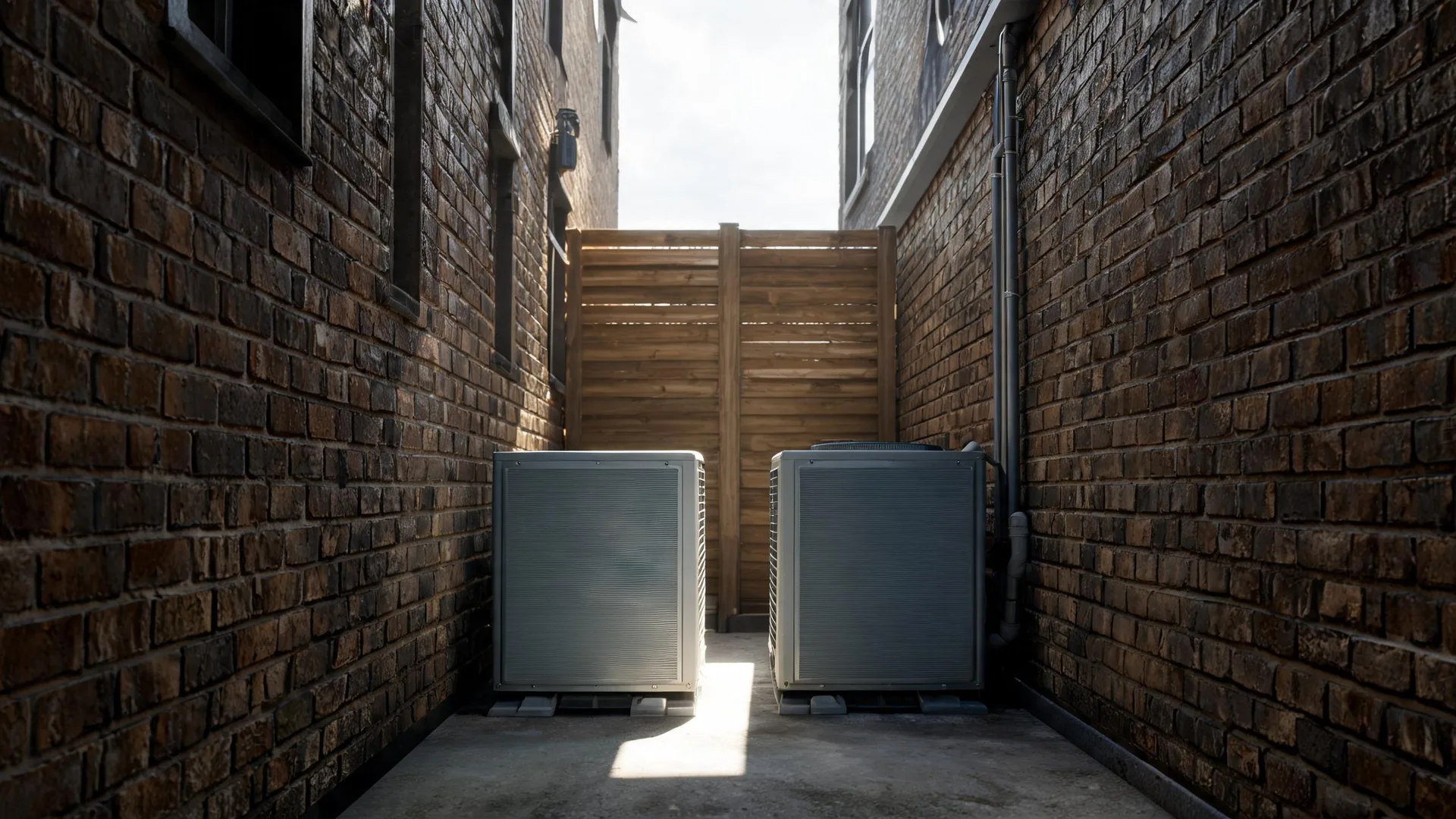
An oversized air conditioner cools the air fast but shuts off before it pulls the humidity out of the house, so the house feels clammy even at the temperature you set. It also short cycles, starting and stopping over and over, which wears the compressor harder than a system that runs in long, steady stretches. Sizing it right means it runs long enough to dry the air out, not just drop the number on the thermostat.

Aerial view of a gray outdoor air conditioning condenser unit mounted on a concrete pad next to a house with vinyl siding.

A higher-efficiency unit would save about $30 a year to run in Kankakee County compared with a new unit at the federal minimum.

  • A higher-efficiency unit$190 a year
  • A new unit at the federal minimum, 13.4 SEER2$220 a year

Estimates for a typical Kankakee County home, from EIA household energy data, Illinois fuel prices and NOAA climate normals. Your home will differ.

Installation day starts with the equipment that isn't the condenser sitting outside. The crew will set the outdoor unit on a pad, but most of the actual work happens at the air handler or furnace coil, where the refrigerant lines, the drain line and the ductwork all come together. Old refrigerant lines usually get replaced rather than reused, since the wrong line size or old residue in the copper can damage a new compressor. The line set gets brazed, pressure tested for leaks, then pulled into a vacuum to clear out moisture and air before any refrigerant goes in. Electrical work follows: a disconnect box near the outdoor unit, new wiring sized to the new equipment, and a thermostat that matches whatever controls the system uses. Once it's charged and running, a contractor should check the airflow at the vents and the temperature split between the air going in and the air coming out, not just confirm that cold air is blowing.