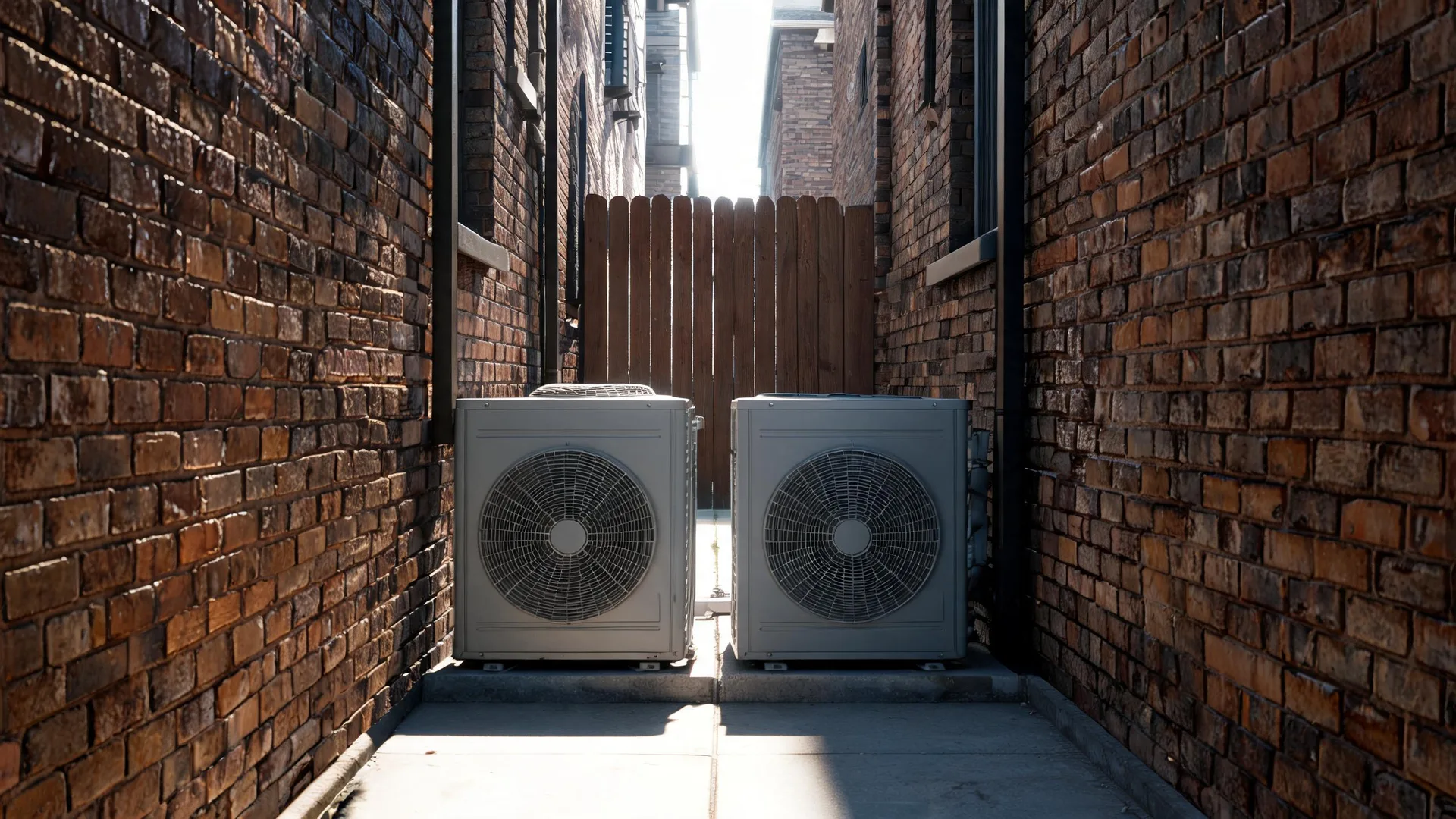
Gas heat is the norm here
Close to three out of four homes in Henry County heat with utility gas. Electricity and propane cover most of the rest. A new air conditioner here almost always pairs with a gas furnace, not an electric air handler.
Takes about a minute. No obligation.
Close to three out of four homes in Henry County heat with utility gas. Electricity and propane cover most of the rest. A new air conditioner here almost always pairs with a gas furnace, not an electric air handler.
If gas already runs your furnace, the new AC just needs a coil that matches the furnace and the right size condenser outside. That's a simpler job than switching fuel types, and it's the path most homes here take.

NOAA nClimDiv, 1991–2020 normals
Cooling here runs June through August, just three months a year.
May is the time to put in a new system, before the first hot week puts you in line with everyone else.




A standard size and a standard efficiency rating are the right call here. Nothing about Henry County pushes you toward oversizing the condenser or paying extra for a premium efficiency tier. Electricity runs 15.07 cents per kilowatt-hour, an ordinary rate, not one that makes a high-SEER2 unit pay for itself faster than it would somewhere with pricier power. What matters more is getting the size right for your house, which means a contractor running a load calculation rather than guessing off the unit you're replacing. Get that match right and a standard system will keep up fine with what summer here asks of it.
Any split-system air conditioner built on or after January 1, 2023 has to hit at least 13.4 SEER2, the federal minimum for units under 45,000 Btu an hour, the size that fits a house. That floor applies here the same as anywhere else. A federal tax credit is available on top of that for equipment that qualifies.
Find a contractor
This time-lapse runs across a full day because the job the system does is a short one, just three summer months, and the house it's going into has usually been standing a long time. Half the homes in Henry County were built in 1961 or earlier. An installer working on a house that old is not just setting a condenser on a pad. The ductwork may have been sized for whatever furnace came with the house, and a return that was fine decades ago might not move enough air for the system going in now. None of that rules out central air. It means the load calculation has to look at the house as it actually is, not at the numbers on the equipment being replaced.
A contractor quoting off the nameplate on your old condenser is guessing the same guess whoever installed it made years ago. Ask instead whether they ran a load calculation on your house as it stands now, with its current windows and insulation. Two houses the same square footage can need different sized systems.
The indoor coil and the outdoor condenser are sold as a matched pair for a reason. A mismatched set can short-cycle, cool poorly, or wear out early even if both pieces are good equipment on their own. Ask the contractor to confirm the coil they're installing is rated for the condenser going in next to it, not just close in size.
Estimates for a typical Henry County home, from EIA household energy data, Illinois fuel prices and NOAA climate normals. Your home will differ.
Installation day starts outside, not in. The old condenser gets disconnected and the refrigerant recovered from the lines, because it can't just be vented into the air. Once that's done the contractor swaps the outdoor unit and sets the new one on its pad, then moves to the coil sitting on top of the furnace. If the coil's being replaced too, that means cutting into the ductwork and sealing it back up around the new piece. New copper line set usually gets run between the coil and the condenser, then the whole system gets evacuated with a vacuum pump to pull out any air and moisture before refrigerant goes in. The last steps happen with the system running: charging it to the right pressure, checking the airflow across the coil, and confirming the thermostat is talking to the right equipment. A contractor should walk you through the settings before they leave, not just pack up and go.