Most homes here run on gas
Gas heats 77.7% of homes in Rock Island County. The furnace sits with the air handler, and a new AC install usually ties into that same ductwork rather than starting from scratch.
Takes about a minute. No obligation.
Gas heats 77.7% of homes in Rock Island County. The furnace sits with the air handler, and a new AC install usually ties into that same ductwork rather than starting from scratch.
Gas or electric furnace, the air conditioner is a separate piece of equipment with its own refrigerant line and outdoor unit. Sizing it right matters more than matching it to the heat source.

NOAA nClimDiv, 1991–2020 normals
Electricity in Rock Island County runs about 10.13 cents per kilowatt-hour, cheaper than most of the country.
A high-efficiency AC costs more up front and takes longer to pay back here, so pick one for how well it cools and holds up, not just its efficiency rating.




Three months of real cooling load here, June through August, with afternoon highs averaging 83°F. That's a moderate stretch, not the kind of punishing summer that pushes a contractor toward oversizing. Zone 5A is a heating-dominant climate, so the furnace carries the harder job and the AC just needs to handle a normal summer well. The dew point averages 63°F those months, enough mugginess that the system needs to pull moisture out of the air, not just drop the temperature. A properly sized, standard-efficiency unit matched to your home's square footage and ductwork handles that without trouble. There's no local reason to pay for a bigger unit or a higher tier than the house calls for.
Any split-system air conditioner installed here has to clear 13.4 SEER2, the federal minimum, so that floor is already built into what a contractor can sell you. Zone 5A doesn't ask for more than that. There's a federal tax credit for qualifying high-efficiency equipment if you want to go above the minimum, but nothing here requires it.
Find a contractor
An oversized unit and an undersized one fail in different ways, but they both come back to the same thing: the compressor's run time. Every time it starts, it draws a hard jolt of current before settling into normal operation, and that startup is harder on the system than any stretch of steady running. A unit sized too big for the house satisfies the thermostat fast, shuts off, then has to start again a short while later. Over a long summer that adds up to far more starts and stops than a correctly sized system ever sees. A unit sized too small doesn't short-cycle, but it runs nearly nonstop on the hottest afternoons, and a compressor built for a duty cycle with rest in it wears differently than one asked to run flat out for hours. Sizing isn't a matter of rounding up for safety. A load calculation accounts for the specific house, and matching the tonnage to that number is what lets the compressor work the way it was built to.
A load calculation looks at square footage, window area, ceiling height and duct layout to find the right tonnage for a home. Go bigger than that and the unit cools the air fast but shuts off before it pulls the moisture out, so the house feels cold and damp at once. Go smaller and it runs long stretches without catching up on a hot afternoon. The equipment itself isn't what costs the most here. Getting the size and the ductwork right is what decides whether the system actually works.
An install that reuses existing ductwork, a existing line set and an existing electrical disconnect is a different job than one that doesn't have any of that to work with. If the ducts need sealing, resizing or new returns to handle an AC's airflow needs, or the electrical panel doesn't have room for a new circuit, that work happens alongside the install, not instead of it. None of it shows up until a contractor is actually in the house looking at what's there.
Estimates for a typical Rock Island County home, from EIA household energy data, Illinois fuel prices and NOAA climate normals. Your home will differ.
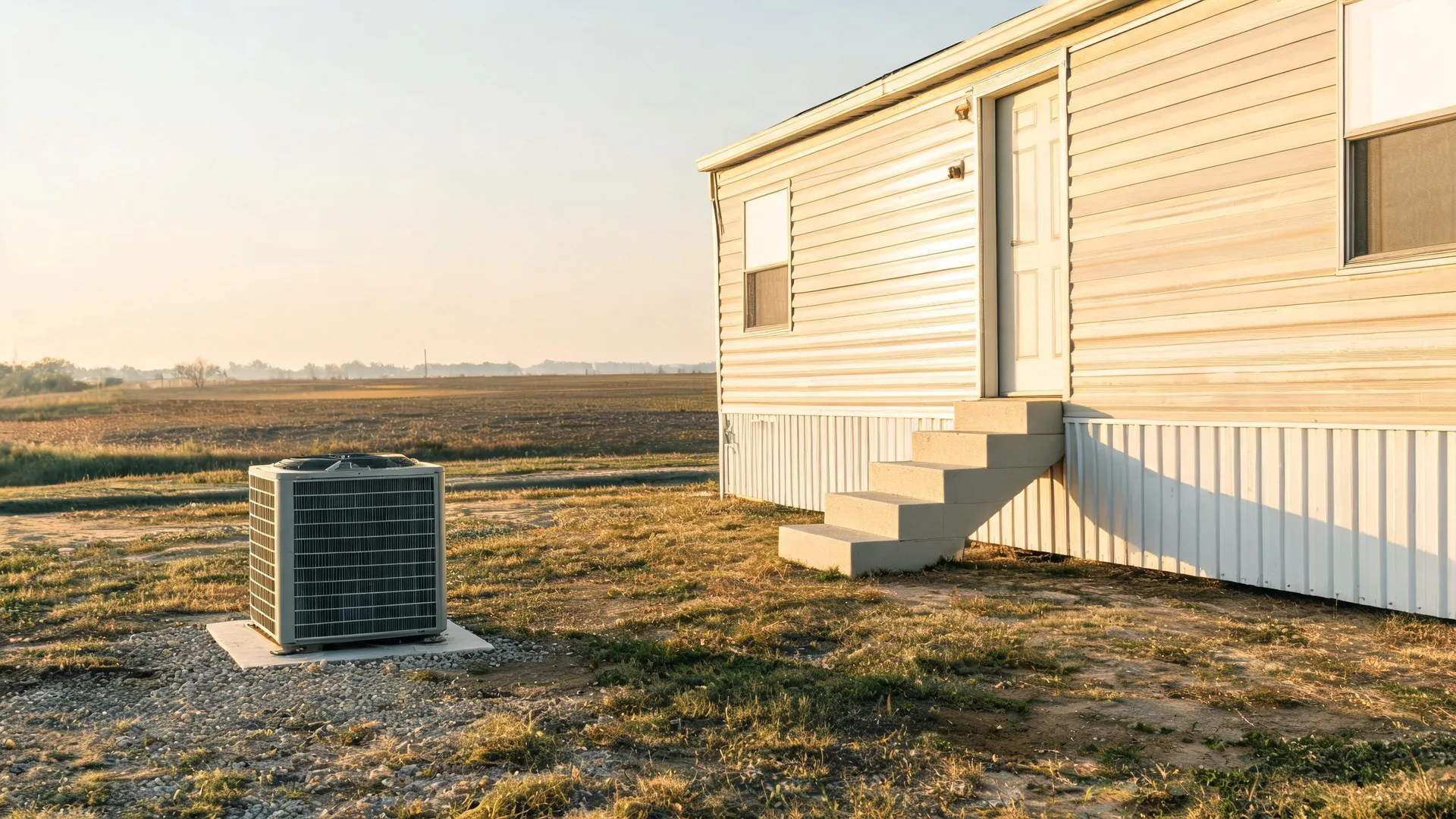
Install day starts with the outdoor unit and the indoor coil, not the thermostat. A contractor sets the new condenser on a pad outside, connects it to the line set, and pairs it with a coil mounted above or beside the furnace. If the line set is being reused, it gets flushed first, because old refrigerant oil left behind can damage a new compressor. Once everything is connected, the system gets evacuated with a vacuum pump to pull out air and moisture before refrigerant goes in, since either one left in the lines will keep the system from cooling right. The charge gets weighed in or checked against the manufacturer's numbers rather than guessed at. Last comes the startup check: airflow across the coil, static pressure in the ducts, and a look at the temperature drop between the air going in and the air coming out, to confirm the system is actually pulling the load it was sized for.