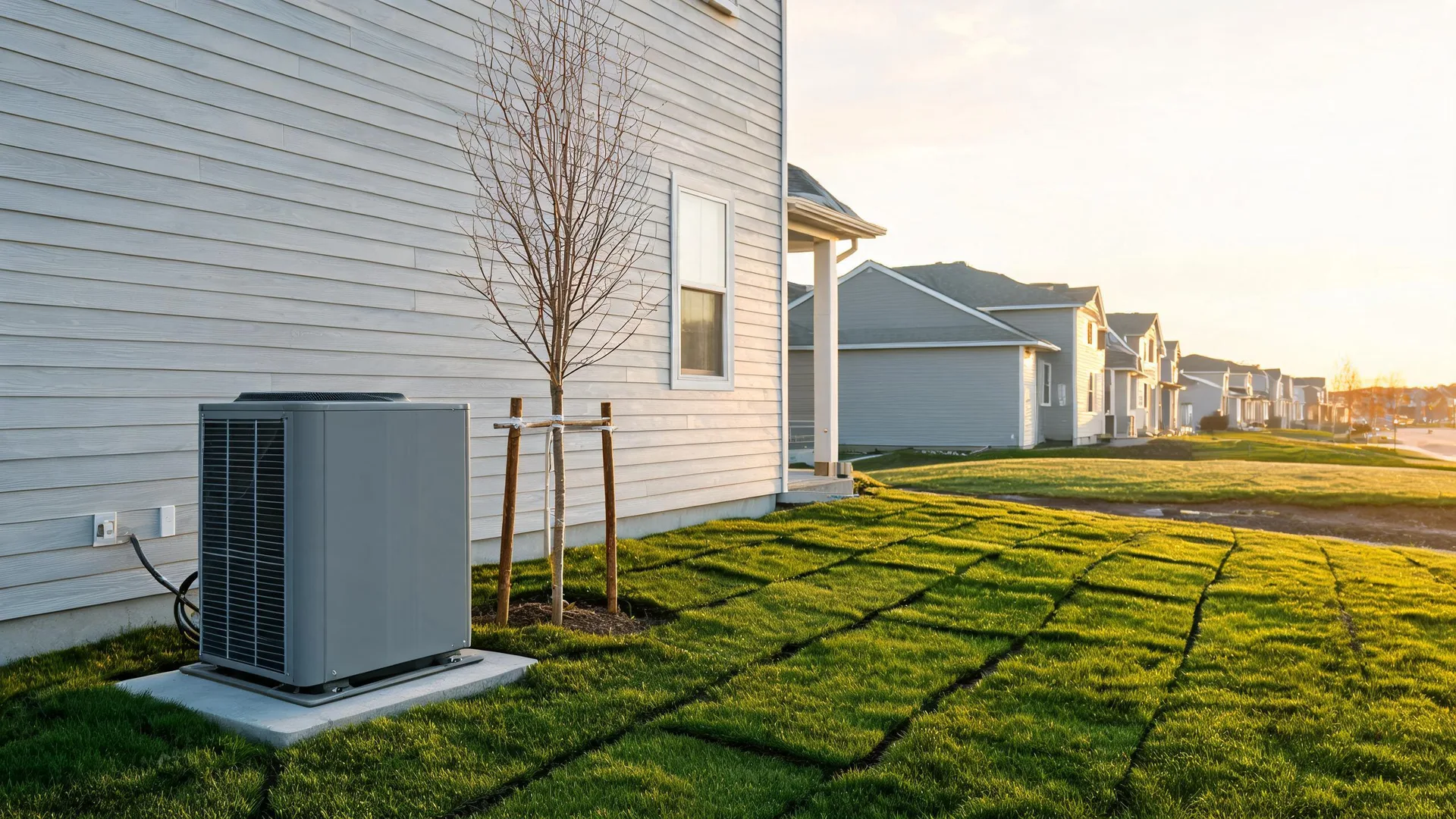
Storms come through here often
Peoria County saw 280 severe weather events between 2015 and 2024, including 147 damaging wind events, 106 hail events and 11 tornadoes. That's a lot of chances for an outdoor condenser to take a hit.
Takes about a minute. No obligation.
Peoria County saw 280 severe weather events between 2015 and 2024, including 147 damaging wind events, 106 hail events and 11 tornadoes. That's a lot of chances for an outdoor condenser to take a hit.
16% of Illinois households went at least 24 hours without power in 2024. A new air conditioner sits on the same grid, and so does the furnace blower and the water heater controls if either one needs electricity to run.

NOAA nClimDiv, 1991–2020 normals
Gas heats 68.1% of homes in Peoria County.
An AC installed here usually pairs with a gas furnace, so the new condenser has to match equipment that's already in place.




Electricity in Peoria County runs 18.04 cents per kilowatt-hour on average. That's more than most counties in the country pay. An air conditioner here already runs hard all summer, so every point of efficiency it has or doesn't have shows up on the bill again and again. A unit sized right for the house costs less to run than one that's oversized or undersized for the space. That difference never shows up on the sales sheet. It shows up months later, after the installer is gone and the system is just running.
Where the new condenser goes and how it's secured matters here. So does having a plan for an outage, since the furnace blower and water heater controls can need power too. Settle both while the system's going in, not after a storm already made the call for you.
Find a contractorHalf the houses in Peoria County were built in 1966 or earlier. A system going into one of those has to work with whatever ductwork and wiring are already there, not a layout drawn up for the equipment going in today. If the one coming out was sized for an older, less efficient system, matching the new one to the house itself, not just the old unit, is worth doing before it's installed. Check with the installer about whether your home's setup came with the house or was updated along the way.
The efficiency rating compares the cooling a unit puts out against the electricity it uses over a season, tested under set conditions. A higher number means the unit can produce more cooling per unit of power. It doesn't mean every installed system will hit that number. Duct leaks, a mismatched coil, or a refrigerant charge that's off all pull the real result down below what's printed on the label.
That number comes from testing the condenser and the indoor coil together as a matched set. Pair a new condenser with an old coil and the combination won't perform at the rating on the new unit's label. Airflow matters too. A duct system that can't move enough air across the coil holds back a high-efficiency unit as much as a worn one.
Estimates for a typical Peoria County home, from EIA household energy data, Illinois fuel prices and NOAA climate normals. Your home will differ.
Installation starts with sizing, and the installer should walk through that math before anyone touches the old unit, using a load calculation against the house itself rather than just matching what's coming out. The old condenser gets disconnected and hauled off, the refrigerant recovered rather than vented. A new line set goes in if the old one doesn't match the new equipment, since the tubing size has to fit what the manufacturer specifies. The indoor coil gets swapped too, not just the outdoor unit, because the two are matched as a set. Once the new condenser is set on its pad and leveled, the refrigerant lines get connected, the system gets evacuated to pull out moisture and air, then charged to the weight the manufacturer calls for. Last comes startup: checking airflow across the coil, checking the charge, and confirming the thermostat is talking to the system before anyone calls it done.