A quiet suburban street at twilight featuring two-story brick homes with illuminated windows and large trees lining the sidewalk.

AC Installation in Pontiac, IL

Tell us about the job

Takes about a minute. No obligation.

New system or replacementCentral ACLivingston County, IL
Step 1 of 2

What ZIP code is the job in?

Electricity here runs 17.98 cents a kilowatt-hour

That is higher than what most US counties pay. An air conditioner is one of the biggest draws on a home's power in Livingston County, so the rate it runs at matters more here than somewhere with cheaper power.


The air carries a lot of moisture to pull out

Summer dew points average 64°F across June, July and August. An air conditioner here isn't just dropping the temperature, it's working the whole season to wring that moisture out of the air, and that work shows up on the bill.

3 months
June through August, your air conditioner is on duty
83°F
the average summer afternoon it cools against
20 hail events
in ten years, and hail bends the fins on outdoor coils
13.4 SEER2
the federal minimum any new unit must meet
Isometric illustration of a cutaway house showing interior ductwork, an indoor air handler and furniture, connected by lines to an outdoor condenser unit on a pad.
Your air conditioner works hardest from June through August.

NOAA nClimDiv, 1991–2020 normals

Cooling runs June through August here, about three months a year.

Install before June and the job happens on your schedule, not during the first hot week.

Most homes here heat with gas, so a gas furnace and a matched AC is the standard setup

68.4% of homes heat with gas
Cooling runs June through August
Summer afternoons average 83°F

Half the homes in Livingston County were built in 1961 or earlier. A house that age usually wasn't built with central air in mind, so the ductwork and the electrical panel may have been sized for a furnace and nothing else. That matters when you're putting in a new AC, because the unit has to match what the house can actually support, not just the square footage. A system sized off a chart without accounting for older duct runs can leave rooms warm or run longer than it should. Worth having the installer look at what's already there before they size the new equipment.

The efficiency rating matters as much as the price tag

Power here costs more than in most places, and a new system runs for years. When you're comparing units, ask what the efficiency rating is, not just what the install costs. The one that costs less to run is the one paying you back on every bill after.

Find a contractor
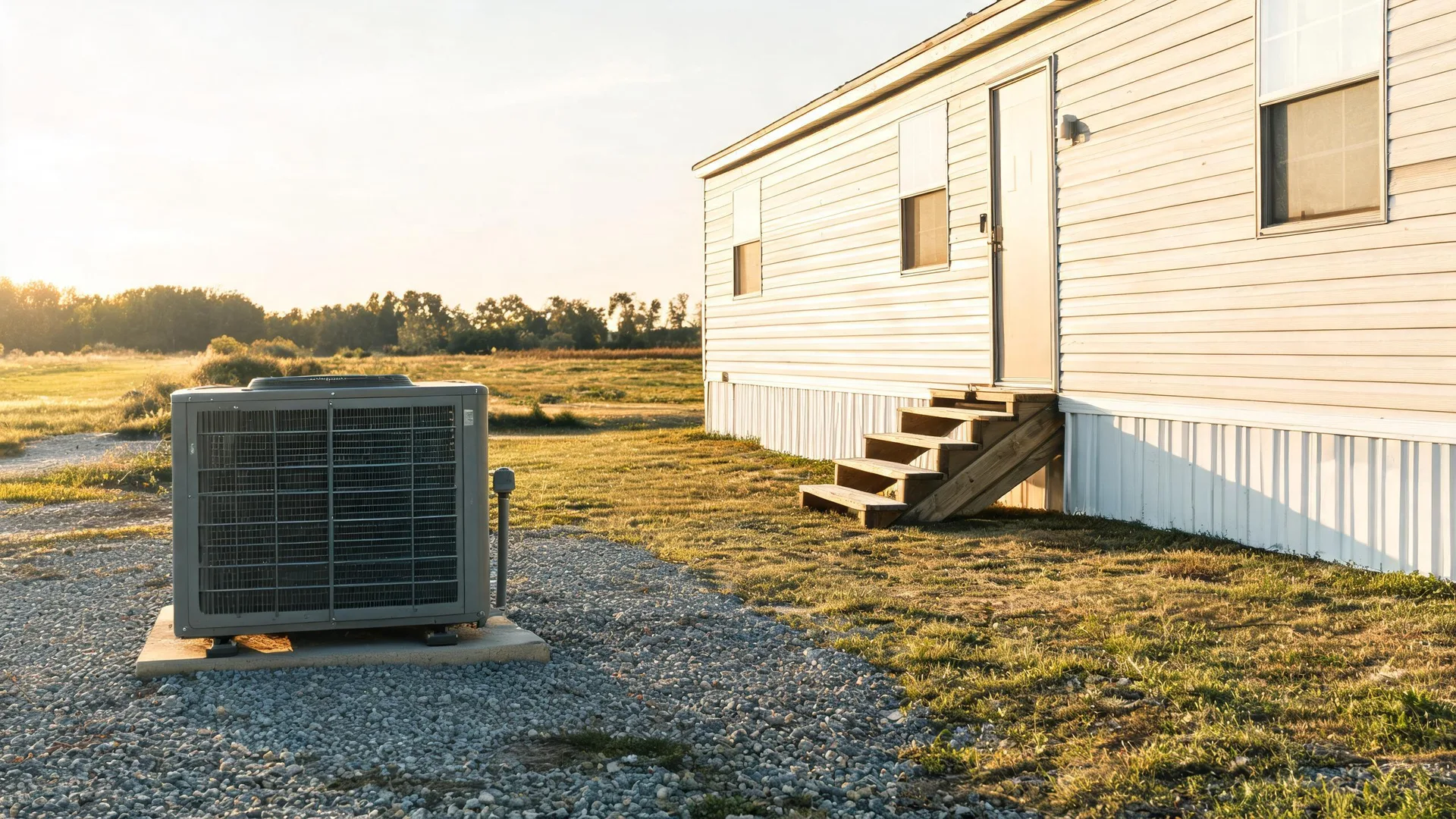
An outdoor residential air conditioning condenser unit mounted on a concrete pad, surrounded by gravel with a blue sky in the background.

What the fit decides, the system repeats all summer

This section is a time-lapse because the fit gets tested every time the system runs, not just on the day it's installed. A new AC sized to the ductwork it will actually run through keeps doing the right amount of work each time it cycles on. One sized off a chart, in a house built before central air was part of the plan, can end up running longer than it should to hit the same temperature. Over years of summers, that difference is what shows up as wear on the unit and as extra hours on the bill.

Sizing comes from a load calculation, not a chart

The right size for an air conditioner comes from a room by room load calculation, accounting for window area, insulation, ceiling height and air leakage, not from a chart that matches tonnage to square footage. Two houses the same size can need different size units depending on how much heat actually gets into them. A contractor doing the job right works through those numbers before quoting equipment.

Oversized and undersized both fail, in different ways

A unit too big for the house cools the air fast and shuts off before it pulls the moisture out, leaving the house cold and still clammy. A unit too small runs constantly trying to reach the set temperature and never quite gets there. Either way the comfort problem shows up inside the house, and the wrong size system wears out faster doing a job it wasn't built to do.

An outdoor air conditioning condenser unit on a concrete pad next to the gray vinyl siding of a residential home.

A higher-efficiency unit would save about $30 a year to run in Livingston County compared with a new unit at the federal minimum.

  • A higher-efficiency unit$200 a year
  • A new unit at the federal minimum, 13.4 SEER2$230 a year

Estimates for a typical Livingston County home, from EIA household energy data, Illinois fuel prices and NOAA climate normals. Your home will differ.

Install day starts with the old equipment coming out, not the new unit going in. The outdoor unit gets disconnected and removed, the indoor coil comes out of the plenum, and the line set gets checked, since most installers won't reuse old refrigerant lines without a good reason to. Once the coil's in place and the new outdoor unit is set on its pad, the lines get connected, the system gets evacuated to pull moisture and air out of the lines, then charged to the manufacturer's spec. After that it's electrical hookup, a startup check, and testing airflow at the vents before anyone calls it done. A thermostat changeover usually happens the same visit if the new system needs one. None of this is a quick swap, and a contractor rushing through the evacuation or skipping the startup check is cutting a corner that shows up later as a system that never quite performs right.