




Overhead view of a gray outdoor AC condenser unit on a concrete pad beside a mulched garden bed and a house with vinyl siding.

AC Installation in Rochelle, IL

Tell us about the job

Takes about a minute. No obligation.

New system or replacementCentral ACOgle County, IL
Step 1 of 2

What ZIP code is the job in?

Utility gas heats 66.5% of homes in Ogle County, more than any other fuel. Electricity covers 14.6%, and bottled or LP gas covers 16.0%. That matters for a central AC install because the cooling coil ties into the existing furnace and ductwork. If your home has a gas furnace, a contractor can size the new AC to match what's already there rather than changing out the whole system. Homes heated by electricity or LP gas can still get central air, but the furnace or air handler on the other end of that coil matters as much as the AC unit itself.

3 months
June through August, your air conditioner is on duty
82°F
the average summer afternoon it cools against
18 hail events
in ten years, and hail bends the fins on outdoor coils
13.4 SEER2
the federal minimum any new unit must meet
Isometric line illustration of a cutaway house showing interior rooms with ductwork, an air handler and furnace, connected by lines to an outdoor condenser unit on the ground outside.
Your air conditioner works hardest from June through August.

NOAA nClimDiv, 1991–2020 normals

Summer here runs about three months, June through August, with afternoon highs around 82°F.

An AC in Rochelle isn't working against much, so a reliable system is doing the job it needs to do.

May is for installing, June is for cooling

Cooling runs June through August
Summer afternoons average 82°F
76 damaging wind events from 2015 to 2024

Half the homes in Ogle County were built in 1972 or earlier. A house that age usually has ductwork sized for the furnace and AC that came with it, not for whatever's on the market now. If the new AC moves more air than the old one, or less, the ducts don't adjust to match. A contractor doing the install should check the duct sizing and the layout before picking equipment, not just swap in whatever tonnage the old unit was. This matters less in a home built in the last decade or two, where the ducts were likely sized for modern equipment from the start.

Any new system here has to meet 13.4 SEER2

Ogle County sits in climate zone 5A, where heating carries the bigger load but summers still call for reliable cooling. Split-system central air conditioners under 45,000 Btu/h have to meet a federal minimum of 13.4 SEER2. That standard narrows down what a contractor can install, so it's worth getting the sizing and equipment right from the start.

Find a contractor
A man in a dark shirt and tan work pants climbs concrete porch steps toward a teal front door, carrying a worn canvas and leather tool bag.
A gray cylindrical air conditioning condenser unit mounted on a concrete pad next to a light-colored vinyl-sided house exterior.

Three months of work a year

Three months of real work, June through August, with afternoons settling around 82 degrees. That's not much strain on a compressor over a year. With load this light, the case for a mid-tier unit is as strong as the case for a top-efficiency one. Put the money into getting the size and the ductwork right instead.

The number is a ratio, not a guarantee

SEER2 compares the cooling a system puts out over a season against the power it draws to do it. A higher number means more cooling per unit of electricity, under the test conditions used to produce that rating. It isn't a promise of what your bill will do, because that depends on the ductwork, the thermostat settings, and how well the coil and the furnace or air handler are matched to each other.

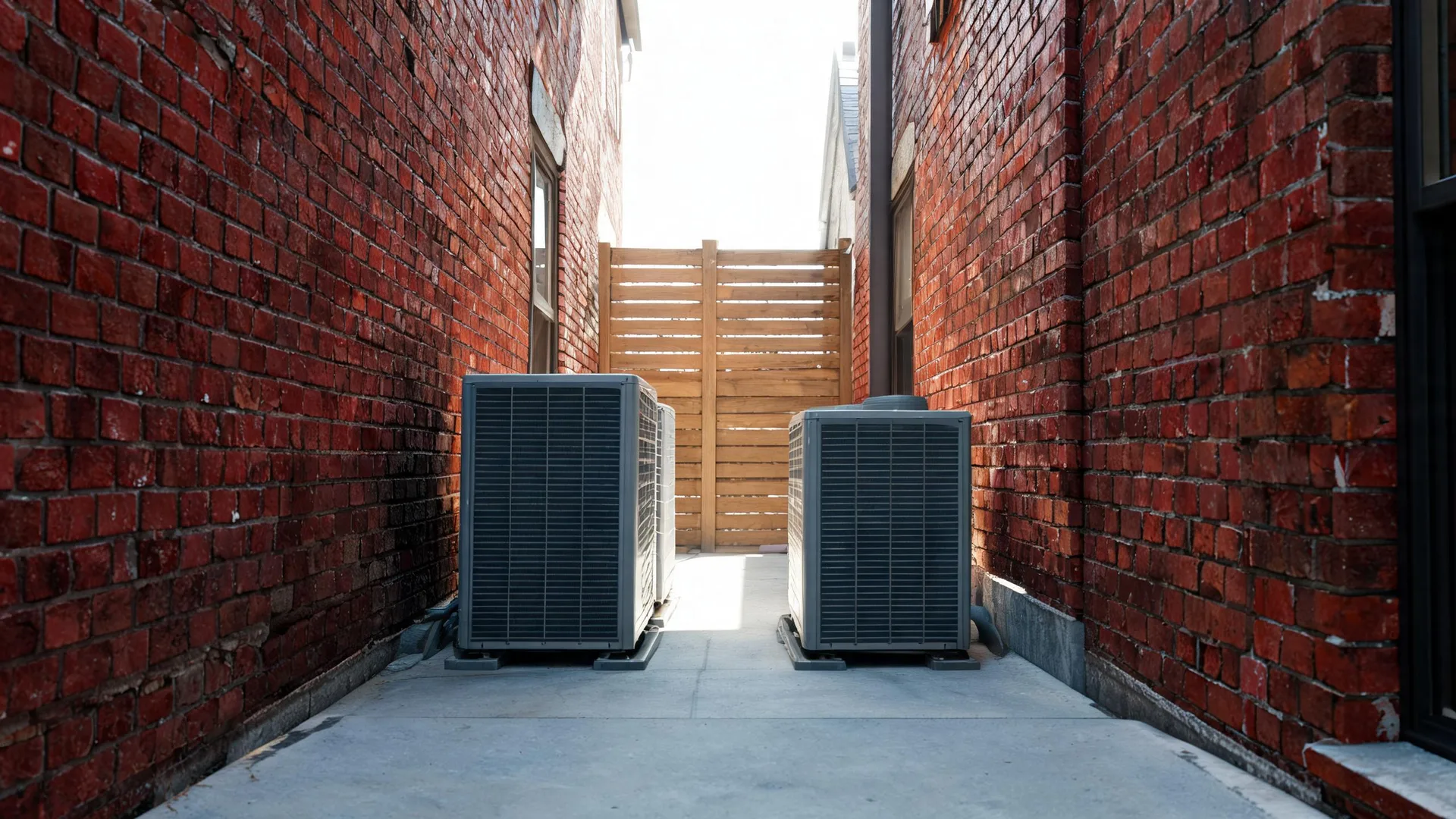
The rating only holds if the install is right

A high-SEER2 condenser paired with the wrong coil, undersized ducts, or a refrigerant charge that's off will run less efficiently than its label suggests. The number on the sticker describes the equipment tested as a matched system in good working order. A contractor who sizes the whole job, not just the outdoor unit, is what gets you anywhere close to that number in practice.

An outdoor air conditioning condenser unit mounted on a concrete pad next to a blue-sided residential house at sunset.

A higher-efficiency unit would save about $30 a year to run in Ogle County compared with a new unit at the federal minimum.

  • A higher-efficiency unit$160 a year
  • A new unit at the federal minimum, 13.4 SEER2$190 a year

Estimates for a typical Ogle County home, from EIA household energy data, Illinois fuel prices and NOAA climate normals. Your home will differ.

Installation day starts with the old equipment coming out, not the new unit going in. The condenser outside gets disconnected, the refrigerant recovered, and the old coil pulled from on top of the furnace or air handler. A contractor checks the line set next, the copper tubing running between indoor and outdoor units, and decides whether it can be reused or needs replacing to match the new system. The new coil goes in first, sealed into the plenum above the furnace, then the condenser gets set on its pad outside and connected. Once everything's wired and the line set is charged with refrigerant, the system gets tested under a full cooling cycle, checking the charge, the airflow across the coil, and the temperature drop between the air going in and the air coming out. A job done right ends with the contractor walking the thermostat settings with you before they leave.