





A row of dark gray single-story houses with asphalt shingle roofs behind trimmed hedges and a mown lawn, framed by overhanging tree branches under an overcast sky.

AC Installation in Rockford, IL

Tell us about the job

Takes about a minute. No obligation.

New system or replacementCentral ACWinnebago County, IL
Step 1 of 2

What ZIP code is the job in?

Gas heats 83.5 percent of homes in Winnebago County, so most of the furnaces paired up with central air here are gas furnaces. When you install new AC, a contractor usually sets the outdoor condenser to work with the existing gas furnace and its blower, rather than swapping out the heating side too. That split system, gas furnace for heat and electric AC for cooling, is the standard setup across the county, so parts and know-how for it are easy to find. If your home is one of the 12.6 percent that heats with electricity, your installer will size the AC around a different kind of air handler, and it's worth saying so when you ask for quotes.

3 months
June through August, your air conditioner is on duty
82°F
the average summer afternoon it cools against
54 hail events
in ten years, and hail bends the fins on outdoor coils
13.4 SEER2
the federal minimum any new unit must meet
Isometric cutaway illustration of a single-story house showing interior ductwork and an air handler connected by lines to an outdoor condenser unit on a pad beside the building.
Your air conditioner works hardest from June through August.

NOAA nClimDiv, 1991–2020 normals

Cooling here runs about three months, June through August, with afternoon highs averaging around 82°F.

An AC sized the normal way for this county's summers handles that fine, no reason to size up or pay for a higher efficiency tier.

Rockford sees its share of storms, but none of it changes how you size an AC

216 severe weather events from 2015 to 2024
16% of homes statewide lost power a day or more in 2024
131 damaging wind events from 2015 to 2024
Install before June in RockfordCooling runs June through August here, so May is the month to get it done.

Winnebago County sits in climate zone 5A, a cool zone where heating carries the bigger share of the year's work. That classification doesn't change what you need from an AC, but it does set a floor. Any split-system central air conditioner under 45,000 Btu/h made from 2023 onward has to meet at least 13.4 SEER2, no matter who installs it or what they're selling you. That's a federal minimum, not a local one, so it holds whether you're in an old farmhouse or new construction. It also means the baseline unit on any quote you get is already built to meet it. There's a federal tax credit available too for qualifying high-efficiency equipment, worth asking your installer about when you compare bids.

In a county this old, the AC has to fit the house, not the other way around

Half the homes in Winnebago County were built in 1971 or earlier. A system sized right has to match the house it's going into, not just the square footage on paper. Ductwork, windows and insulation all look different in a house from that era than in one built last year, and the AC you install needs to work with what's actually there.

Find a contractor
A gray residential air conditioning condenser unit mounted on a concrete pad outdoors, surrounded by green grass under a partly cloudy blue sky.

Get it sized to your house, not a formula

A load calculation matters more than a square footage estimate here. Ask the installer to run one on your actual house, room by room, rather than quoting off a standard per-square-foot number. If your ductwork hasn't been touched since the house was built, say so before they size anything.

The ductwork decides more than the unit does

If the existing ducts are too small or leaky for the new system's airflow, a contractor has to seal, resize or add returns before the AC can work the way it's rated to. That work costs more than the condenser itself in some homes. A straightforward duct layout keeps the job to a swap. One that's undersized or was never balanced right adds labor the quote has to cover.

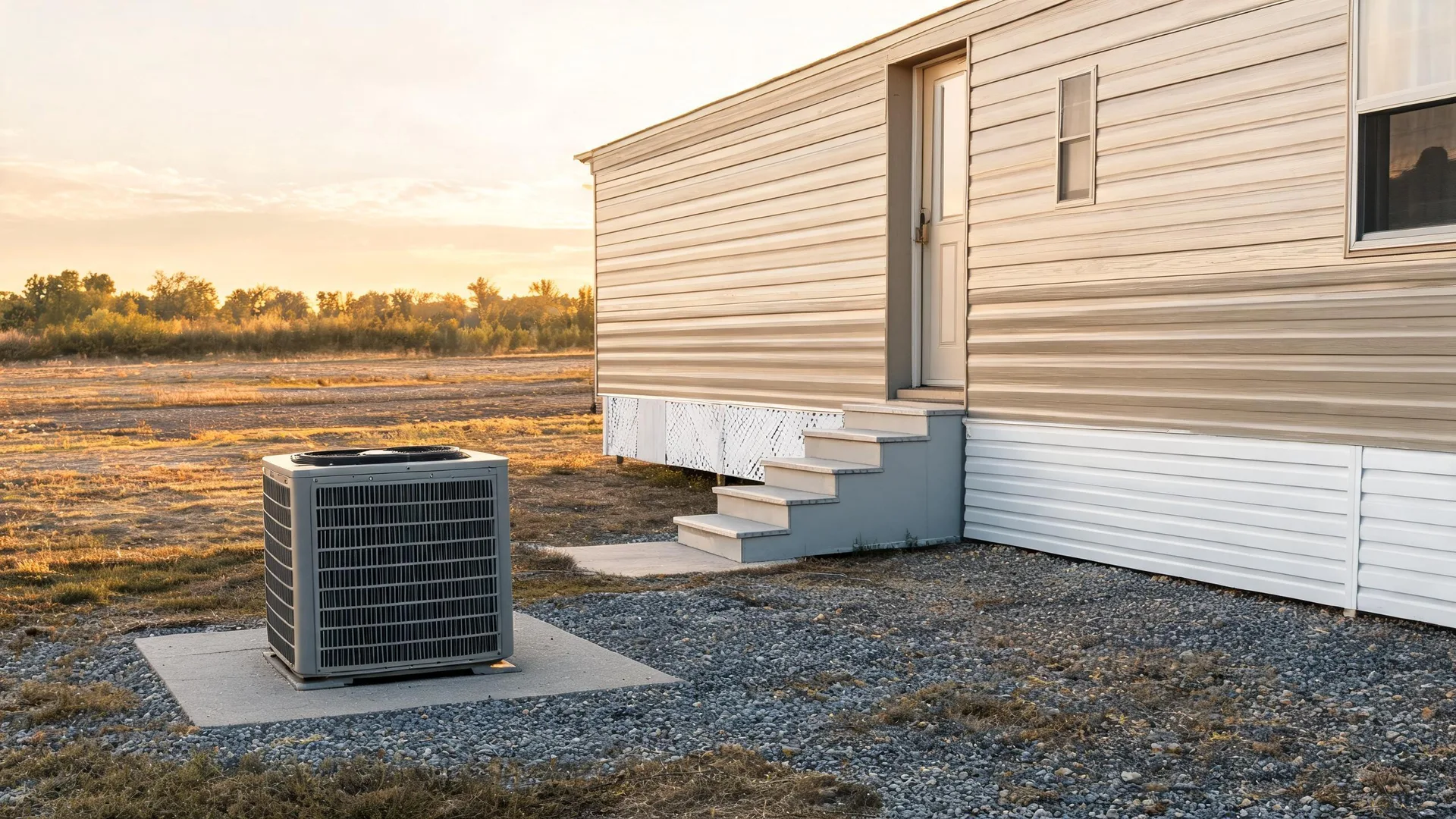
Where the condenser sits matters

Running new refrigerant line, cutting through a wall or finishing electrical for the outdoor unit all take time a straight swap doesn't. If the old condenser's pad, line set and disconnect are usable, the new one goes in against them. If the location changes or the electrical panel can't take the new unit's draw as is, that's additional work before cooling even starts.

Overhead view of an outdoor AC condenser unit on a concrete pad next to a house with a dark shingle roof.

Going above the federal minimum saves little here, about $20 a year.

  • A higher-efficiency unit$160 a year
  • A new unit at the federal minimum, 13.4 SEER2$180 a year

Estimates for a typical Winnebago County home, from EIA household energy data, Illinois fuel prices and NOAA climate normals. Your home will differ.

Installation day starts with the old condenser coming out. The line set gets checked before anything else connects to it, since reusing old refrigerant line without testing it can mean a leak nobody catches until later. The new condenser sets on the pad, the electrical connects, and the lines get joined and pulled into a vacuum before any refrigerant goes in. That vacuum step matters because moisture or air left in the line set wears out a compressor early. Once the vacuum holds, the system gets charged to the specs on the nameplate rather than topped off by feel. Last comes the test. A contractor should check airflow at the registers, check the temperature difference between return and supply air, and confirm the thermostat is actually controlling the new equipment before calling the job finished.