A low-angle view across a mown lawn toward a two-story dark-sided house with a covered front porch, flanked by large green trees under an overcast sky.

AC Installation in Sterling, IL

Tell us about the job

Takes about a minute. No obligation.

New system or replacementCentral ACWhiteside County, IL
Step 1 of 2

What ZIP code is the job in?

Most homes here run on gas heat

Close to three in four homes in Whiteside County heat with utility gas. Electricity and propane each cover a smaller share. A new air conditioner here almost always pairs with an existing gas furnace rather than standing alone.


That pairing shapes the installation

Your furnace likely already has the ductwork and blower an air conditioner needs to move cold air through the house. The job is matching a new outdoor unit and coil to that system, not building cooling from scratch.

3 months
June through August, your air conditioner is on duty
83°F
the average summer afternoon it cools against
37 hail events
in ten years, and hail bends the fins on outdoor coils
13.4 SEER2
the federal minimum any new unit must meet
Isometric line illustration of a cutaway house showing interior rooms with ductwork, an indoor air handler, and an outdoor condenser unit connected by lines, on a white background.
Your air conditioner works hardest from June through August.

NOAA nClimDiv, 1991–2020 normals

A standard size and a standard efficiency rating cover a house here.

Electricity runs 18.23 cents a kilowatt-hour in Whiteside County, so the unit you size right is the one that keeps that bill in check.

Three months of cooling, nothing extreme to size for

Cooling runs June through August
Summer afternoons average 83°F
58 damaging wind events from 2015 to 2024
Built for the house you haveHalf the homes in Whiteside County were built in 1961 or earlier.

Cooling here runs June through August, so May is the month before it starts. That makes May the time to put in a new system, while there's no rush and no heat to work around. A contractor can size the unit and get the charge right without a failed system pushing the schedule. Wait until the house is already warm and you're choosing from whatever can be installed that week, not what actually fits your home. Done in May, the system is just running by the time it needs to.

Your AC doesn't need to be bigger here, just installed

Whiteside County has had 137 severe weather events between 2015 and 2024, from wind to hail to tornadoes. None of that calls for a bigger unit or a higher efficiency rating than standard. A system sized right for your house handles this county's weather the same way it handles any other county's. What's left is getting it installed.

Find a contractor
A gray metal air conditioning condenser unit mounted on a concrete pad in a flat grassy field under a partly cloudy sky.

Matched to the house, not just the weather

A system installed here is going into a duct layout and electrical setup that's already there, not one built around it. On a house from 1961 or earlier, that means matching the new unit to what the ductwork and panel can actually handle, rather than picking a unit first and hoping it fits. That's a sizing conversation to have before anything gets installed, not after.

The load calculation sets the price

An installer has to work out how much heat the house actually gains before pricing anything. That means measuring the rooms, checking window area and orientation, and looking at insulation and ceiling height. Skip that step and you either pay for more unit than the house needs or end up with one that runs constantly and still can't keep up. The calculation is what the rest of the quote is built on.

What's already there changes the job

Existing ductwork and the electrical panel either work with a new system or they don't. Ducts that are too small, too leaky, or routed wrong may need rework before a new unit can move the air it's rated for. A panel without room for a new circuit needs an electrician before the installer can finish. None of that shows up until someone opens the walls or the attic and looks, which is why the same size unit can cost different amounts house to house.

Overhead view of an air conditioning condenser unit on a concrete pad next to a house with asphalt shingle roofing and vinyl siding.

A higher-efficiency unit would save about $30 a year to run in Whiteside County compared with a new unit at the federal minimum.

  • A higher-efficiency unit$180 a year
  • A new unit at the federal minimum, 13.4 SEER2$210 a year

Estimates for a typical Whiteside County home, from EIA household energy data, Illinois fuel prices and NOAA climate normals. Your home will differ.

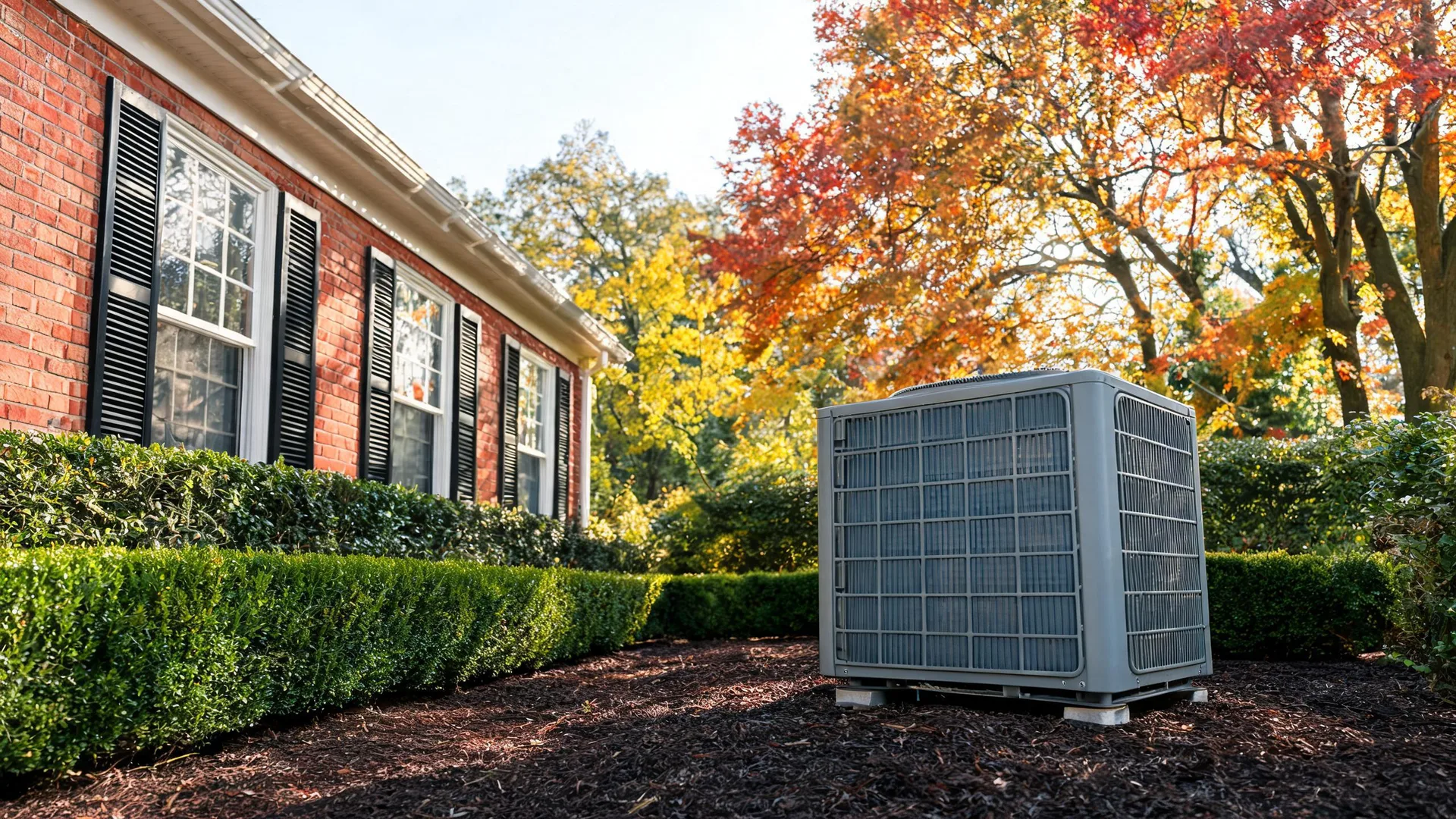
Install day starts with the old equipment coming out, not the new one going in. The outdoor unit gets disconnected, the refrigerant recovered, and the old coil pulled from the plenum before anything new goes in its place. Setting the new outdoor unit means a level pad and enough clearance around it for air to pull through the coil. Inside, the new coil goes in above the furnace, and the line set connecting the two gets run, brazed, and sealed so nothing leaks. Once everything's connected, the system gets evacuated to pull moisture and air out of the lines before refrigerant goes in. Only after it's charged does the installer check airflow at the registers and confirm the thermostat is talking to both the furnace and the new unit.