







Overhead view of an outdoor AC condenser unit on a concrete pad next to a house with a dark shingle roof.

AC Installation in West Frankfort, IL

Tell us about the job

Takes about a minute. No obligation.

New system or replacementCentral ACFranklin County, IL
Step 1 of 2

What ZIP code is the job in?

Electricity in Franklin County runs 17.10 cents per kilowatt-hour on average, more than most US counties pay. Whatever you install will lean on that rate all summer. The air here doesn't help. The dew point averages 67°F across June, July and August, which is heavy, and a heavy dew point means the system is pulling moisture out of the air, not just cooling it. That's extra work on top of the temperature. Two systems can hit the same number on the thermostat and land on very different bills, because one is sized and built for that load and the other is just barely keeping up with it.

5 months
May through September, your air conditioner is on duty
87°F
the average summer afternoon it cools against
24 hail events
in ten years, and hail bends the fins on outdoor coils
13.4 SEER2
the federal minimum any new unit must meet
Isometric cutaway illustration of a house showing attic ductwork, an indoor air handler, refrigerant lines running outside, and an outdoor condenser unit on a pad.
Your air conditioner works hardest from June through August.

NOAA nClimDiv, 1991–2020 normals

Half the homes in Franklin County were built in 1963 or earlier.

A new air conditioner has to match the house it's going into, not the one on the showroom floor.

Put in before May, this runs on your terms

Cooling runs May through September
Summer afternoons average 87°F
80 damaging wind events from 2015 to 2024
Most homes here run on electric heatElectricity heats 49.1% of homes in Franklin County, and an electric furnace or heat pump matched to your AC keeps both running off the same math.

Franklin County sits in climate zone 4A, a mixed zone that asks real work of both heating and cooling. Every split-system air conditioner installed here has to meet the federal minimum for that class of equipment, rated at 13.4 or higher. That rating measures how much heat the system removes for the electricity it uses over a season, not how big it is or how fast it cools. A unit below that number cannot legally be manufactured for sale, so the floor is already set before a contractor ever walks through the door. Where you have a choice is how far above that floor you go, and that choice is what shows up on the bill every summer after.

What you install now is what you'll pay to run every summer after

That rate and that rating are going to work together every summer this system runs. Picking something above the minimum is the one part of this decision that's easier to get right before it's installed than after.

Find a contractor
A man in a dark jacket, cap and tan work pants climbs concrete steps toward a teal front door, carrying a canvas tool bag beside a potted shrub in a blue planter.
An outdoor residential air conditioning condenser unit mounted on a concrete pad, surrounded by gravel with a blue sky in the background.

Half these homes were built before central air was standard

A house built in 1963 or earlier wasn't sized for the air conditioner going in now. The ductwork, the return air, the spot where the old unit sat, all of it was laid out for whatever cooling load that era had in mind. A contractor sizing a new system should be measuring your house, not swapping in the same tonnage that came out. That choice plays out every day this unit runs, for years, in a house that's already told you what it needs if someone bothers to check.

Bigger isn't the safe choice

An oversized air conditioner cools the air fast and shuts off before it finishes pulling the moisture out of it. That leaves the house feeling clammy even at the right temperature, and all that starting and stopping wears on the compressor faster than running a full cycle would. An undersized one just runs and runs and never quite catches up on the hottest days. The right size is the one that runs long steady cycles and still keeps up.

Sizing is a room by room count

A contractor works out the right size with a load calculation, not a guess based on square footage or the unit being replaced. That means walking the house and counting what adds heat: window area and which way they face, ceiling height, how much insulation is in the attic and walls, how many people live there, what the kitchen puts out. Two houses the same size can need two different systems once someone actually counts what's inside them.

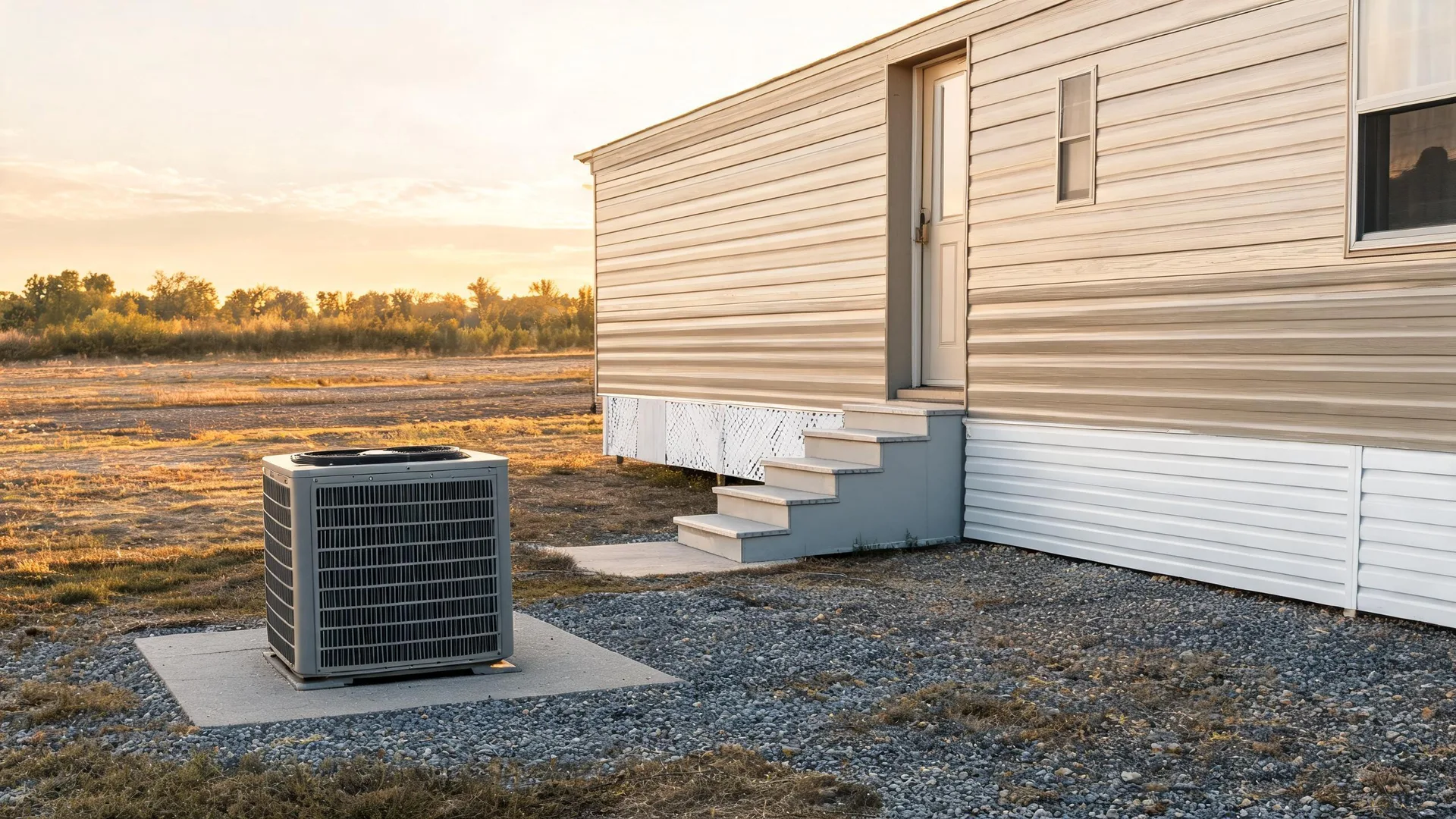
Aerial view of a gray outdoor air conditioning condenser unit mounted on a concrete pad next to a house with vinyl siding.

A higher-efficiency unit would save about $40 a year to run in Franklin County compared with a new unit at the federal minimum.

  • A higher-efficiency unit$290 a year
  • A new unit at the federal minimum, 13.4 SEER2$330 a year

Estimates for a typical Franklin County home, from EIA household energy data, Illinois fuel prices and NOAA climate normals. Your home will differ.

Installation day starts with the old equipment coming out, not the new one going in. The outdoor unit gets disconnected and removed, the indoor coil comes out of the plenum, and the line set gets checked to see if it can be reused or needs replacing. Once the old system is clear, the real work is in the connections: a new line set gets run if needed, the coil gets set in place, and the refrigerant lines get brazed and then pressure tested before anything is charged. A proper installation gets pulled down to a vacuum first, to clear out air and moisture, because either one left in the lines causes problems months later. Only after that does the system get charged, and a tech checks the charge against the manufacturer's spec rather than just running it until the air feels cold. Before anyone leaves, the system should run a full cycle while someone checks airflow at the registers and confirms the thermostat is actually talking to the equipment.