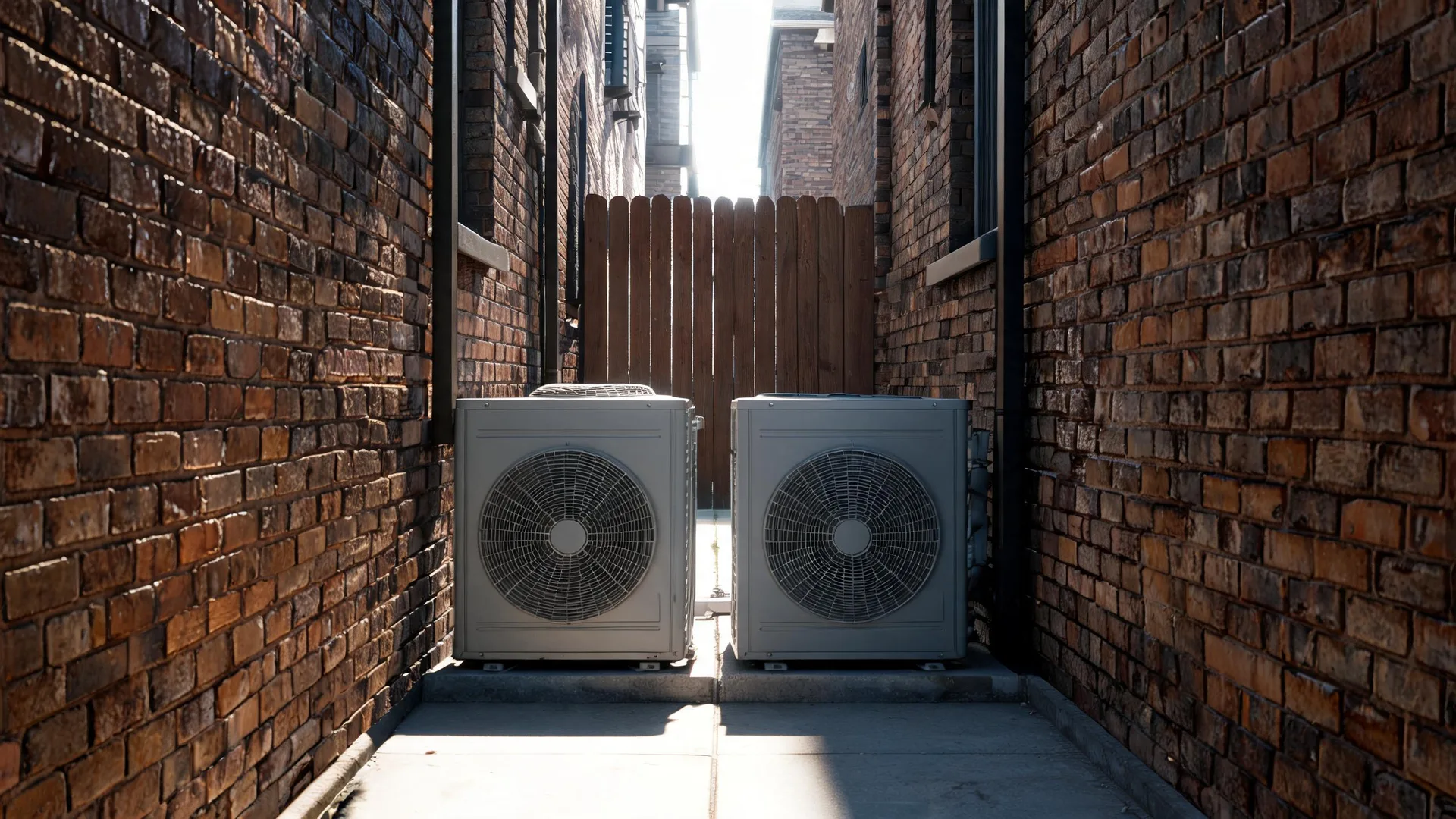
Power here costs more to waste
Electricity in St. Clair County ran 17.65 cents per kilowatt-hour in 2025, higher than most of the country. An air conditioner working harder than it needs to burns through that rate fast.
Takes about a minute. No obligation.
Electricity in St. Clair County ran 17.65 cents per kilowatt-hour in 2025, higher than most of the country. An air conditioner working harder than it needs to burns through that rate fast.
A dirty coil or a low charge makes the compressor run longer to cool the same house. Getting the system back to spec means it does the job without the extra draw.

NOAA nClimDiv, 1991–2020 normals
An air conditioner in Belleville runs five months straight, May through September, with afternoon highs averaging 87°F and a dew point near 66°F.
That stretch wears a coil or a capacitor down faster than it would somewhere milder, and the wear shows up right when the heat does.



Between visits, the filter is the one thing worth checking yourself. A dirty filter chokes airflow across the coil, and the system has to run longer to move the same amount of cold air through the house. Hold it up to a light. If you can't see through it, swap it or wash it, depending on which kind you have. Outside, keep the area around the condenser clear. Grass clippings, leaves, and anything piled against the cabinet block the airflow it needs to dump heat. A few feet of open space on all sides is enough. Inside, keep an eye on the vents and make sure furniture or rugs haven't ended up blocking one. None of this replaces a real inspection, but it keeps the system from working against itself in the meantime.
A system running out of spec draws more power to do the same job, and power in St. Clair County costs more than in most places. A tune-up gets the coil and the charge back to where they should be, so the compressor isn't working harder than it has to all summer.
Find a contractor
A system that never gets looked at doesn't fail all at once. The coil loses its grip on heat a little at a time as dust and grime build across the fins, so the refrigerant inside can't shed heat the way it's supposed to. The compressor picks up the slack, running longer to get the same drop in temperature. Run it that way long enough and the extra heat it can't shed starts cooking the compressor itself, which is the one part in the system nobody wants to replace. A capacitor loses strength the same slow way, giving the compressor and fan motor a weaker kick every time they start, until one morning they don't start at all. None of this shows up as a sudden breakdown. It shows up as a system that takes longer to cool the house than it used to, and keeps taking longer, until the day it stops.
Warm air out of the vents while the thermostat says it's cooling means the compressor is running but losing the fight. Short cycles, where the unit kicks on and off in quick bursts, point to a dirty coil or a refrigerant charge that's off. Ice on the copper line or the indoor coil means airflow or charge is wrong, and running it iced up like that only pushes the compressor harder. A hum at the outdoor unit with the fan not spinning is usually a capacitor on its way out.
A system that used to keep the house comfortable and now struggles on the hottest afternoons is losing capacity somewhere, often the coil or the charge. New rattling, squealing, or a hard clunk when the compressor kicks on are mechanical complaints, not something that clears up on its own. A unit that's never been opened up and inspected is carrying however many seasons of dust and wear with nobody having checked what they did to the coil, the contactor, or the capacitor.
A tune-up checks the refrigerant charge, cleans the coils, tests the capacitor and tightens the electrical connections.
A proper tune-up starts outside, with the condenser coil. The tech cleans the fins so the refrigerant inside can actually shed heat, since a coil caked with dust can't let go of it no matter how hard the compressor works. From there it's the refrigerant charge, checked against what the system calls for and corrected if it's low or overfilled, because either one makes the compressor work harder than it should. The capacitor and contactor get tested under load, not just looked at, since a capacitor can read fine sitting still and still fail to kick the compressor on. The blower gets checked too, along with the belt if it has one, and the condensate drain gets cleared so it isn't backing up somewhere out of sight. Electrical connections get tightened, because a loose one generates heat on its own and shortens the life of whatever it's feeding. None of this is guesswork. Each reading gets checked against what the manufacturer specifies for that unit, so the tech knows whether it's running the way it was built to or just running.