







A quiet residential street at dusk lined with illuminated two-story brick houses and mature trees.

AC Maintenance in Belvidere, IL

Tell us about the job

Takes about a minute. No obligation.

Tune-up, service, or cleaningCentral ACBoone County, IL
Step 1 of 2

What ZIP code is the job in?

Your air conditioner only has to work three months a year here, June through August. Afternoons average 81 degrees, with a dew point around 61°F, so it's not fighting the kind of heavy, soupy heat you'd get further south. That's a lighter load than most machines see over their lifespan. Light duty doesn't mean no duty, though. The coil still gets dirty, the capacitor still ages, the refrigerant charge still drifts. A yearly check catches those small things before they turn into a system that won't start in July.

3 months
June through August, your air conditioner is on duty
81°F
the average summer afternoon it cools against
15 hail events
in ten years, and hail bends the fins on outdoor coils
41 wind events
in ten years, and wind drives debris into outdoor units
Isometric line illustration of a cutaway single-story building showing interior rooms, ceiling ductwork and an air handler, connected by lines to an outdoor condenser unit beside the exterior wall.
Your air conditioner works hardest from June through August.

NOAA nClimDiv, 1991–2020 normals

A tune-up is a checklist, not a guess: coil, capacitor, charge, drain, electrical connections, airflow.

Skip one of those and the rest of the visit doesn't tell you much.

Half the homes here were built in 1986 or later, so a lot of this equipment still has years left in it

Half the homes here were built by 1986
Climate zone 5A
Power here costs 17.93 cents per kilowatt-hour
Get It Looked At Before JuneJune through August is cooling season in Boone County. Have it checked in May.

Between visits, the simplest thing you can do is keep the filter clean. A clogged filter starves the coil of airflow, and a starved coil can ice over even on a mild day. Check it once a month and replace or rinse it when it looks gray instead of white. Walk outside too and look at the condenser unit. Grass clippings, cottonwood seed and leaves pack into the fins and block airflow the same way a dirty filter does. Keep at least a couple feet of open space around it. Inside, listen for anything new: a hum before the compressor kicks on, a rattle, a system that runs longer than it used to. None of that needs a tool to notice, just attention.

Keep up the yearly check

Easy duty still wears parts. A yearly check keeps it going a long time.

Find a contractor
A man in a cap, gray long-sleeve shirt and brown work pants climbs wooden porch steps toward a dark teal front door, carrying a canvas tool bag, with a potted shrub beside the entry.
An outdoor residential air conditioning condenser unit mounted on a concrete pad, surrounded by gravel with a blue sky in the background.

A Newer System Still Needs the Yearly Check

If your system is one of the newer ones, a yearly check is what keeps it that way. Maintenance doesn't restart a clock, but it stops the small stuff, a dirty coil, a tired capacitor, from cutting that life short. A unit with years ahead of it is worth that hour each spring. Skip a few years of checks and you're asking a newer system to cover for problems an older one would've already shown you.

A Real Tune-Up Means Hands On the Equipment

A thorough visit means the panels come off and the capacitor gets tested under load, not just looked at. The coil gets inspected and cleaned if it's dirty, not glanced at through a grille. The refrigerant charge gets checked against what the system calls for, which means gauges, not a guess based on how cold the air feels at the vent. The condensate drain gets flushed so it can't back up later. Electrical connections get tightened, since a loose connection is what burns a wire or trips a breaker mid-summer.

What a Quick Visit Skips

A rushed tune-up is a visual check and a filter swap, done in the time it takes to drink a cup of coffee. Nobody pulls a capacitor reading, so a part that's failing today looks fine until it dies on a hot afternoon. Nobody checks the charge, so a system that's low on refrigerant keeps running weak instead of getting caught. Ask what was actually tested, not just looked at, and ask to see the capacitor and charge readings. A tech with nothing to hide will show you the numbers.

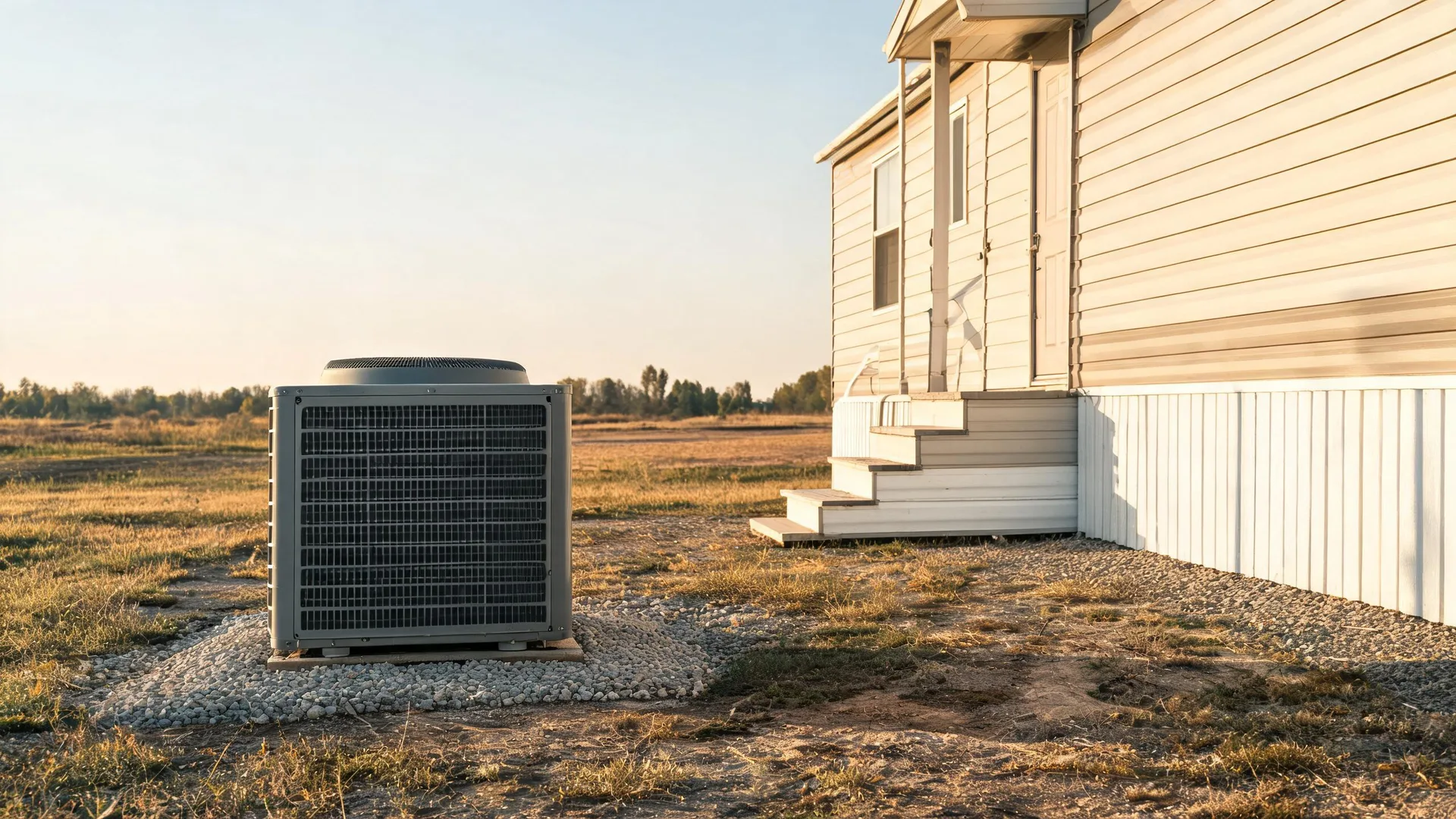
An outdoor air conditioning condenser unit installed beside the exterior wall of a blue vinyl-sided house at sunset.

Book your AC tune-up in May, before homes here start needing cooling in June.

  1. Jan
  2. Feb
  3. Mar
  4. Apr
  5. May
  6. Jun
  7. Jul
  8. Aug
  9. Sep
  10. Oct
  11. Nov
  12. Dec

A tune-up checks the refrigerant charge, cleans the coils, tests the capacitor and tightens the electrical connections.

A technician's gauges and meter find things a homeowner never will. A capacitor can read weak under load and still let the compressor start every time, so the unit seems fine right up until the day it doesn't. A refrigerant charge that's drifted low won't trip anything or make noise. The system just runs longer, pulls more power, and cools less, and nobody notices because it never fully stops working. A cracked contactor or a connection gone loose with heat cycles looks ordinary until it arcs. None of these show up by listening at the vent or watching the fan spin. They show up on a meter, which is the whole reason the check happens before the part fails instead of after.